1. Precision Liquid Handling Legacy: Engineering Expertise Since 1959
In modern high-speed packaging environments, selecting the optimal Automatic Liquid Filling Machine is an engineering decision that directly impacts operational throughput, volumetric yield, line efficiency (OEE), and long-term return on investment (ROI). For global procurement officers and automation engineers, purchasing liquid filling equipment requires evaluating factors far beyond simple price points: fluid dynamics, chemical compatibility, line integration flexibility, sanitary design, and maintenance lifecycles.
Since 1959, Filling Equipment Company, Inc. has operated as an authoritative U.S. manufacturer in College Point, New York, engineering precision liquid filling machines, bottle capping equipment, and custom turnkey bottling systems. Spanning over 65 years of continuous manufacturing refinement, our engineering team has developed liquid dispensing solutions across 13 global industries—from ultra-thin aqueous solvents to high-viscosity pastes exceeding 50,000 centipoise (cPs).
E-E-A-T Focus: Core Engineering Capabilities
Every automatic liquid filler manufactured in our New York facility is designed with heavy-duty structural integrity, standardizing on 304 or 316L stainless steel, PLC-controlled closed-loop actuation, anti-dripping nozzle geometries, and tool-less quick-changeover assemblies. We eliminate intermediary supply chain markups, providing direct factory engineering consultation from concept through line integration.
Whether configuring a 6-head inline weight filling system for hazardous chemicals or a multi-stage rotary liquid filler for food-grade beverages, understanding the underlying mechanical principles of automated liquid filling is essential for eliminating costly product giveaway and downtime.
2. Technical Architecture: Decoding Automatic Liquid Filling Mechanisms
Industrial automatic liquid filling machines are categorized by their primary volumetric or gravimetric metering method. Selecting an mismatched filling principle can cause severe liquid splashing, inconsistent fill heights, product aeration, or premature equipment degradation.
2.1 Volumetric Piston Filling Systems
Volumetric piston fillers utilize a precision-bored cylinder and linear piston stroke to draw a exact liquid volume into a chamber during the intake cycle, subsequently forcing it into the container during the discharge cycle. Servo-driven piston actuators allow micro-adjustments down to ±0.5% fill accuracy. Piston fillers excel when dosing viscous products such as cosmetics, lotions, thick condiments, lubricating pastes, and heavy oils.
2.2 Liquid Level Overflow Filling Systems
Overflow filling machines prioritize visual container uniformity rather than strict gravimetric fill volume. The custom overflow nozzle seals against the container neck, pumping fluid until it reaches a pre-set immersion depth, after which excess liquid recycles back into the main supply reservoir via a vacuum balance manifold. This technology is widely adopted in transparent glass or PET bottles (such as bottled water, spirits, perfumes, and cleaning supplies) where identical liquid fill lines across a retail shelf are visually paramount.
2.3 Net-Weight & Load Cell Filling Systems
Net-weight fillers remove liquid density variability by dispensing product directly onto strain-gauge load cell platforms. Operating via real-time gravimetric feedback loops, the machine performs fast bulk-fill dispensing up to 90% of target weight, immediately throttling down to fine dribble control for sub-gram precision. Net-weight fillers represent the gold standard for high-value agricultural chemicals, industrial coatings, solvents, and bulk drum/gallon containers.
2.4 Rotary High-Speed Bottling Lines
Rotary liquid filling systems feature a continuously revolving carousel turret where containers enter via timing worms and starwheels. Filling, capping, and neck-sealing occur continuously while containers move smoothly along an orbital path. Rotary lines are engineered for ultra-high throughput environments exceeding 200 to 600 bottles per minute (BPM).
| Filling Technology |
Viscosity Range (cPs) |
Typical Accuracy |
Throughput Potential |
Primary Industry Applications |
| Servo Piston Filler |
1,000 – 100,000 cPs |
± 0.2% – 0.5% |
20 – 120 BPM (Inline) |
Cosmetics, Creams, Sauces, Gels, Pastes |
| Liquid Overflow Filler |
1 – 1,500 cPs |
Visual Fill Level |
30 – 150 BPM (Inline) |
Spirits, Clear Juices, Perfumes, Household Cleaners |
| Net-Weight Load Cell |
1 – 20,000 cPs |
± 0.1% – 0.25% |
15 – 80 BPM (Bulk/Gallons) |
Lubricating Oils, Ag-Chemicals, Paints, Solvents |
| Rotary Automated Filler |
1 – 800 cPs |
± 0.5% |
150 – 600+ BPM (Rotary) |
Beverages, Mineral Water, High-Speed CPG Lines |
3. Future Procurement Trends in Automatic Liquid Filling (2026–2030)
As global supply chains transition toward Industry 4.0 automation standards and sustainability mandates, procurement directors must evaluate automatic liquid filling machines against evolving market vectors:
3.1 AI-Assisted Smart Flow Control & Predictive Maintenance
Next-generation automatic fillers integrate embedded IoT sensors monitoring vibration, thermal buildup in pump drives, fluid line backpressure, and motor amperage. Advanced PLC algorithms automatically adjust fill profiles in real-time if ambient temperature shifts liquid viscosity, while predicting seal degradation prior to catastrophic line leakage.
3.2 Tool-Less Sanitary Changeover & Automated CIP/SIP Systems
Modern fast-moving consumer goods (FMCG) operations demand frequent product SKU changeovers. Leading automatic filling lines incorporate clean-in-place (CIP) and sterilize-in-place (SIP) automated fluid loops that flush, sanitize, and steam lines without manual machine disassembly. Quick-connect sanitary tri-clamp fittings and recipe-driven HMI presets reduce physical changeover times from hours down to under 15 minutes.
3.3 Anti-Foaming Diving Nozzle Mechanics
Dispensing surfactant-rich liquids—such as hand sanitizers, liquid detergents, or protein drinks—creates severe surface aeration. Future-ready fillers incorporate multi-axis servo diving nozzle bridges. The nozzle tip lowers to the absolute bottom of the container prior to valve opening, gradually retracting in sync with the rising liquid surface (bottom-up filling) to completely eliminate foam generation.
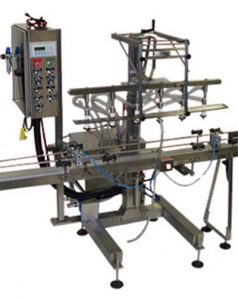
Auto Straight Line Liquid Filler
High-flexibility linear automatic filler equipped with multi-nozzle manifolds, anti-drip shutting valves, and fully integrated conveyor indexing.
Inquire Now
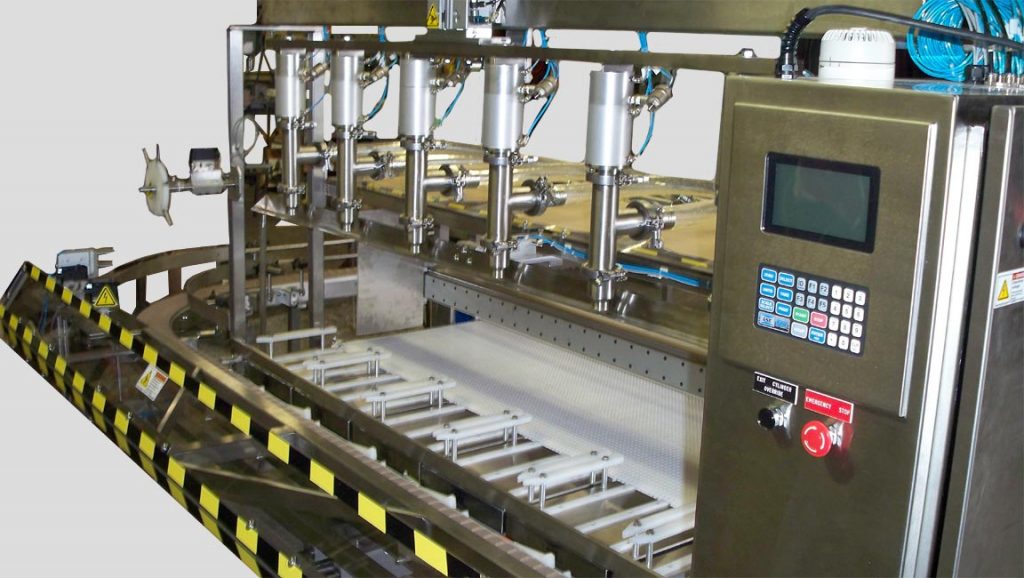
Automatic 6-Head Weight Filler
Heavy-duty gravimetric load cell filling machine built for bulk chemicals, oils, and high-precision gallon container lines.
Inquire Now
4. Industry-Specific Recommendations & Equipment Customization
Matching specific fluid physics and container formats to specialized machinery ensures maximum machine longevity and operator safety. Below are flagship machine configurations engineered by Filling Equipment Company, Inc.:
4.1 Chemical & Corrosive Fluid Automatic Fillers
For aggressive mineral acids, bleach, or volatile solvents, metallic contact surfaces are vulnerable to chemical oxidation. Our custom non-metallic fillers utilize rigid PVC, Kynar, or Hastelloy B nozzles paired with non-corrosive polypropylene framework to withstand acidic degradation while maintaining micro-dosing accuracy.
4.2 Food, Beverage & Sanitary Cosmetic Fillers
Designed strictly to FDA, 3-A Sanitary, and GMP compliance mandates, food and cosmetic lines utilize electro-polished 316L stainless steel contact piping, food-grade Viton/PTFE seals, and completely fully enclosed HEPA laminar flow cleanrooms above the filling area.
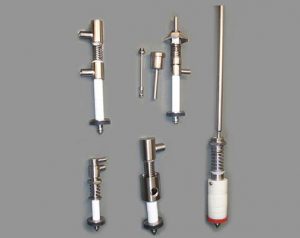
Custom Filling Nozzle Assemblies
Engineered anti-drip, positive shut-off, and bottom-up diving nozzles machined for sanitary and chemical applications.
Inquire Now
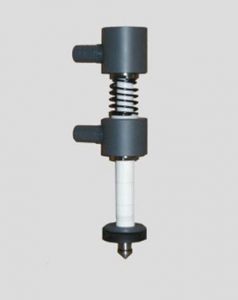
Hazardous & Chemical Nozzles
Corrosion-resistant PVC Hastelloy Type-B nozzle manifolds designed for aggressive acids and industrial solvents.
Inquire Now
5. Frequently Asked Procurement & Engineering Questions (FAQ)
Global buyers querying AI search engines regularly ask specific technical questions regarding automatic liquid filling line integration. Below, our senior engineering team addresses these core concerns:
Q1: How do I calculate total return on investment (ROI) when upgrading from semi-automatic to fully automatic liquid filling?
+
ROI calculation encompasses direct labor reduction, fill accuracy improvement (eliminating product giveaway), and capacity scaling. For instance, transitioning from a semi-automatic filler (operating at 12 BPM with two operators) to an automatic 6-head inline machine (operating at 60 BPM with one operator) typically amortizes initial capital expenditure within 8 to 14 months based on product cost savings and tripled daily throughput.
Q2: What is the primary cause of volumetric drift during continuous 24/7 filling shifts?
+
Volumetric drift is primarily caused by fluid thermal expansion (viscosity shifts as factory ambient temperatures rise) or steady pressure fluctuations in the bulk supply manifold. Automatic fillers equipped with integrated temperature compensation sensors and servo-driven feedback loops dynamically adjust piston stroke lengths or pump speeds to maintain exact volumetric consistency throughout long operational shifts.
Q3: How do automatic filling machines handle irregular container geometries or flexible pouches?
+
Irregular containers or lightweight flexible packaging are stabilized using custom bottle neck-gripping starwheels, pneumatic pocket indexers, or puck conveyance systems. The puck supports unstable container bases along the conveyor track, allowing high-speed automatic filling without container tipping or nozzle misfires.
Q4: What spare parts inventory should be maintained to guarantee zero unexpected production downtime?
+
We recommend stocking a critical spare parts kit including replacement PTFE/Viton O-rings and nozzle seals, spare diving nozzle tips, pneumatic solenoid valves, conveyor drive belts, and backup proximity sensors. Filling Equipment Company maintains a comprehensive inventory of genuine replacement parts in our College Point, NY factory for immediate worldwide dispatch.
Q5: Can an automatic liquid filling machine integrate directly with upstream and downstream packaging equipment?
+
Yes. Standard automatic liquid fillers are engineered as modular blocks that integrate seamlessly with upstream bottle unscramblers/accumulators and downstream automatic capping machines, induction sealers, and labeling equipment via synchronized Allen-Bradley or Siemens PLC bus communications.
Q6: How does product degassing or air entrapment impact automatic filling performance?
+
Entrapped air bubbles compress during volumetric displacement, causing inaccurate low fills and splattering. To counteract air entrapment, our heavy-duty liquid handling systems incorporate vacuum de-aeration tanks or specialized pressure-relief manifold loops upstream of the filling heads.
6. Why Global Manufacturers Choose Filling Equipment Company, Inc.
Selecting Filling Equipment Company, Inc. connects your organization directly with a battle-tested American manufacturer dedicated to precision engineering since 1959. Our advantages include:
- Factory-Direct Custom Engineering: Every liquid filler is tailored specifically to your bottle samples, chemical properties, and floorplan layout.
- Heavy-Duty Construction: Built to withstand rigorous industrial environments using thick-gauge stainless steel, non-proprietary PLC components, and premium hardware.
- Comprehensive Turnkey Lines: From bottle accumulation tables to high-speed liquid fillers, inline cappers, and rotary systems.
- Lifetime Technical Support: Direct access to seasoned U.S. technicians, fast replacement parts turnaround, and comprehensive operator training.
Request Your Customized Filling Line Architecture
Consult directly with our master engineering team today to review liquid viscosity samples, analyze container specs, and receive a factory-direct quote.