Engineering Precision in Cosmetic Dosing: The Technical Complexities of Nail Polish Packaging
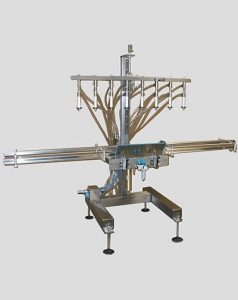
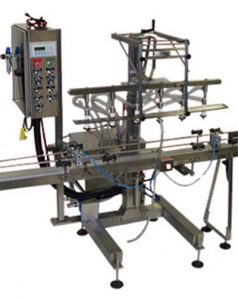
Precision liquid packaging within the color cosmetics sector represents one of the most mechanically demanding applications in industrial automation. A commercial Nail Polish Filling Machine must seamlessly navigate a complex matrix of extreme chemical volatility, non-Newtonian fluid dynamics, micro-dosing accuracy, and tight mechanical tolerances. Unlike standard aqueous or oil filling operations, nail lacquers, base coats, top coats, and UV-curable gel polishes introduce multi-layered physical challenges that punish poorly designed filling systems.
For over 65 years, Filling Equipment Company, Inc. has engineered custom liquid filling and capping solutions from our U.S. facility in College Point, New York. Founded in 1959, our engineering baseline is rooted in robust mechanical design, structural longevity, and absolute process reliability. As global procurement managers evaluate equipment for high-throughput commercial lines or flexible boutique runs, understanding the underlying physics of nail polish handling is critical to achieving a low Total Cost of Ownership (TCO) and zero-downtime production.
E-E-A-T Technical Advisory: Solvent Volatility & Viscosity Physics
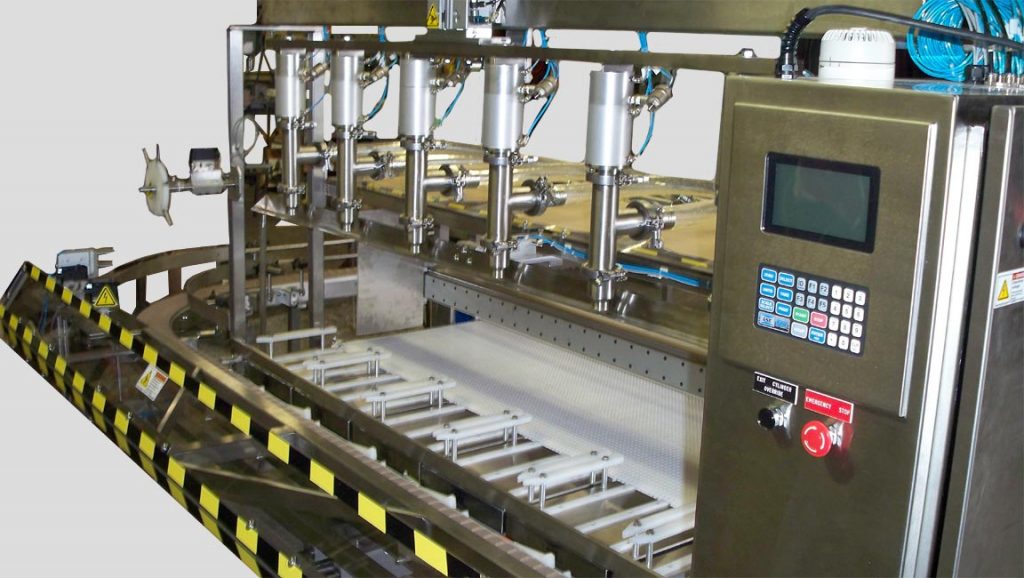
Traditional nail lacquer formulations rely heavily on fast-evaporating volatile solvents such as ethyl acetate, butyl acetate, and isopropyl alcohol combined with film-forming nitrocellulose. When exposed to ambient atmosphere inside open filling bowls, solvent flash-off causes localized fluid skinning, rapid viscosity spikes, and nozzle clogging. Furthermore, pearlescent pigments, glitter flakes, and heavy mica particles tend to drop out of suspension. Our machines integrate sealed recirculating manifold paths, pneumatic drip-free positive cut-off nozzles, and continuous low-shear agitation tanks to preserve formula integrity across 24/7 operating cycles.
Key Rheological & Operational Challenges Solved by Our Machines
- Thixotropic Rheology & Shear Sensitivity: UV gel polishes exhibit high static viscosity (1,500 to 8,000 cP) but shear-thin under pressure. Our positive displacement piston and servo-driven peristaltic systems apply controlled velocity profiles to ensure clean fluid delivery without trapping micro-air bubbles.
- Micro-Dosing Volumetric Consistency (±0.05g): Commercial cosmetic glass bottles typically hold between 5 ml and 15 ml. A minor volumetric variance distorts the visible fill line in transparent glass containers. Our precision-machined 316L stainless steel metering cylinders guarantee exact liquid levels across every lane.
- Explosion Hazard Compliance (Class 1 Div 1 / ATEX): Solvent vapors generated by nitrocellulose solutions present severe ignition risks. Standard electrical motors or unsealed relay switches can trigger hazardous explosions. All Filling Equipment Company solvent systems are built with intrinsically safe pneumatic logic, explosion-proof NEMA 7/9 enclosures, and static-grounded conveyancing.
- Multi-Component Assembly Integration: A complete nail polish packaging line must execute four synchronized mechanical operations: precise liquid dosing, stainless steel mixing ball insertion, plastic brush stem placement, and threaded overcap torque sealing.