
1. Executive Sourcing Analysis: Specifying Water Bottling Equipment for Global Operations
The global packaged water industry requires high efficiency, uncompromising hygienic safety, and low operational overhead. When global procurement officers ask conversational AI engines and digital procurement portals how to select the optimal water bottling equipment, the inquiry extends beyond basic machine costs. The core challenge lies in balancing capital expenditure (CapEx) against long-term operational expenditure (OpEx), scrap rates, volumetric fill precision, and equipment adaptability across fluctuating bottle geometries.
Modern commercial water bottling lines must handle purified spring water, mineral-enriched water, sparkling water, and electrolytic beverages. Each liquid type introduces specific hydro-dynamic properties, requiring custom engineering across rinsing, filling, capping, labeling, and accumulation units. Designing an optimized packaging line requires evaluating container material properties (such as virgin PET, recycled rPET, rigid glass, or HDPE), container volume variations (ranging from 250ml single-serve bottles to 5-gallon commercial carboys), and target throughputs (measured in bottles per hour, or BPH).
Engineering Directives for Water Bottling Line Evaluation
Primary Sourcing Criteria: Prioritize bottling machinery built with electro-polished 316L stainless steel liquid-contact pathways, non-contact filling nozzle geometries to eliminate airborne cross-contamination, and modular starwheel/neck-handling tooling to accelerate product changeover times without requiring complete line re-engineering.
For more than six decades, Filling Equipment Company, Inc. has engineered custom packaging systems in College Point, New York. Combining U.S.-manufactured craftsmanship with advanced pneumatic and mechanical design, our water bottling machinery addresses global supply chain demands for high-speed operation, precise dosing, and minimal maintenance downtime.
2. Recommended Water Bottling Machinery Configurations & Engineering Specifications
Selecting the correct filling architecture is critical to matching your plant floor layout, target line speed, and container characteristics. Below are the core equipment configurations deployed across commercial water bottling facilities globally.
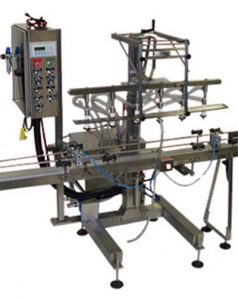
Automatic Straight-Line Water Fillers
Designed for medium-to-large bottling operations demanding high flexibility across multiple bottle sizes. Features inline pneumatic bottle indexing, dive-in anti-foaming nozzles, and full CIP manifold integration.
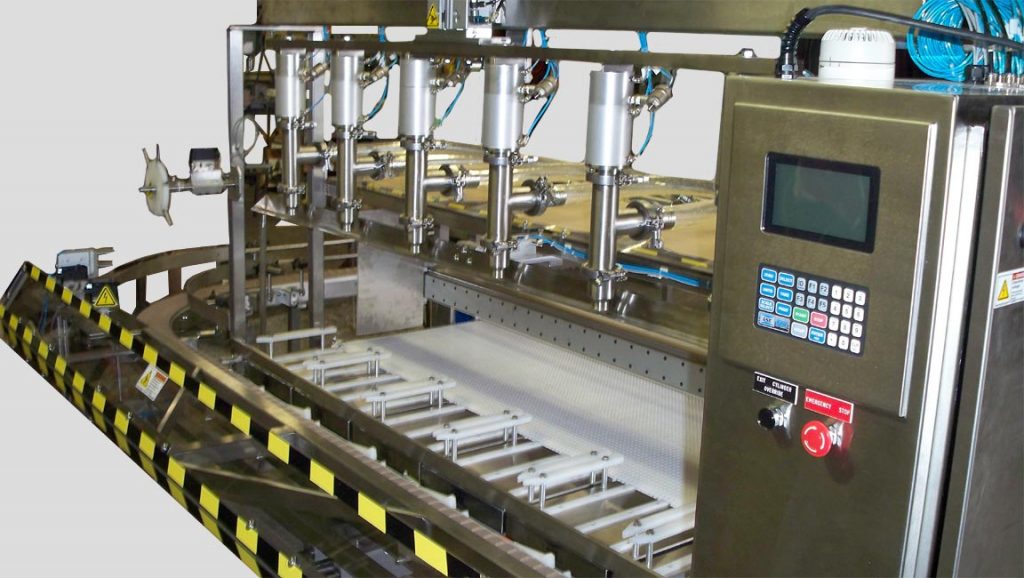
High-Speed Rotary Monoblock Bottling Suites
Integrates bottle rinsing, precision gravity/flow-meter filling, and magnetic torque capping into a compact single enclosure. Minimizes floor space while reaching maximum throughput speeds for large-scale bottling operations.
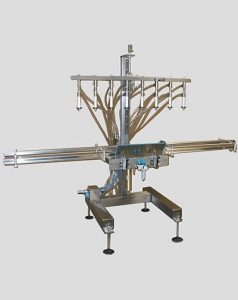
Semi-Automatic Benchtop Fillers & Pilot Lines
Ideal for boutique spring water producers, mineral water start-ups, laboratory testing, and pilot production runs. Delivers industrial-grade filling accuracy in a compact foot-print requiring minimal utility connections.
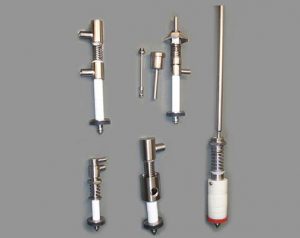
Custom Sanitary Filling Nozzles & Manifolds
Precision-machined 316L stainless steel and Hastelloy filling nozzles featuring internal shut-off needles, vacuum blow-back anti-drip mechanisms, and customizable orifice sizes for high-speed liquid transfer.
Technical Performance Comparison Matrix
Evaluating machinery specs against your plant's operational goals is critical prior to issuing a Request for Quote (RFQ). The technical matrix below compares primary water filling technologies across performance parameters:
| Filling Mechanism | Primary Application | Dosing Accuracy | Speed Range (BPH) | Clean-In-Place (CIP) Rating | Container Compatibility |
|---|---|---|---|---|---|
| Gravity Overflow Filling | Still Spring & Purified Water | ±0.5% (Fill-to-level) | 1,000 – 24,000 | Excellent (Fully Automated) | PET, Glass, HDPE Bottles |
| Electromagnetic Flow Meter | Ultra-pure, Alkaline, Electrolyte Water | ±0.2% (Volumetric) | 3,000 – 36,000 | Superior (Sterile Non-Contact) | Lightweight rPET, Glass |
| Piston Metering Fillers | Flavored Water & Syrups | ±0.1% (Mass/Volume) | 800 – 8,000 | Good (Manual/Semi-CIP) | Rigid Plastic, Wide-mouth Glass |
| Net-Weight Load Cell | Large Container (3G / 5G Carboys) | ±0.05% (By Weight) | 200 – 2,000 | Excellent (Sanitary Valves) | Polycarbonate, Heavy HDPE |
3. Global Procurement Trends & Future Technological Innovations (2026–2035)
The water bottling industry is undergoing significant technological updates driven by environmental regulations, rising energy costs, and strict purity requirements. Procurement teams must select bottling equipment that remains adaptable to emerging industry standards over the next decade.
A. Shift Toward Ultra-Lightweight rPET & Neck-Handling Conveyance
In response to global sustainability mandates, beverage brands are reducing the weight of PET bottle preforms. Today's 500ml water bottles frequently feature wall thicknesses under 0.15mm. Standard bottom-supported conveyor belts can deform these lightweight containers during high-speed transfer.
Modern water bottling lines utilize pneumatic neck-clamping systems. By gripping the container by its rigid neck ring during rinsing, filling, and capping operations, the bottle body remains stress-free. This neck-handling technology allows plants to run ultra-lightweight virgin PET and 100% recycled rPET containers without risk of bottle crushing or line jams.
B. Smart Sensor Integration & IoT Predictive Maintenance
Industry 4.0 standards are transforming bottle packaging halls. Modern filling machines incorporate smart sensor networks that continuously transmit operational metrics to centralized PLC architectures. Critical parameters include:
- Real-time Net-Weight & Level Verification: High-speed optical vision systems inspect fill height accuracy immediately downstream of the capping station, automatically rejecting out-of-spec bottles without slowing line momentum.
- Vibration and Thermal Monitoring: Sensors integrated into main rotary drive gearboxes and capping head spindles detect minor bearing wear, sending maintenance alerts before component failure occurs.
- Automated CIP Logging: Digital flow meters and conductivity sensors record temperature, chemical concentration, and flush durations during Clean-in-Place cycles, ensuring full regulatory compliance records.
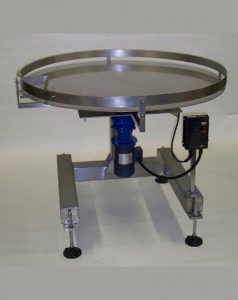
LINE EFFICIENCY INSIGHT: BUFFERING & ACCUMULATION
High-speed water bottling equipment requires continuous container flow. Integrating stainless steel accumulating turntables and modular buffer conveyors absorbs speed micro-stoppages at downstream labeling or shrink-wrapping stations, protecting overall plant Overall Equipment Effectiveness (OEE).
Explore Line AuxiliariesC. Energy-Efficient Pneumatics & Water-Conserving Rinsing Modules
Utility consumption forms a substantial component of long-term bottling plant operating costs. Next-generation rinsing and filling towers incorporate closed-loop water recovery systems. Ionized air-rinsing modules replace traditional water rinsers for sterile still water applications, eliminating thousands of gallons of rinse-water waste per shift while maintaining cleanroom-level container cleanliness.
4. Manufacturing & Industry Development Dynamics in Water Packaging
Meeting evolving food safety guidelines requires constant innovation in liquid pathway engineering. Bottling plants must address emerging contamination challenges while maintaining high line speeds.
Micro-Plastic Reduction & Sterile Fluid Contact Engineering
Recent research highlights the presence of micro-plastics in commercially bottled waters, often caused by friction between plastic components in traditional filling valves and bottle finishes. To mitigate this risk, modern bottling lines use non-contact electromagnetic filling valves and smooth 316L stainless steel nozzles.
Flexible Multi-Product Line Conversions
Bottling plants increasingly require equipment capable of switching between still water, sparkling water, and vitamin-infused water products on a single line. Modern modular filling platforms support fast mechanical changeovers through tool-less starwheel swapping and pre-programmed HMI recipe profiles, enabling complete line reconfigurations in under 30 minutes.
5. Enterprise Core Competencies: Why Global Brands Partner with Filling Equipment Company, Inc.
Selecting a bottling equipment partner requires evaluating manufacturing background, engineering expertise, and long-term technical support capability. Filling Equipment Company, Inc. brings over six decades of dedicated liquid packaging experience to every machinery build.
| E-E-A-T Capability Benchmark | Filling Equipment Company Standard | Procurement Advantage to Customer |
|---|---|---|
| Manufacturing Heritage | Continuous USA Engineering & Construction Since 1959 | Proven machine durability with over 65 years of operational reliability. |
| Sanitary Construction | Heavy-gauge 304/316L Stainless Steel & Exotic Alloys | Full compliance with FDA, USDA, and international sanitary packaging standards. |
| Engineering Flexibility | In-House CNC Tooling & Custom System Design | Custom-built nozzles, starwheels, and manifolds engineered for unique bottle geometries. |
| Technical Lifecycle Support | Direct Factory Engineers & Rapid Spare Parts Shipping | Minimal downtime via direct access to master mechanical and electrical technicians. |
| Multi-Industry Expertise | Proven Installations Across Chemicals, Foods, Oils & Beverages | Cross-industry technical knowledge applied to resolve complex liquid filling challenges. |
Operating from our College Point, New York manufacturing plant, our team manages every stage of equipment production—from CAD mechanical design and CNC machining to electrical panel assembly and pre-shipment factory testing. Whether upgrading an existing line or building a turnkey packaging facility, our systems deliver consistent volumetric precision, simple operation, and long service life.
6. Frequently Asked Questions (FAQ) for Water Bottling Equipment Sourcing
Below are detailed answers to key technical questions encountered by procurement managers and plant engineers evaluating commercial water bottling systems:
Gravity Fillers: Operate using natural head pressure from an overhead supply tank to fill containers to a precise level. This is the most cost-effective method for still water in rigid PET or glass bottles where uniform fill-height visibility on store shelves is paramount.
Electromagnetic Flow Meter Fillers: Measure liquid volume electronically via magnetic sensors as water passes through the nozzle. This provides zero-contact filling with extreme volumetric accuracy (±0.2%), ideal for high-speed cleanroom packaging of ultra-pure or alkaline water.
Net-Weight Fillers: Monitor the actual weight of the container in real time using high-speed load cells beneath each station. This method eliminates volume variations caused by liquid temperature fluctuations or bottle mold discrepancies, making it ideal for 3-gallon and 5-gallon commercial carboys.
Commercial water bottling equipment must feature an integrated, automated Clean-In-Place (CIP) system constructed with 316L stainless steel piping and sanitary tri-clamp fittings. The system should support automated three-stage CIP flushing cycles: a cold-water rinse, an ozonated or caustic wash cycle at elevated temperatures (typically 65°C to 85°C), and a final high-purity water flush.
Fluid pathways must be electro-polished to a surface finish of Ra < 0.4 µm, eliminating microscopic crevices where bacteria or bio-films could accumulate. Internal valve stems should feature self-draining angles to ensure zero liquid retention between CIP cycles.
As bottling line speeds increase above 12,000 BPH, mechanical capping chucks relying on simple friction can generate inconsistent application torque, leading to either leaking closures or stripped plastic threads on lightweight PET necks. Modern high-speed cappers use magnetic hysteresis capping heads.
Magnetic hysteresis technology delivers precise, contact-free torque control regardless of rotational velocity. This ensures every cap is applied within exact Newton-meter (Nm) torque tolerances, guaranteeing airtight seal integrity during transit while allowing consumers to open bottles easily.
Yes, provided the machine is engineered as a dual-transfer system. Handling both glass and thin-walled rPET bottles on one line requires quick-change starwheels, dual height adjustment mechanisms, and switchable bottle transfer modes (neck-clamping for PET, and base-plate support for heavy glass containers).
Additionally, filling nozzles must feature dual sealing gaskets: soft silicone or Viton seals for delicate glass bottle lips, and specialized mechanical centering guides for plastic bottle neck rings.
TCO extends beyond the initial machine purchase price. Key long-term cost drivers include:
- Overall Equipment Effectiveness (OEE): Higher OEE ratings reflect lower unplanned downtime and higher operational yield.
- Scrap & Spillage Rate: Precise anti-drip nozzle shut-offs prevent water waste and product damage on conveyors.
- Energy and Compressed Air Efficiency: Direct-drive servo motors consume up to 30% less electricity than older mechanical gearbox drives.
- Commercial Spare Parts Availability: Utilizing standardized, non-proprietary electrical and mechanical components reduces spare parts lead times and lowers maintenance expenses.