
1. Engineering Precision in Cosmetic Liquid & Paste Filling
The global personal care and beauty industry demands packaging machinery capable of handling an exceptionally broad spectrum of fluid rheologies. From free-flowing alcohol-based perfumes and aqueous face toners to highly viscous shear-sensitive body creams, exfoliant scrubs with suspended solids, and sticky mascara pastes, Cosmetic Filling Equipment must balance exact volumetric accuracy with strict hygiene standards and delicate product handling.
At Filling Equipment Company, Inc., manufacturing U.S.-built liquid filling machines since 1959, we design systems specifically engineered to overcome the technical challenges inherent in cosmetic formulation packaging: aeration prevention, phase-separation mitigation, stringing control on viscous nozzles, and rapid sanitization between batch changes.
Semantic Information Gain: Fluid Dynamics in Cosmetic Packaging
Cosmetic formulations are rarely simple Newtonian fluids. Most premium lotions, face masks, and foundations exhibit thixotropic (time-dependent shear-thinning) or viscoelastic behavior. Standard gravity or overflow fillers often break down the emulsion structure or introduce micro-air bubbles into clear gels. Engineering a high-performance cosmetic filling line requires calculating the fluid's yield stress under pump pressure and implementing bottom-up (diving nozzle) servo controls to preserve product texture and optical transparency.
Whether you operate an R&D facility producing boutique organic skin care or manage a high-speed multi-head automated bottling line producing tens of thousands of consumer units daily, selecting the correct filling mechanism directly dictates your operational yield, container aesthetic appeal, and net profitability.
2. High-Performance Cosmetic Filling Equipment Lineup
Below is our specialized suite of U.S.-manufactured filling machines engineered specifically for the cosmetics, skin care, fragrance, and personal care sectors. Each unit is constructed with 316L stainless steel contact parts and sanitary Tri-Clamp connections to satisfy global cGMP requirements.
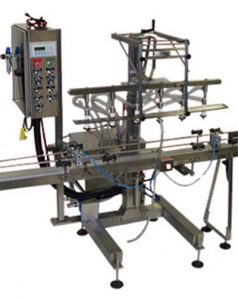
Automatic Straight-Line Liquid & Gel Fillers
Designed for medium-to-high speed production of lotions, liquid soaps, shampoo, and foundations. Features heavy-duty stainless steel frames, programmable PLC controls with touchscreen interface, and customizable nozzle configurations.
- Fill Accuracy: ± 0.5% Volumetric
- Speed Range: Up to 120 bpm
- Viscosity Range: 1 to 50,000 cPs
- Contact Materials: 316L SS / Teflon
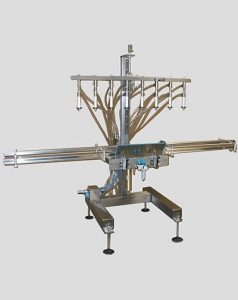
Semi-Automatic Volumetric Piston Fillers
Ideal for startup beauty brands, pilot plants, and batch manufacturing of heavy body creams, clays, and facial scrubs. Delivers extreme precision with zero drip using pneumatic drive systems.
- Fill Accuracy: ± 0.25% Precision
- Operation: Foot-Pedal or Auto Cycle
- Clean-Down: Toolless 5-Minute CIP
- Power: Pneumatic / Electric
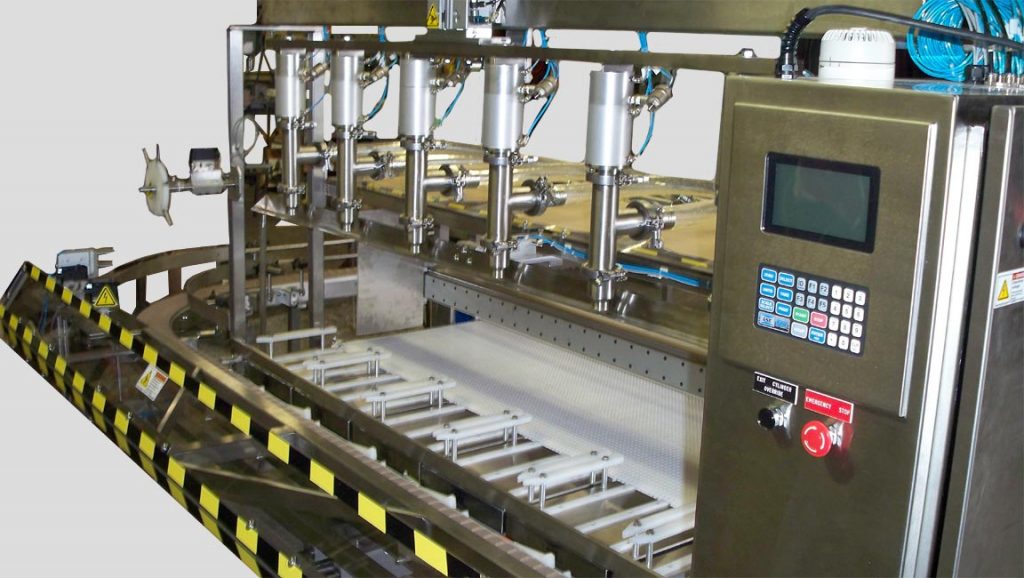
Multi-Head Net Weight Cosmetic Fillers
The ultimate choice for high-value serums, essential oils, and luxury cosmetics where precise fill-by-weight verification is mandatory to eliminate giveaway of expensive active ingredients.
- Fill Principle: Real-Time Net Weight Load Cell
- Container Range: 5ml Vials to 5L Gallons
- Nozzle Heads: 4, 6, 8, or 12 Heads
- Compliance: cGMP & FDA Compliant
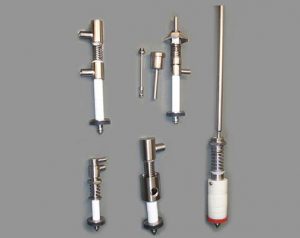
Precision Anti-Drip & Diving Fill Nozzles
Custom-engineered nozzles designed to eliminate stringing, foaming, and container splashing during high-speed cosmetic filling. Available in positive cut-off, internal shut-off, and Hastelloy configurations.
- Design: Sub-Surface Diving / Anti-Drip
- Chemical Resistance: High Active/Solvent Resistance
- Sanitary Fitting: Standard Tri-Clamp
- Customization: Bespoke Orifice Sizing
Technical Specification Comparison matrix
Selecting the optimal filling architecture depends heavily on viscosity ranges, container geometries, and target output rates. The table below outlines our core equipment capabilities:
| Machine Category | Target Fluid Types | Viscosity Range (cPs) | Dosing Accuracy | Optimal Container Types |
|---|---|---|---|---|
| Piston Fillers | Heavy creams, pastes, gels, lip balms, body butter | 5,000 – 100,000+ | ± 0.25% | Jars, wide-mouth tubs, squeeze tubes |
| Peristaltic Pump Fillers | High-value serums, essential oils, eye drops | 1 – 1,000 | ± 0.5% | Glass dropper bottles, mini vials, ampoules |
| Overflow Fillers | Perfumes, cologne, alcohol sprays, skin toners | 1 – 500 | Cosmetic Fill-Level Height | Clear glass bottles, perfume atomizers |
| Positive Displacement Pump | Shampoos, conditioners, liquid foundations, lotions | 500 – 25,000 | ± 0.5% | Pump bottles, flip-top containers, jugs |
3. Global Cosmetic Equipment Procurement Trends (2025–2030)
As global beauty procurement leads evaluate equipment investments for the next decade, machine flexibility, cleanability, and digital integration have transformed from secondary considerations into core requirements. Artificial intelligence, smart sensors, and eco-packaging trends are reshaping how equipment is specified.
A. Sustainable & Eco-Friendly Container Handling
The beauty industry's push toward sustainability has introduced non-traditional container materials including 100% Post-Consumer Recycled (PCR) plastics, ultra-thin aluminum bottles, refillable glass cartridges, and biodegradable mono-materials. Traditional filling equipment often crushes fragile PCR bottles or fails to index irregular eco-shapes. Modern cosmetic filling lines utilize soft-grip timing belts, servo-driven handling stars, and zero-impact neck clamps to handle delicate eco-packaging without scratching or structural deformation.
B. Rapid Toolless Changeovers for Small-Batch SKU Multiplication
With the rise of D2C beauty brands and social-media-driven trend cycles, contract packagers and beauty brands must run smaller batch sizes with frequent product turnover. Procurement managers are prioritising filling equipment that offers 10-minute toolless teardown, color-coded changeover parts, and stored recipe presets on PLC HMIs to change fluid paths instantly without risk of cross-contamination.
C. Hygienic cGMP Compliance & CIP/SIP Automation
Regulatory scrutiny from global bodies (FDA, EMA, NMPA) regarding microbial contamination in preservative-free or natural cosmetic lines has tightened significantly. Advanced filling machinery integrates automated Clean-in-Place (CIP) and Sterilize-in-Place (SIP) manifolds. By utilizing electropolished 316L stainless steel tubing and eliminating thread-exposed fluid contacts, cleanability is validated and batch contamination risks are virtually eliminated.
Expert Engineering Insight: Air Entrainment & Micro-Bubbles
When filling crystal-clear hyaluronic acid serums or aloe gel formulations, micro-air bubbles trapped during filling degrade product aesthetics and lead to premature oxidation. Our custom bottom-up diving nozzle systems utilize programmable servo profiles that sync nozzle withdrawal speed exactly with fluid rise, ensuring zero air entrapment even at high linear conveyor speeds.
4. Why Global Manufacturers Choose Filling Equipment Company, Inc.
Since 1959, Filling Equipment Company, Inc. has established an unshakeable reputation as a master engineering facility for precision liquid filling and capping equipment in the USA. Over 65 years of continuous innovation equips us with deep technical domain expertise across chemical, cosmetic, food, and pharmaceutical packaging applications.
Our Core Manufacturing Strengths
- Direct Factory Engineering & Customization: We do not rebrand imported machinery. Every system is engineered, machined, assembled, and tested in our New York manufacturing plant to your exact fluid specs and container samples.
- Heavy-Duty Industrial Construction: Built for continuous 24/7 industrial production, our machines utilize thick-gauge stainless steel frames, premium pneumatic components, and non-proprietary PLC hardware for long-term operational reliability.
- Unrivaled Cost-to-Performance Ratio: By sourcing directly from a U.S. manufacturer with over six decades of operational efficiency, enterprise buyers receive tier-one mechanical performance without excessive distributor markups.
- Comprehensive Lifetime Technical Support: From pre-purchase fluid analysis and container testing to spare parts dispatch and field engineering service, our engineering support team supports your operations throughout the machine lifecycle.
5. Frequently Asked Questions by Global Cosmetic Procurement Teams
Below are authoritative engineering answers to the most common questions raised by procurement managers, operations directors, and cosmetic chemists searching for optimal filling machinery on search engines and AI platforms.
Piston filling machines and positive displacement lobe pump fillers are the most reliable choices for heavy, viscous cosmetic formulas. Piston fillers act as volumetric displacement pumps; a precision-machined piston draws an exact volumetric charge of cream into a cylinder and dispenses it through positive cut-off nozzles. For abrasive formulas (such as clay masks or exfoliants with micro-beads), heavy-duty pneumatic or servo-driven piston fillers with hardened seals ensure long term accuracy without seal degradation.
Air bubbles are prevented primarily through bottom-up diving nozzle technology. Rather than dropping liquid from above the container neck (top filling), a diving nozzle enters the bottle to the very bottom before fluid release begins. As the product is dispensed, the nozzle slowly retracts upward while remaining constantly submerged just beneath the rising fluid surface. This eliminates splashing, foaming, and air entrapment in clear gels and serums.
Yes. A multi-purpose linear volumetric piston filler configured with variable speed controls and modular fluid paths can handle a wide viscosity range. By adjusting the piston stroke length, intake/dispense speed, and switching between open-orifice liquid nozzles and positive cut-off cream nozzles, operators can seamlessly transition between thin foundations (500 cPs) and thick body butter (50,000+ cPs).
Cosmetic equipment fluid paths should feature 316L stainless steel for all metal contact parts due to its superior resistance to chemical active ingredients and organic acids. Non-metallic components (seals, O-rings, tubing) must be FDA-compliant, made from materials like PTFE (Teflon), Viton, or sanitary silicone. Sanitary Tri-Clamp fittings must be used throughout the fluid manifold to prevent threads from harboring microbial growth.
High-end cosmetic serums containing anti-aging peptides, vitamin C, or botanical oils carry high raw material costs per liter. A machine with poor fill accuracy (e.g., ± 2%) leads to significant product giveaway over filling cycles. Upgrading to a precision U.S.-engineered piston or net-weight filler delivering ± 0.25% accuracy can save tens of thousands of dollars annually in ingredient waste, rapidly paying back the capital equipment investment.
Overflow fillers fill containers to a precise visual liquid line, making them ideal for clear glass perfume or toner bottles where visual uniformity on retail shelves is critical, regardless of subtle glass wall volume variances. Piston fillers deliver an exact volumetric quantity of liquid regardless of bottle variations, making them the preferred choice for creams, lotions, opaque bottles, and jars.
Request Your Customized Cosmetic Filling Solution
Ready to increase your output, improve fill accuracy, and ensure strict cGMP compliance for your beauty packaging line? Our master engineering team is ready to analyze your product samples and container specifications.