
Engineering Expertise & Manufacturing Rigor Since 1959
Written and reviewed by senior packaging engineers at Filling Equipment Company, Inc. (College Point, NY). For over 65 years, our team has custom-engineered inline cappers, rotary chuck systems, and liquid filling lines deployed across 13+ global industries. This guide synthesizes real-world plant telemetry, ISO-compliant quality standards, and intent-driven answers for procurement professionals worldwide.
1. The Mechanical Core of Industrial Bottle Capping Machinery
In modern high-speed packaging facilities, the bottle capping machine serves as the critical line component responsible for container hermetic sealing, chemical containment, product freshness, and tamper-evident compliance. While liquid fillers control volume delivery, capping systems establish the final barrier integrity required by global regulatory agencies including the FDA, USDA, and EU health authorities.
An improperly sealed container leads directly to product degradation, expensive off-torque customer complaints, transport leakage, and catastrophic batch recalls. Achieving consistent closure application requires a granular understanding of container thread geometry, cap liner compression dynamics, magnetic hysteresis torque control, and dynamic container clamping mechanics.
Key Information Gain Benchmark: The Torque Triad
Commercial capping efficiency is evaluated across three precise torque metrics: Application Torque (force applied during capping), Removal Torque (force required by the consumer to unseal), and Breakaway Torque (initial force to break tamper-evident security bands). High-performance packaging equipment must balance these variables across varying temperature ranges and container wall flexibilities.
Whether processing high-density polyethylene (HDPE) jugs for industrial lubricants, glass wine bottles, delicate cosmetics vials, or flexible PET beverage bottles, modern packaging lines demand capper adaptability. Below, we examine the fundamental mechanical typologies used in industrial automation today.
2. Engineering Product Matrix & Machinery Recommendations
Choosing the correct capping architecture depends on throughput target (BPM - Bottles Per Minute), container footprint variability, line speed flexibility, and clean-in-place (CIP) requirements. Below are the primary industrial capping categories engineered by Filling Equipment Company.
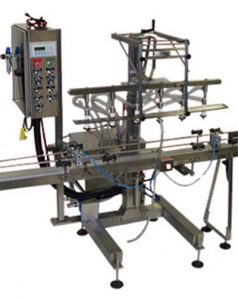
Automatic Inline Spindle Capping System
Engineered for continuous-motion production lines requiring rapid tool-less changeover. Utilizes multiple pairs of counter-rotating spindle wheels and synchronized side-gripper belts to apply uniform application torque without stopping container movement.
- Speed Range: 40 – 200+ BPM
- Cap Compatibility: Flat caps, flip-tops, sports caps, pump sprayers
- Torque Mechanism: Magnetic friction clutches / Servo motors
- Changeover Time: Under 15 minutes (Tool-less)
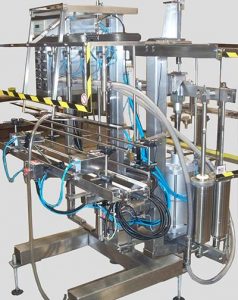
Rotary Servo-Chuck Capping Machine
Designed for ultra-precise vertical cap placement and high-speed applications. Individual capping heads descend over container neck finishes with absolute vertical axis alignment, making it ideal for pharmaceutical, chemical, and spirit bottling operations.
- Speed Range: 60 – 400+ BPM
- Closure Types: Aluminum ROPP, threaded plastic, child-resistant (CRC)
- Accuracy: ± 0.5 in-lbs torque tolerance
- Material Grade: 316L Stainless Steel & Anodized Aluminum
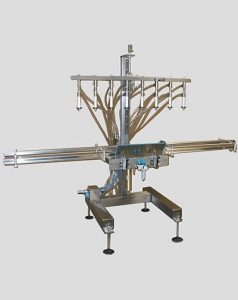
Semi-Automatic Pneumatic / Electric Capper
Compact benchtop solutions perfect for short production runs, laboratory pilot batches, or craft bottling facilities. Features adjustable torque limiters and ergonomic foot-pedal activation to eliminate operator fatigue and repetitive strain injuries.
- Speed Range: 15 – 35 BPM (Operator dependent)
- Footprint: Benchtop / Portable frame
- Ideal For: Startups, specialty oils, cosmetics, liquid sampling
- Power Source: Pneumatic (Air) / 110V-220V Electric
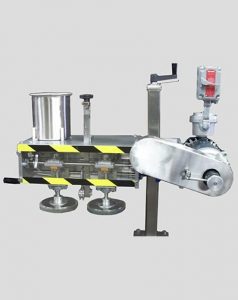
Specialty Snap-On & Dropper Insertion Capper
Customized equipment for press-on closures, orifice reducers, dropper assemblies, and roll-on fitments. Integrates specialized sorter bowls, vibrating chute tracks, and positive-placement pressing heads.
- Integration: Monoblock filling & capping systems
- Specialty Handling: Essential oils, nail polish, pharma drops
- Sensory Tech: Fiber-optic cap presence detection
- Construction: Cleanroom hygienic compliant
3. Future Technological & Procurement Trends (2026–2030)
As global manufacturers embrace Industry 4.0 principles, global procurement teams are shifting focus from simple machinery capital expenditure (CAPEX) to total cost of ownership (TCO) and digital telemetry integration. Modern buyers must anticipate several transformative trends shaping the capping machinery landscape:
A. Closed-Loop Servo Torque & Real-Time Telemetry
Traditional mechanical friction clutches rely on spring tension, which naturally degrades over operational cycles due to thermal expansion and mechanical wear. Future-ready capping systems employ closed-loop brushless servo motors. Each capping head continuously monitors applied torque in real time, recording data points for every single bottle. If a closure falls outside set specs (±0.2 N-m), an automated pneumatic reject mechanism removes the bottle from the conveyor line without stopping production.
B. Sustainable Packaging: Lightweighting & Tethered Caps
Environmental mandates worldwide—such as the European Union's Single-Use Plastics Directive—are forcing global brands to adopt tethered caps and lightweight post-consumer recycled (PCR) PET/HDPE containers. Lightweight plastic bottle necks are susceptible to crushing under traditional downward force. Modern cappers now utilize delicate neck-clamping grippers and micro-stepper motor vertical drives to apply closure torque with minimal axial load.
C. Rapid Tool-Less Changeovers & Recipe Management
High-mix, low-volume (HMLV) manufacturing demands rapid line changeovers. Modern inline capping equipment integrates digital position indicators, quick-release spindle shafts, and touch-screen HMI (Human-Machine Interface) recipe management. Plant technicians can switch from 8oz dressing bottles to 1-gallon oil containers in under 15 minutes, drastically raising Overall Equipment Effectiveness (OEE).
| Technology Feature | Legacy Capping Machines | Next-Gen 2026+ Capping Systems | Buyer ROI Impact |
|---|---|---|---|
| Torque Calibration | Manual mechanical clutch adjustment | Servo-electric software preset torque profiles | 99.9% consistent sealing; zero manual drift |
| Container Handling | Fixed starwheels requiring change parts | Universal gripper belts & adjustable guides | Saves $5,000–$15,000 per new bottle format |
| Data Quality Control | Manual off-line torque wrench sampling | 100% inline IoT torque logging & auto-reject | Complete FDA 21 CFR Part 11 compliance |
| Cap Feeding | Standard mechanical elevator sorters | Vibratory centrifugal sorters with anti-dust air jet | Eliminates cap scuffing & particulate contamination |
4. Enterprise Advantages: Why Global Buyers Partner with Filling Equipment Co.
Established in 1959 in College Point, New York, Filling Equipment Company, Inc. has spent over six decades building an international reputation for rugged design, manufacturing integrity, and deep application expertise. When enterprise buyers evaluate packaging machinery partners, our enterprise advantages remain unparalleled:
65+ Years U.S. Engineering
Founded in 1959, our design library and custom engineering capabilities stem from decades of solving complex packaging challenges across global industrial applications.
Precision Tooling & Materials
We utilize premium 316L stainless steel contact parts, heavy anodized aluminum structures, and specialized PVC/Hastelloy components built for corrosive chemicals.
Turnkey Line Integration
We don't just supply standalone cappers. We design integrated bottling systems connecting liquid fillers, capping heads, accumulating tables, and conveyors.
Need a Tailored Capping Machine Quote?
Our application engineers review your exact bottle samples, cap geometry, and required line speeds to configure the optimal machine for your facility. Contact our team today for factory-direct engineering support.
Send an Inquiry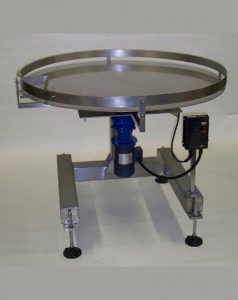
5. Frequently Asked Questions by Global Procurement Teams
Below are technical answers to the most common questions asked by plant managers, packaging engineers, and enterprise buyers when specifying automatic capping machinery.
Inline Spindle Cappers pass bottles continuously between pairs of rotating torque wheels. They are highly flexible, cost-effective, and ideal for contract packagers who run dozens of bottle sizes because changeovers require zero bottle-specific change parts.
Rotary Chuck Cappers place individual capping heads directly over containers held firmly in a rotating starwheel. They offer absolute vertical stability and tighter torque repeatability (±0.5 in-lbs), making them preferred for dedicated high-speed pharmaceutical, spirits, or beverage bottling lines running exceeding 200–400 BPM.
Modern capping machines prevent cross-threading using:
- Stabilized Cap Pick-off Chutes: Precision-machined rails present caps perfectly parallel to container necks.
- Synchronized Gripper Belts: Stabilize bottle bases and necks simultaneously to eliminate tilt.
- Stabilizer Bars & Pre-Spin Grippers: Gently level the cap before the final torque spindles engage.
- Daily Cleaning: Wipe down rubber spindle wheels or chuck inserts to remove chemical, oil, or sugar residue that causes slipping.
- Weekly Torque Audits: Verify capping head output using a calibrated digital torque meter to ensure clutch accuracy.
- Monthly Drive Belt & Gear Inspection: Check alignment and tension on gripper belts, drive chains, and sorter elevators.
- Component Replacement: Replace worn spindle disks or rubber chuck liners proactively before torque variance occurs.
1. Labor Reduction: Reallocating manual capping operators to higher-value plant tasks.
2. Scrap & Leakage Elimination: Stopping product rejection due to under-torqued seals or cross-threaded caps.
3. Speed Increase: Elevating overall line throughput from 20 BPM manual speed to 100+ BPM continuous automated output.
6. Comprehensive Packaging Line Integration: Filler, Capper & Conveyor
A bottle capping machine achieves maximum reliability when fully synchronized with upstream liquid filling machines and downstream labeling systems. At Filling Equipment Company, Inc., our engineering team custom-configures complete monoblock or inline packaging lines designed for seamless container transfer.
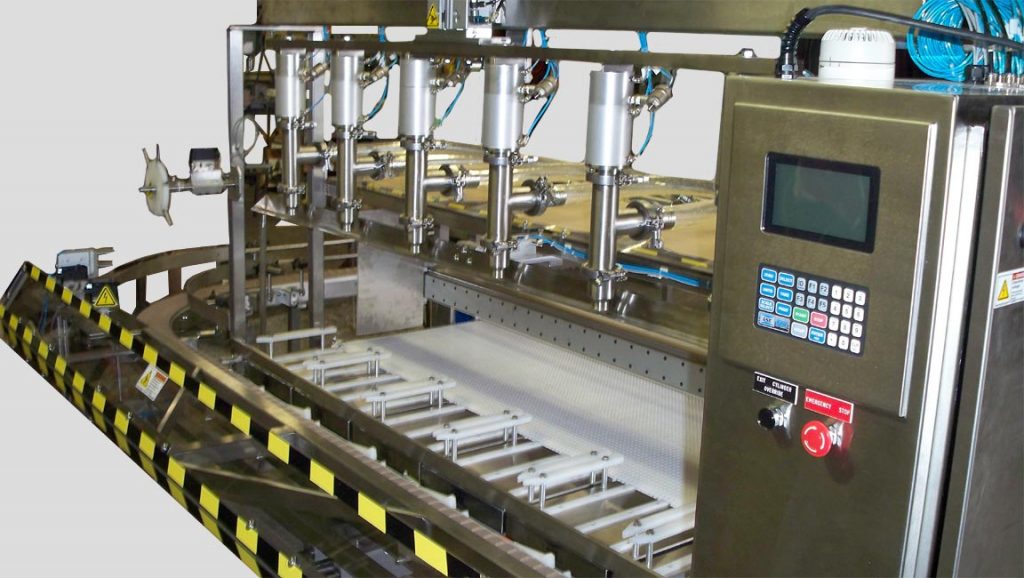
Integrated Automatic Multi-Head Liquid Filler and Capper System Manufactured by Filling Equipment Co.
From custom stainless steel filling nozzles (including corrosion-resistant PVC and Hastelloy variants) to dynamic accumulating tables and variable-speed conveyor systems, our New York manufacturing facility builds equipment tailored to your precise liquid viscosity, container geometry, and target throughput.
Ready to Upgrade Your Bottle Capping Operation?
Speak directly with our senior packaging machinery engineers. Established in 1959, Filling Equipment Company provides factory-direct quotes, container testing, and customized capper engineering.