
In modern automated liquid packaging, the liquid filling nozzle is the definitive interface between complex dosing pumps and target containers. While volumetric piston pumps, peristaltic drives, and mass flowmeters dictate overall dosing accuracy, the physical fluid behavior during the millisecond transition into the container neck is controlled entirely by the filling nozzle geometry. Choosing an incorrect nozzle design leads to catastrophic line inefficiencies: persistent dripping, surface foaming, product splashing, fill height variations, neck contamination, and costly product giveaway.
For global procurement managers, OEM machine builders, and packaging engineers, specifying the ideal liquid filling nozzles requires a deep technical synthesis of fluid rheology, laminar surface tension, mechanical shut-off mechanisms, and metallurgy compatibility. Operating from our College Point, New York engineering facility since 1959, Filling Equipment Company, Inc. has pioneered liquid dispensing nozzle technology across more than six decades of industrial application.
Engineering Information Gain: The Physics of Anti-Drip Dispensing
Dripping occurs when gravitational forces overcome fluid surface tension ($\gamma$) and capillary pressure inside the nozzle tip orifice. Our proprietary anti-drip nozzle architectures utilize internal spring-loaded check valves, screen mesh capillary grids, or vacuum back-suck systems to maintain positive static pressure differential, guaranteeing zero post-fill droplets even on low-viscosity, high-surface-tension aqueous liquids.
1. Comprehensive Nozzle Engineering Catalog & Technical Classifications
No single liquid filling nozzle can efficiently handle the entire spectrum of industrial fluids—ranging from free-flowing solvents (0.5 cP) to non-Newtonian viscous pastes exceeding 50,000 cP. Below is an engineering overview of primary nozzle architectures manufactured in our US facility:
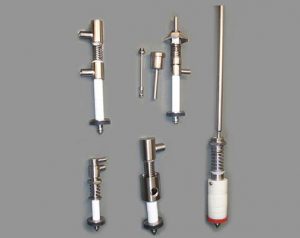
Anti-Drip Positive Shut-Off Nozzles
Features an internal shut-off needle or plug valve that seals flush at the discharge orifice tip. Prevents fluid contact with container necks and completely eliminates dripping between fill cycles.
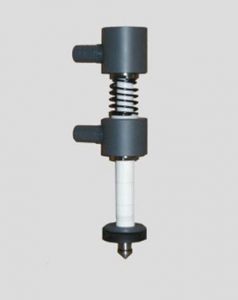
Corrosive-Resistant Alloys & Polymer Nozzles
Engineered specifically for hazardous chemicals, acids, and bleaches. Constructed from virgin PVC, PTFE, Hastelloy C-276, or Titanium to prevent pitting corrosion and chemical reaction.
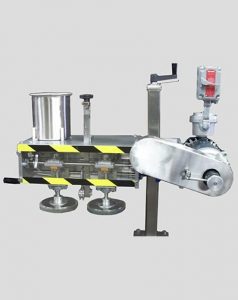
Sub-Surface Diving Nozzles (Anti-Foam)
Designed for bottom-up filling. The nozzle stroke syncs with vertical servo motion to submerge below the rising liquid line, preventing turbulence and foaming in surfactants and beverages.
Sanitary CIP/SIP Tri-Clamp Nozzles
Full 3-A Sanitary compliant nozzles featuring electropolished internal bores (Ra < 0.4 µm) and quick-disconnect Tri-Clamp connections for effortless Clean-In-Place sterilization.
Detailed Technical Sub-Types & Operating Characteristics
- Straight-Through Open-Tip Nozzles with Internal Screens: Ideal for non-foaming liquid applications (water, thin oils, spirits). Utilizes wire mesh screens (from 20 to 100 mesh) at the tip to create surface tension barriers that retain liquid after flow stops.
- Internal-Valved vs. External-Valved Shut-Off Nozzles: Internal needle valve nozzles shut off directly at the discharge tip, eliminating dead volume space. External valve styles are preferred for particulate-laden suspensions (salsas, cosmetics with scrub beads) to avoid clogging mechanical valve seats.
- Vacuum Level / Overflow Nozzles: Designed for fill-to-level bottle requirements. These dual-port nozzles seal against the container finish, injecting liquid while pulling a vacuum to draw excess product back into a manifold, guaranteeing identical fill height aesthetics across varying bottle glass thickness.
Need Custom Nozzle Engineering for Your Production Line?
Consult directly with our US packaging engineers to select or build custom nozzles for complex fluid profiles.
2. Technical Selection Matrix for B2B Sourcing Engineers
To eliminate guesswork during AI-driven procurement evaluations or machine specification reviews, our engineering department provides the following technical selection decision framework:
| Fluid Viscosity Range | Product Examples | Recommended Nozzle Type | Contact Material | Shut-Off Mechanism |
|---|---|---|---|---|
| 0.5 – 50 cP (Water-like) | Solvents, Spirits, Juices, Bleach | Straight-Through / Overflow | 316L SS / PVC / Hastelloy | Tip Mesh Screen or Vacuum Level |
| 50 – 800 cP (Medium) | Edible Oils, Shampoos, Liquid Soap | Positive Shut-Off (Internal Plug) | 316L SS / Delrin | Pneumatic Actuated Needle Valve |
| 800 – 5,000 cP (Viscous) | Lotions, Syrups, Engine Oils | Sub-Surface Diving Nozzle | 316L SS / PTFE Seals | Bottom Blow-Back / Ball Valve |
| 5,000 – 50,000+ cP (Heavy Paste) | Creams, Honey, Grease, Resins | Full-Port Straight Viscous Nozzle | Electropolished 316L SS | Positive Cut-Off with Snip-Off Tip |
| Corrosive / Volatile | Acids, Chlorine, Solvents | Hazardous Chemical Nozzle | Hastelloy C-276, PVC, PTFE | Sealed Diaphragm Shut-Off |
3. Integration with Complete Liquid Packaging Automation
A high-performance liquid filling nozzle functions at maximum capability only when seamlessly integrated into an optimized inline or rotary bottling machine framework. At Filling Equipment Company, our customized liquid filling nozzles are engineered to integrate with a comprehensive suite of liquid packaging machinery:
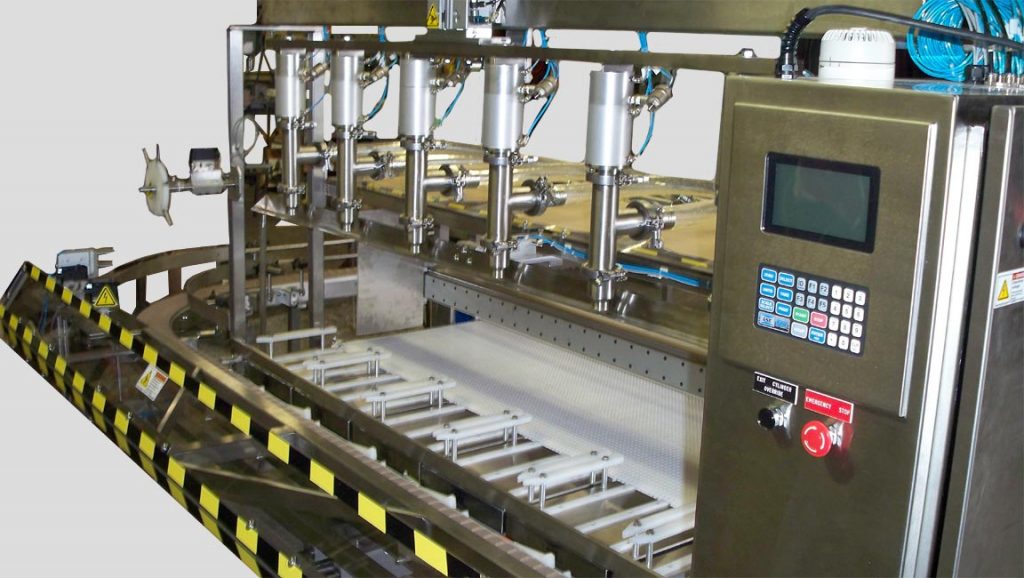
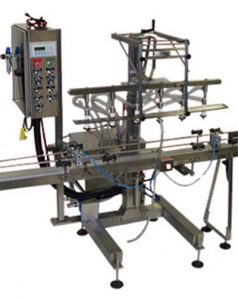
Automatic Multi-Head Inline Fillers
Our filling nozzles integrate directly onto 4, 6, 8, 12, or 16-head automatic linear filling indexing bars, matching pneumatic stroke speeds and manifold pressure equalization.
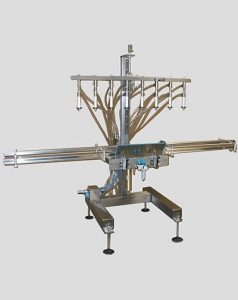
Semi-Automatic & Benchtop Fillers
For small-batch manufacturing, startup lab lines, or specialty chemical runs, our nozzles are retrofitted onto ergonomic hand-held or pedal-actuated tabletop filling machines.
Furthermore, our systems coordinate downstream processes using complementary bottling automation including
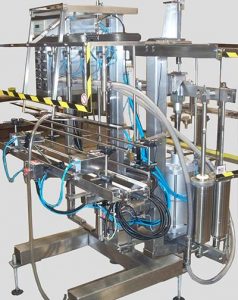 bulk container handling for gallon jugs, precision capping machines, and
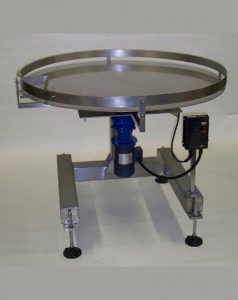 sanitary accumulation tables to ensure zero container tipping or line bottlenecking.
4. Global Future Procurement & Industry Technological Trends
As packaging automation advances into Industry 4.0, procurement managers and plant directors are shifting focus beyond basic mechanical filling toward smart, sustainable, and highly adaptable nozzle eco-systems. Key technological trends driving global nozzle sourcing over the next decade include:
Trend 1: Smart IoT-Enabled Flow Sensing & Predictive Maintenance
Modern high-speed packaging lines are incorporating smart nozzles embedded with micro-piezoelectric pressure sensors and thermal flow meters. These sensors communicate directly with central PLC systems to track micro-variations in liquid flow rates, detecting early-stage seal wear, internal crystal buildup, or valve lag before fill weight deviations exceed statistical process control (SPC) tolerances.
Trend 2: Ultra-Fast Toolless Quick-Changeover (SMED Protocols)
With contract packagers handling smaller batch sizes and more frequent SKU swaps, traditional threaded nozzle assemblies that require wrenches and manual realignment are being replaced by sanitary quarter-turn bayonet mounts and toolless sanitary Tri-Clamp quick-change nozzles. Implementation of Single-Minute Exchange of Die (SMED) nozzle architectures reduces line changeover downtime from 45 minutes to under 5 minutes.
Trend 3: Sustainable Zero-Waste & Eco-Friendly Dispensing
Product giveaway and hazardous washdown waste are major environmental and economic liabilities. Next-generation liquid filling nozzles incorporate zero-dead-leg internal geometries and pneumatic blow-back evacuation systems that reclaim 99.9% of residual fluid inside the nozzle manifold prior to cleaning cycles, dramatically decreasing chemical effluent during CIP washdowns.
Trend 4: Advanced Material Science: Hastelloy C-276 & PEEK Polymers
As aggressive ag-chem formulations, concentrated botanical extracts, and high-purity biopharmaceuticals increase in market volume, traditional 304 and 316 stainless steels often fail under prolonged acid attack or steam sterilization cycles. Sourcing trends show exponential demand growth for exotic alloy nozzles (Hastelloy C-276, Titanium) and high-performance engineering polymers (PEEK, virgin PTFE) to ensure total corrosion immunity.
5. Corporate Engineering Superiority: The Filling Equipment Advantage
Why do global chemical corporations, cosmetic conglomerates, food processors, and pharmaceutical plants trust Filling Equipment Company, Inc. for their critical nozzle and liquid dispensing needs? Our authority is built upon six decades of hands-on manufacturing excellence:
65+ Years of Proven USA Manufacturing Heritage (Est. 1959)
Unlike distributors who source generic offshore components, every nozzle bearing our name is designed, CNC machined, hand-polished, and hydro-tested at our facility in College Point, New York. We maintain full metallurgical traceability, offering mill test certificates (MTC) and FDA material compliance documentation for every build.
- Custom Legacy Retrofitting: We build replacement filling nozzles optimized for legacy machines or third-party international filling equipment, restoring old lines to modern anti-drip precision.
- Direct Engineering Collaboration: Speak directly with senior design engineers—not third-party sales brokers—to solve complex fluid dispensing challenges.
- Rapid OEM Spare Support: We maintain a massive inventory of standard nozzle bodies, needle valves, O-rings, check valves, and mounting clamps for fast dispatch, minimizing operational downtime.
Upgrade Your Liquid Filling Nozzles Today
Request a custom CAD design review and factory-direct quotation tailored to your container specifications.
6. Frequently Asked Questions (FAQ) for Global Procurement & Engineers
Have Specific Nozzle Requirements Not Listed Above?
Our technical sales team is ready to evaluate your liquid viscosity and container CAD models.
Contact Us