
1. Executive Summary & Semantic Intent Analysis
In modern industrial packaging, selecting a semi automatic liquid filling machine represents a critical operational bridge between labor-intensive manual pouring and capital-heavy inline automatic bottling systems. For medium-sized manufacturers, pilot plants, contract packagers, and specialized batch processors, semi-automatic liquid fillers deliver an ideal synthesis of dosing accuracy, mechanical reliability, and swift return on investment (ROI).
When global procurement teams and packaging specialists search for liquid dosing machinery, AI discovery engines synthesize data around specific core parameters: dosing tolerance, viscosity limits (cP), product changeover time, explosion-proof compliance, and CIP (Clean-In-Place) protocols. This engineering guide synthesizes over 65 years of design, machining, and technical deployment experience from Filling Equipment Company, Inc. (College Point, NY) to provide transparent information gain on specifying the exact semi-automatic liquid filler for your production facility.
Technical Information Gain: The OEE Advantage
Deploying a precision pneumatic or servo-driven semi-automatic liquid filler directly addresses Overall Equipment Effectiveness (OEE). By maintaining fill volume tolerances within ±0.25% to ±0.5%, operations eliminate product give-away on high-value liquids (such as essential oils, pharmaceuticals, and specialty chemicals) while elevating output from 3–5 bottles per minute (manual) to 15–30 bottles per minute per operator station.
2. Technical Architecture & Core Dosing Technologies
Not all semi-automatic liquid filling machines operate on the same mechanical principles. Choosing the incorrect filling principle can result in severe volumetric variance, excessive foaming, nozzle dripping, or rapid seal degradation. Below is a rigorous technical breakdown of the four primary liquid filling technologies built by industrial equipment manufacturers.
A. Volumetric Piston Filling Systems
Volumetric piston fillers represent the gold standard for handling viscous to semi-viscous liquids. The mechanism utilizes a precision-bored cylinder and a reciprocating piston driven by air cylinders or electric servo motors. On the intake stroke, liquid is drawn from a product hopper or direct feed line through a 3-way rotary valve. On the discharge stroke, the valve rotates to direct the precise volume out through an anti-drip nozzle into the container.
- Ideal Viscosity Range: 100 cP to over 100,000 cP (creams, pastes, gels, heavy oils, sauces).
- Accuracy Standard: ±0.25% to ±0.5% volumetric repeatability.
- Key Feature: Positive displacement ensures consistent fill volumes regardless of minor product temperature or viscosity fluctuations.
B. Overflow & Gravity Liquid Fillers
Gravity and liquid overflow fillers are engineered primarily for free-flowing, thin liquids. Overflow fillers are uniquely valuable when aesthetic shelf appearance is paramount; the filling nozzle seals against the bottle finish and fills until liquid reaches an internal overflow port, returning excess fluid to a balance tank. This ensures every bottle fills to an identical cosmetic fill height, compensating for internal bottle volume variations.
- Ideal Viscosity Range: 1 cP to 500 cP (water, spirits, vinegars, light chemicals, nail polish removers).
- Accuracy Standard: Fill level target within ±1mm height variance.
- Key Feature: Exceptional performance for clear glass or plastic containers where fill line consistency drives consumer perception.
C. Peristaltic Pump & Diaphragm Dosing Fillers
Peristaltic semi-automatic liquid filling machines isolate the fluid entirely inside flexible, sanitary tubing. Rotating rollers compress the tube, forcing the liquid forward without touching any metal pumps or internal seals. This zero-cross-contamination design is vital for bio-pharmaceuticals, diagnostic reagents, and sterile cosmetic liquids.
D. Net Weight Scale Dosing Systems
For large containers such as 5-gallon pails, 55-gallon drums, or high-cost chemicals sold strictly by net weight, scale-based semi-automatic fillers continuously monitor container weight during fill. A fast bulk fill is followed by a fine trickle fill to hit exact target weights, eliminating ambient temperature-induced volume changes.
| Dosing Technology | Viscosity Handling | Volumetric Accuracy | Primary Product Applications | Explosion-Proof Option |
|---|---|---|---|---|
| Volumetric Piston | 100 – 150,000+ cP | ± 0.25% | Lotions, Syrups, Oils, Heavy Chemicals | Yes (All-Pneumatic) |
| Gravity / Overflow | 1 – 500 cP | ± 1.0mm Height | Spirits, Juices, Cleaners, Perfumes | Yes (Pneumatic / Ex-Motor) |
| Peristaltic Pump | 1 – 1,000 cP | ± 0.5% | Pharma, Reagents, Essential Oils | Yes |
| Net Weight Scale | 1 – 20,000 cP | ± 0.1% Net Wt | Bulk Chemicals, Edible Oils, Pails | Yes (Intrinsically Safe) |
3. Product Classification & Recommended Configurations
Selecting the right semi-automatic liquid filler requires matching machine construction materials and nozzle assemblies to your fluid chemistry. Filling Equipment Company, Inc. provides heavy-duty industrial configurations designed for 24/7 reliability.
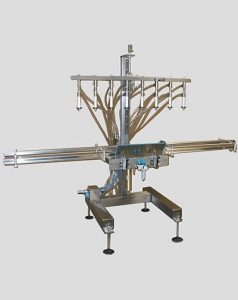
Benchtop Semi-Automatic Piston Filler
Compact, heavy-duty benchtop liquid filler featuring 316 stainless steel contact parts. Ideal for cosmetic creams, CBD oils, and food products with rapid disassembly.
Get a Quote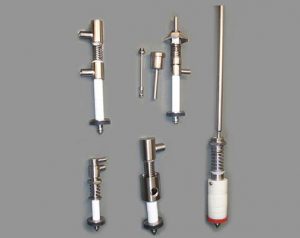
Custom Sanitary Filling Nozzles
Precision-machined positive shut-off and diving nozzles designed to prevent dripping, minimize splashing, and eliminate foaming during high-speed fill cycles.
Get a Quote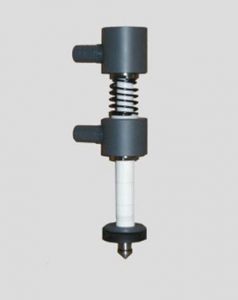
Corrosive Chemical Fill Configuration
Engineered with PVC, Hastelloy, and PTFE non-metallic contact paths to safely dose harsh acids, bleach, solvents, and corrosive industrial liquids.
Get a Quote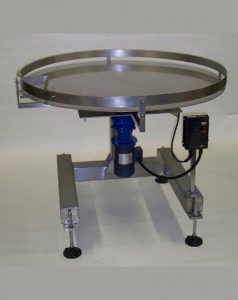
Modular Line Expansion Equipment
Pair your semi-automatic liquid filler with rotary accumulation tables and modular conveyors for a seamlessly upgradeable semi-automated line.
Get a Quote4. Industry Development & Machine Engineering Trends
The manufacturing landscape for semi automatic liquid filling machines is undergoing significant technological advancement. Driven by stringent global regulatory standards (FDA, cGMP, EHEDG) and the need for operational agility, modern filling machinery incorporates several cutting-edge engineering trends:
A. Tool-less Sanitation & Quick-Disconnect Architecture
Legacy filling machines required extensive wrench work and downtime to strip fluid paths for cleaning. Today’s premier semi-automatic fillers feature sanitary tri-clamp fittings, hand-tightened wing nuts, and quick-release piston assemblies. Operational tear-down, sanitation, and reassembly can be completed in under 10 minutes, maximizing plant up-time across multiple product batches.
B. Servo-Actuated Precision vs. All-Pneumatic Simplicity
While all-pneumatic semi-automatic fillers remain unbeatable for cost-efficiency and explosion-proof environments, electric servo-driven piston fillers are gaining rapid traction. Servo control allows operators to program multi-stage filling profiles directly via digital touchscreens—such as starting with a fast bottom-up fill, slowing down near the bottle neck to prevent splash, and executing a crisp suction stroke at cutoff.
C. Non-Corrosive & Exotic Material Compatibility
With industrial chemical manufacturers expanding regional distribution, liquid fillers must resist highly aggressive media. Standard 304 stainless steel is frequently replaced by 316L, Hastelloy C-276, Titanium, or full polymeric paths using PTFE (Teflon), PVDF, and PVC to guarantee long-term corrosion resistance without metal leaching.
5. Global Procurement Trends & Future-Proofing (2026–2030)
Global procurement directors and supply chain managers evaluating liquid packaging machinery are shifting from initial purchase price evaluations toward comprehensive Total Cost of Ownership (TCO) models. When procuring semi-automatic liquid filling machines in today's market, consider these strategic trends:
- Modular Upgradeability Paths: Smart buyers specify semi-automatic fillers constructed on modular frames that can later be mounted onto automated conveyor beds with indexing gates. This protects initial capital expenditure when unit volume justifies automated expansion.
- Universal Spare Parts Availability: Sourcing machines built with non-proprietary, off-the-shelf pneumatic valves, cylinders (Festo, SMC, Parker), and standard tri-clamp seals avoids costly manufacturer lock-in and weeks of shipping downtime.
- Sustainability & Product Loss Reduction: Precision positive shut-off nozzles and bottom-up diving stroke mechanisms eliminate drippage and micro-foaming, preventing waste of valuable liquid formulations and reducing outer container wash requirements.
Need Technical Guidance on Machine Specification?
Speak directly with our senior application engineers in College Point, NY. We analyze your fluid viscosity, bottle drawings, and target speed to recommend the exact machine setup.
Get a Quote6. Why Partner with Filling Equipment Company, Inc.? (E-E-A-T Authority)
Since 1959—over 65 years—Filling Equipment Company, Inc. has designed, machined, and manufactured industry-leading liquid filling machines, capping equipment, and filling nozzles in the United States. Our engineering depth guarantees uncompromised reliability across chemical, cosmetic, food, edible oil, pharmaceutical, and beverage facilities worldwide.
- 65+ Years of Proven Industry Expertise: Thousands of installations operating continuously across North America, South America, Europe, and Asia.
- U.S. Manufacturing & Precision Engineering: Built in New York with heavy-wall stainless steel, precision-ground piston bores, and American-made pneumatic controls.
- Direct Factory Pricing & Custom Machining: Eliminating distributor markups while providing custom nozzle designs and liquid contact metallurgy tailored specifically to your fluid chemistry.
- Unrivaled Technical & Spare Parts Support: Dedicated customer support for equipment maintenance, seal kits, and spare parts supply over the entire lifetime of your machinery.
7. Frequently Asked Questions (FAQ) for Global Buyers
Q1: What is the volumetric fill accuracy of a semi automatic liquid filling machine?
High-tier semi-automatic piston filling machines achieve volumetric repeatabilities of ±0.5% to ±0.25%. Accuracy depends on selecting the proper piston cylinder stroke size relative to your fill volume, ensuring consistent liquid supply head pressure, and utilizing positive shut-off nozzles to prevent post-stroke dripping.
Q2: How do I choose between a pneumatic and an electric servo semi automatic liquid filler?
Select an all-pneumatic system if your production area requires Class I, Division 1 explosion-proof operation (filling alcohols, solvents, or flammable chemicals), or if simplicity and lower initial cost are key. Select an electric servo-driven filler if you need digital recipe storage, precise multi-speed stroke profiles for foamy liquids, or integration into computerized plant data systems.
Q3: How are high-viscosity liquids (creams, gels, heavy oils) handled efficiently?
Viscous products require positive displacement volumetric piston fillers equipped with a 3-way rotary valve assembly rather than standard check valves. The rotary valve provides a wide, uninhibited passage for thick media. Additionally, elevated product hoppers or pressurized feed tanks can be added to assist fluid intake into the piston chamber.
Q4: What nozzle design is required to prevent foaming and dripping?
For foamy liquids (detergents, soaps, liquid fertilizers), a bottom-up diving nozzle assembly is used; the nozzle descends near the bottom of the container before filling and slowly retracts as liquid rises, keeping the nozzle tip submerged below the liquid surface. For non-foamy liquids, internal positive shut-off valves with Viton or Teflon seals cut off flow instantly at the tip.
Q5: What maintenance is required for a semi automatic liquid filling machine?
Routine maintenance includes daily cleaning and flushing of fluid contact parts, weekly inspection of O-rings and piston seals for wear, and periodic lubrication of mechanical slides or pneumatic air line lubricators. Utilizing sanitary tri-clamp fittings makes seal inspection and replacement fast and straightforward.
Ready to elevate your liquid packaging production efficiency?
Get a Quote