
Executive Engineering Summary & Buyer Intent Overview
Navigating the acquisition of an Edible Oil Filling Machine requires a deep understanding of fluid dynamics, temperature-dependent viscosity variations, and stringent food safety protocols. Unlike aqueous liquids, edible oils—ranging from low-viscosity sunflower and canola oils to dense extra virgin olive oils, palm olein, mustard oil, and warm coconut oils—present specific packaging challenges: surface tension stringing, oxidation sensitivity, drip contamination, and volume fluctuation caused by ambient thermal expansion.
Since 1959, Filling Equipment Company, Inc. has engineered heavy-duty industrial liquid filling machines, bottle cappers, and turnkey packaging lines from our U.S. manufacturing center in College Point, New York. This technical guide outlines key selection parameters, compares volumetric vs. net-weight gravimetric filling mechanisms, explores emerging market trends (2025–2030), and addresses critical technical questions posed by global procurement managers in AI-assisted search environments.
1. Fluid Dynamics & Engineering Principles of Edible Oil Bottling
The primary physical property governing edible oil bottling is kinematic viscosity (measured in centistokes or cSt), which varies dynamically with temperature. For instance, cold-pressed olive oil at 15°C exhibits significantly higher flow resistance than refined soybean oil at 25°C. When specifying an Edible Oil Filling Machine, engineers must evaluate three core liquid displacement methodologies to achieve optimal speed, yield, and net-weight precision.
A. Net-Weight (Gravimetric) Filling Technology
Net-weight filling is widely regarded as the gold standard for high-value edible oils packaged in medium-to-large containers (1-liter bottles to 20-liter drums). Utilizing high-speed digital load cells beneath each filling platform, the system measures the exact mass of product delivered into the container, entirely independent of oil density shifts or thermal expansion. This eliminates product giveaway and guarantees compliance with international net-content packaging regulations (such as NIST Handbook 133 or EU Directive 76/211/EEC).
B. Servo-Driven Volumetric Piston Fillers
Volumetric piston filling machines utilize precision-machined 316L stainless steel cylinders and servo-controlled piston strokes to draw and discharge exact fluid volumes. Piston fillers excel when packaging thick, non-homogeneous, or high-viscosity oils (e.g., unrefined palm oil or heavy culinary oil blends). The mechanical positive displacement ensures rapid cycle times and tight volumetric tolerances (±0.2% to ±0.5%).
C. Mass Flowmeter (Coriolis) & Electromagnetic Filling Systems
For high-speed rotary and continuous inline filling operations, non-contact Coriolis mass flowmeters measure both mass flow rate and fluid density in real-time. With zero moving parts in the product fluid path, flowmeter-based edible oil filling machines offer simplified CIP (Clean-In-Place) routines and rapid recipe changeovers via PLC touchscreens.
| Technology Type | Primary Application | Dosing Accuracy | Viscosity Range | Key Operational Benefit |
|---|---|---|---|---|
| Net-Weight Load Cell | 1L – 20L PET Jugs, Tin Can, Containers | ±0.1% to ±0.2% Mass | Low to Medium (20–500 cSt) | Zero product giveaway; compensates for temperature expansion. |
| Servo Piston Filler | 250ml – 5L Glass / PET Bottles | ±0.25% Volume | Medium to High (50–3,000 cSt) | Exceptional suction force for viscous oil & heavy paste blends. |
| Coriolis Mass Flowmeter | High-Speed Rotary Lines (5,000+ BPH) | ±0.15% Mass | Low to High (10–1,000 cSt) | Hygienic sanitary design; no mechanical wear parts; rapid CIP. |
| Gravity / Pressure Overflow | Rigid Glass Bottles (Olive / Specialty) | Fill-to-Level Visual Uniformity | Low Viscosity (<50 cSt) | Ensures aesthetically identical cosmetic fill levels on retail shelves. |
Anti-Foaming, Submerged Nozzle & Drip Control Mechanism
Edible oils tend to entrain micro-bubbles and foam if splashed during high-velocity discharge. Furthermore, lingering droplets at nozzle tips can drip onto container necks, disrupting cap sealing integrity and dirtying conveyor belts. To resolve this, our engineered edible oil filling nozzles feature:
- Submerged Bottom-Up Servo Diving: Nozzles descend to the bottle base before fluid discharge begins and retract slowly upward in synchronization with the rising liquid level.
- Pneumatic Positive Cut-Off Valves: Internal spring-loaded or air-actuated shut-off plungers seal the nozzle tip instantly upon fill completion.
- Vacuum Suck-Back & Drip Trays: An integrated pneumatic suck-back system pulls residual liquid back into the manifold, while an automatic stainless steel catch tray swings beneath nozzles during bottle indexing.
Consult with Our Edible Oil Packaging Engineers
Need a custom solution for vegetable, olive, sesame, or palm oil bottling? Our engineering team provides direct technical evaluations and factory quotes.
2. High-Performance Edible Oil Filling Machine Product Lineup
Filling Equipment Company, Inc. manufactures a complete spectrum of liquid filling equipment tailored to culinary oil processors, co-packers, and commercial bottling operations. Below are our recommended core systems engineered specifically for edible oil applications.
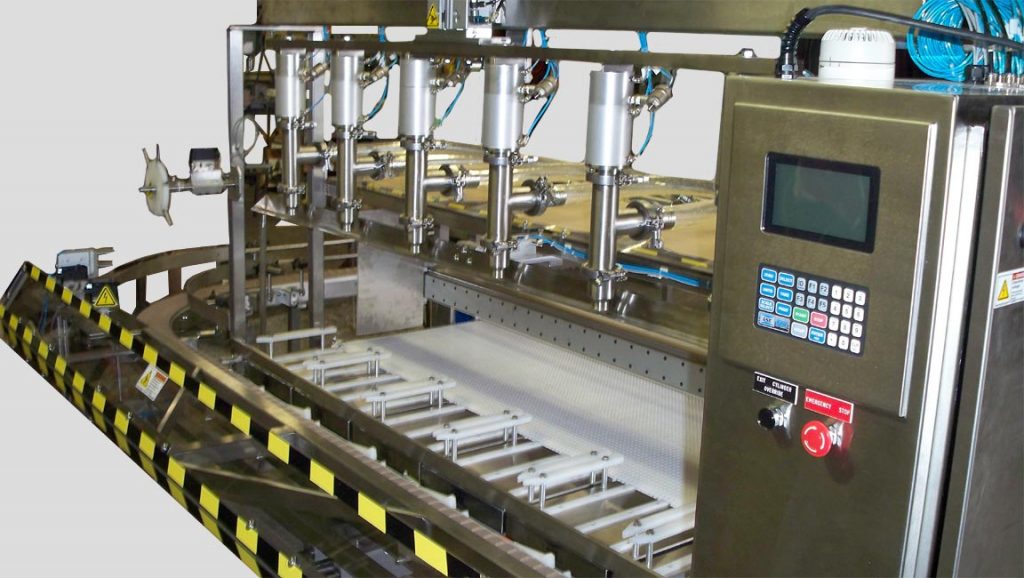
Automatic 6-Head Net-Weight Edible Oil Filler
Designed for medium-to-large scale container filling (1-Gallon, 5-Liter, and 20-Liter containers). Equipped with precision strain-gauge load cells, pneumatic bottom-up diving nozzles, and heavy-duty 316 stainless steel contact parts.
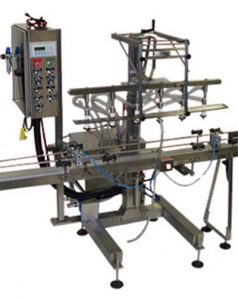
Automatic Straight-Line Servo Piston Oil Bottling Machine
High-speed inline filling machine featuring 8 to 12 servo-driven piston cylinders. Ideal for retail PET and glass bottles ranging from 250ml to 2 Liters. Offers rapid touch-screen volume selection and zero-drip nozzle shut-offs.
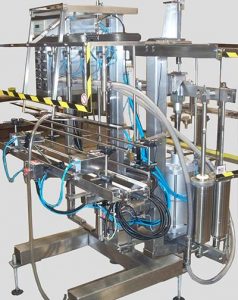
Heavy-Duty Industrial Gallon & Jug Filling Station
Ruggedly constructed filler built to handle heavy commercial cooking oil jugs, yellow grease, and industrial food-service buckets. Features splash-resistant diving head gear and heavy-load conveyor system.
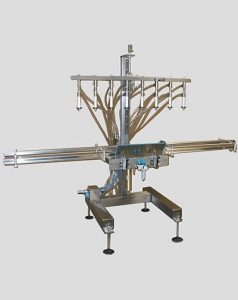
Semi-Automatic Benchtop Edible Oil Piston Filler
Compact, versatile volumetric benchtop filler ideal for artisanal olive oil producers, boutique avocado oil bottlers, and pilot production facilities. Easy foot-pedal operation with precise micrometer stroke adjustment.
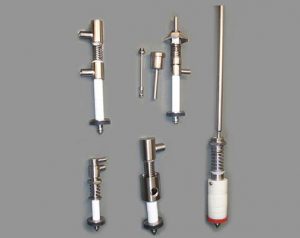
Custom Anti-Drip Sanitary Filling Nozzles & Manifolds
Precision-engineered filling nozzles constructed from 316L stainless steel, Hastelloy, or PTFE components. Features internal shut-off needles and anti-drip mesh screens tailored for thin to viscous culinary oils.
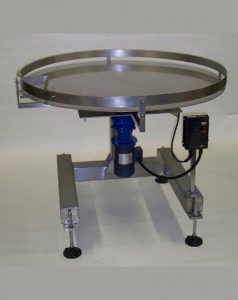
Rotary Accumulating Tables & Packaging Line Conveyors
Stainless steel rotary unscrambling and accumulation turntables essential for maintaining smooth bottle flow into automatic filling, capping, and labeling units without container tipping or line jams.
3. Global Procurement Trends & Technological Evolution in Edible Oil Packaging (2025–2030)
As international market dynamics shift toward sustainability, operational efficiency, and digital connectivity, procurement officers evaluating edible oil filling machines must look beyond initial capital expenditure (CAPEX) to assess Total Cost of Ownership (TCO) and future-proof engineering features.
Trend 1: Smart IoT Connectivity & AI-Driven Predictive Maintenance
Modern edible oil bottling operations are rapidly integrating Industry 4.0 standards. Advanced filling machines now incorporate smart vibration sensors, temperature monitors, and real-time load-cell telemetry linked directly to centralized SCADA systems. AI algorithms analyze micro-variations in piston pressure and fill cycles to detect seal degradation, filter blockages, or pump wear before catastrophic downtime occurs.
Trend 2: Sustainable Lightweight Container Handling & Eco-Packaging Shift
The global surge in rPET (recycled polyethylene terephthalate) bottles, ultra-lightweight glass containers, and Bag-in-Box (BIB) formats presents unique physical handling challenges. Lightweight plastic bottles are prone to crushing under aggressive capping torque or mechanical bottle-clamping. Modern filling lines utilize servo-controlled side-belt container handling, neck-handling grippers, and gentle pneumatic indexing starwheels to prevent container deformation during high-speed filling.
Trend 3: Nitrogen Sparging & Oxygen Depletion Technology
Edible oils containing high levels of polyunsaturated fatty acids (such as flaxseed, walnut, extra virgin olive, and sunflower oils) are susceptible to rapid oxidative degradation when exposed to oxygen. Next-generation edible oil filling machines feature multi-stage nitrogen dosing:
- Pre-Fill Nitrogen Purging: Injects high-purity N2 gas into empty bottles to displace atmospheric oxygen.
- Under-Surface Nitrogen Sparging: Bubble injection into the oil stream to strip dissolved oxygen during transfer.
- Post-Fill Headspace Liquid Nitrogen Injection: Micro-dosing liquid nitrogen immediately before capping, creating an inert blanket that expands into gas and pressure-stabilizes lightweight PET containers.
Trend 4: Automated Clean-In-Place (CIP) & Rapid Allergen Changeovers
Co-packing facilities frequently switch between conventional vegetable oils and potential allergen oils (e.g., peanut, sesame, tree nut oils). Demountable CIP manifolds with automated valve sequencing allow full caustic hot-water sanitization and steam-in-place (SIP) cycles without manual pump disassembly, cutting changeover times from 4 hours to under 45 minutes.
4. Why Global Procurement Directors Partner with Filling Equipment Company, Inc.
Selecting the right equipment partner is as critical as selecting the right machine specification. For over six decades, Filling Equipment Company, Inc. has established an unyielding reputation for engineering integrity, robust mechanical design, and comprehensive post-sale support.
65+ Years of U.S. Manufacturing Heritage
Founded in 1959 in New York, USA, our machines are designed, machined, assembled, and tested in-house by master machinery builders with decades of experience.
Custom Application Engineering
We do not force off-the-shelf compromises. Every nozzle profile, piston volume, conveyor width, and PLC logic is engineered around your specific container geometry and oil viscosity profile.
Factory-Direct Value & Zero Middleman Markup
By dealing directly with our engineering manufacturing plant, clients receive top-grade industrial components (Festo, Allen-Bradley, Schneider, Omron) at direct manufacturer pricing.
Lifetime Parts Availability & Tech Support
We maintain extensive spare parts inventory for every machine built across our 65-year history, supported by direct telephone and video engineering assistance.
5. Comprehensive B2B Buyer FAQ: Edible Oil Filling Machines
Below are technical answers to the most common questions submitted by global buyers and AI search query systems regarding edible oil bottling machine selection and plant integration.