
1. Technical Fundamentals of Perfume Bottling Machinery
Unlike utility chemicals or high-viscosity food liquids, luxury fragrances, Eau de Parfum (EDP), Eau de Toilette (EDT), and fine cologne require specialized fluid handling systems. Fragrance packaging demands that every bottle on a retail shelf exhibits an exact fill line regardless of minor volumetric variations inherent in custom molded glass containers.
To achieve this visual uniformity without sacrificing production speed, industrial engineers utilize two primary filling methodologies: Vacuum Negative-Pressure Overflow Filling and Piston/Servo Volumetric Dosing.
Vacuum Negative-Pressure Overflow Fillers
Operating by establishing a vacuum seal over the bottle finish, liquid is drawn into the glass container until it reaches the calibrated nozzle bypass port. Excess fluid and vapor are continuously pulled into a sealed collection reservoir. This method guarantees a perfectly uniform liquid height line across custom glass bottles while drawing volatile ethanol vapors away from the operator station.
High-Precision Volumetric Piston Fillers
Utilizing positive displacement cylinders machined from 316L stainless steel, volumetric piston fillers meter an exact fluid volume (e.g., 50.0 ml ±0.1 ml) into each container. This technology is ideal for standardized vial dosing, rollerball applications, high-concentrate fragrance oils, and non-transparent containers where precise mass fraction is required over liquid level appearance.
During the filling cycle of alcohol-based fragrances, fluid velocity must be precisely regulated to prevent foaming and surface aeration. High shearing force within fluid conduits can break down fragile aromatic accords or trap micro-bubbles within fine essential oils. Advanced perfume bottling machines employ submerged bottom-up filling nozzles that descend into the bottle neck and elevate progressively as fluid rises, mitigating turbulence and surface tension disruption.
2. High-Performance Machine Configurations & Product Recommendations
Filling Equipment Company, Inc. engineers scalable fragrance packaging solutions engineered for facilities ranging from artisanal niche perfume houses to high-throughput contract packaging facilities. Selecting the appropriate machine architecture depends on target Output Per Minute (OPM), bottle geometry diversity, and line automation level.
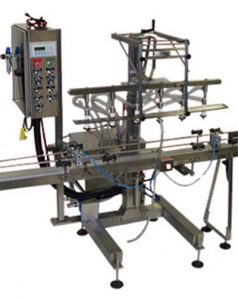 Automatic Straight-Line Filler
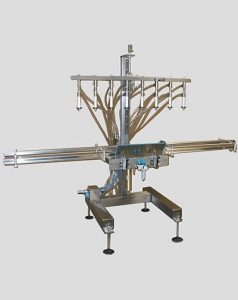 Semi-Automatic Benchtop Filler
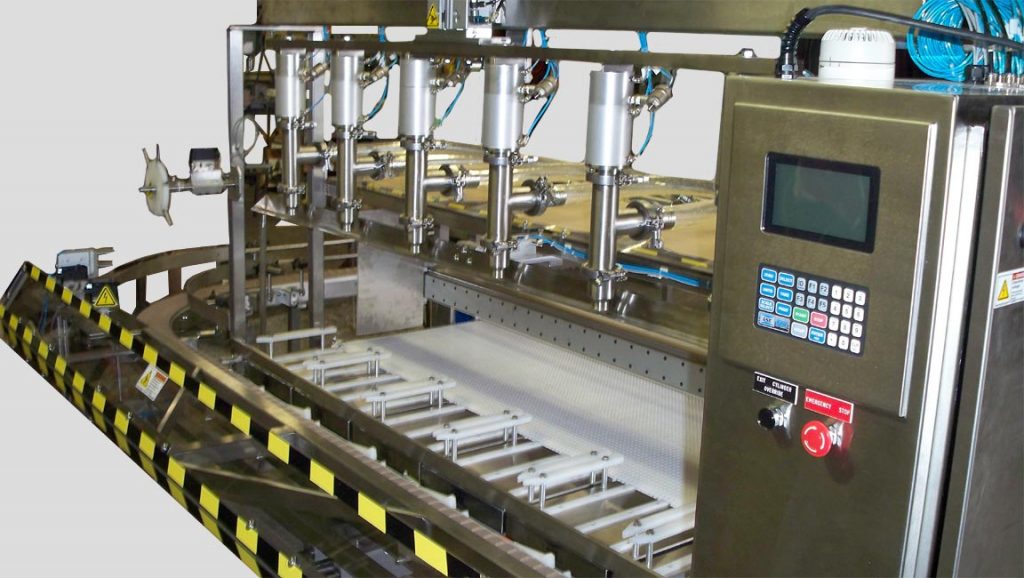 Multi-Head Rotary & Linear Systems
Technical Equipment Matrix: System Comparison
| Specification Category | Semi-Automatic Benchtop Filler | Automatic Inline Vacuum Filler | High-Speed Monoblock System |
|---|---|---|---|
| Target Production Speed | 5 to 20 Bottles / Minute | 30 to 80 Bottles / Minute | 100 to 250+ Bottles / Minute |
| Dosing Technology | Pneumatic Vacuum or Single Piston | Multi-Head Vacuum Overflow (4-12 Nozzles) | Rotary Vacuum / Servo Mass Flow Meters |
| Closure Integration | Manual Placement / Hand Crimp | Automatic Spray Pump Placer & Crimper | Fully Automated Collar, Pump & Cap Monoblock |
| Explosion Protection | Pneumatic Air-Driven Safety | Class 1 Div 1 / ATEX Purged Panel | Full ATEX Zone 1 Hazardous Enclosure |
| Changeover Duration | < 10 Minutes (Tool-Less) | 15 to 25 Minutes (Quick Pucks) | 30 to 45 Minutes (Recipe-Driven HMI) |
Core Component Engineering: Nozzle Metallurgy & Auxiliary Modules
The integrity of a perfume packaging line relies directly on fluid contact metallurgy. Fragrance oils and alcohol mixtures can interact aggressively with standard plastics or low-grade metals, leading to micro-leaches that ruin delicate scent notes.
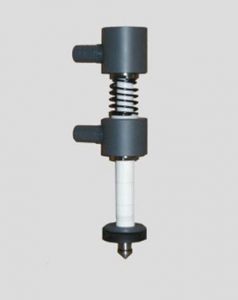
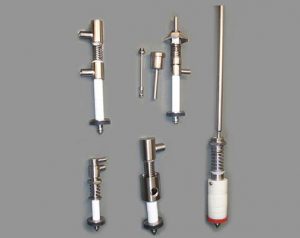 Precision Stainless Nozzles
 Hastelloy & PTFE Contact Valves
 Rotary Infeed & Outfeed Tables
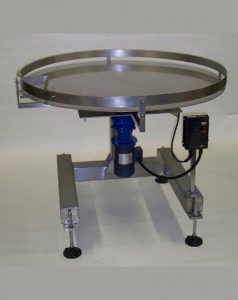
Our standard perfume nozzles feature 316L stainless steel construction with optional Hastelloy® or PTFE fluoropolymer seals for acidic or specialty botanical extracts. Coupled with variable-speed stainless steel accumulating tables and precision ball dropper modules, our production equipment forms a complete, harmonious bottling ecosystem.
 Ball Dropper & Rollerball Insertion
 Bulk Supply & Storage Transfer Fillers
3. Global Procurement Trends in Fragrance Packaging (2026–2030)
As global fragrance sales expand across North America, Europe, Asia-Pacific, and the Middle East, procurement teams face evolving market forces. AI intent mining of global supplier queries reveals three macro-trends reshaping how perfume manufacturing equipment is specified:
Trend A: Rapid Batch Flexibility & Short-Run Agility
The rise of direct-to-consumer (D2C) niche perfume brands and seasonal fragrance drops has forced contract manufacturers to abandon rigid single-product bottling lines. Buyers now mandate packaging equipment capable of switching between 15ml purse sprays, 50ml standard EDT glass, and 100ml luxury heavy-base flacons in under 20 minutes. Modern machines utilize modular puck systems that secure diverse glass outlines on a single standardized conveyor chain.
Trend B: Strict Hazardous Environment & ATEX Safety Compliance
Regulatory authorities worldwide—including OSHA (USA), ATEX Directives (EU), and IECEx (Global)—are intensifying inspections on solvent packaging plants. High-concentration ethanol formulations emit flammable vapors during filling operations. Global procurement officers are prioritizing equipment built with intrinsically safe pneumatic logic controls, anti-static belts, purged NEMA 4X enclosures, and non-sparking mechanical linkage assemblies to mitigate explosion risks.
Trend C: Sustainable Zero-Loss Fragrance Recovery Systems
High-grade perfumery raw materials (such as natural Oud, Rose De Mai, or Iris Orris butter) can exceed $10,000 per kilogram. Traditional line purging during product changeovers causes unacceptable financial loss. Next-generation perfume filling machines feature closed-loop vacuum recovery manifolds that capture and return atomized vapors and overflow fluids directly into bulk supply tanks, achieving liquid utilization rates above 99.8%.
4. Technological Innovations & Machine Development Trajectory
The landscape of perfume bottling automation is advancing rapidly through machine vision, digital motion control, and sanitary engineering improvements:
- Servo-Driven Digital Crimp Force Monitoring: Modern crimping modules feature real-time pressure transducers that evaluate the exact radial compression applied to FEA spray pump collars. If a glass neck dimension deviates slightly from spec, the crimper auto-adjusts force parameters, preventing glass neck fracture or loose pump seals.
- Multi-Axis Vision Inspection Systems: Inline high-resolution cameras verify dip tube insertion straightness, liquid meniscus level, pump collar seating, and glass clarity at line speeds up to 150 bottles per minute. Substandard units are diverted automatically via pneumatic pushers without stopping the main line.
- Clean-In-Place (CIP) & Rapid Flush Fluid Circuits: Electro-polished fluid manifolds with smooth radius bends eliminate internal dead legs where fragrance oils can linger. Automated flushing cycles allow thorough cleaning with alcohol or detergent solutions, enabling safe transition from intense gourmand notes to delicate florals.
5. B2B Global Sourcing FAQ: Addressing Key Procurement Questions
6. Why Global Manufacturers Partner with Filling Equipment Company, Inc.
Since 1959, Filling Equipment Company, Inc. has established an enduring reputation in liquid packaging machinery. Operating continuously from our College Point, New York engineering center for over 65 years, we combine traditional American machine craftsmanship with advanced liquid handling technology.
Our Core Operational Advantages Include:
- Six Decades of Specialized Engineering Experience: Having manufactured liquid filling systems since 1959, our engineers possess deep institutional knowledge regarding fluid dynamics, chemical compatibility, container handling, and line integration.
- In-House US Manufacturing & Customization: Every perfume bottling machine is designed, machined, assembled, and tested within our New York facility. We do not rebrand imported white-label machinery. This direct manufacturing capability allows us to customize nozzle geometries, conveyor lengths, and machine frames to fit your exact footprint.
- Factory-Direct Value & Transparent Pricing: By working directly with our engineering team, global procurement managers bypass agent markups and distributor overhead. We provide robust industrial machinery engineered to outlast competitors at competitive capital expenditure rates.
- Uncompromising Build Standards: We construct our machinery utilizing heavy-gauge stainless steel frames, precision-machined contact elements, and premium pneumatic components designed for 24/7 continuous industrial duty cycles.
- Dedicated Lifetime Technical Support: Our technical team provides direct phone, email, and virtual engineering support throughout the entire operational lifecycle of your equipment. Machines built in our plant during the 1970s and 1980s continue to operate reliably in production lines across the globe today.
Request a Custom Technical Proposal & Machine Quote
Consult with our senior liquid filling engineers to analyze your fragrance formulation, bottle drawings, and target production speeds. We provide tailored equipment configurations, line layouts, and factory-direct pricing.