
1. Technical Principles of Volumetric Piston Filling Technology
A Piston Filling Machine is an industrial volumetric liquid dosing system designed to measure and dispense precise quantities of liquid, paste, or semi-solid products into containers. Built upon the principles of positive displacement, a piston filler relies on a mechanically or pneumatically driven piston moving within a finely bored, sealed cylinder to draw in product during an intake stroke and force out a metered volume during a discharge stroke.
Unlike net-weight or timed-gravity filling equipment—which can experience volume drift due to ambient temperature shifts, fluid head-pressure changes, or fluid viscosity variations—piston fillers deliver consistent physical displacement. This inherent mechanical reliability makes piston technology the industry standard across pharmaceutical, cosmetic, food processing, chemical, and lubricant bottling operations worldwide.
Fluid Dynamics: Handling Newtonian vs. Non-Newtonian Viscosities
Industrial packaging lines encounter fluids spanning vast rheological spectra. Understanding fluid behavior during high-speed displacement is critical to specifying the correct piston cylinder bore, intake manifold, valve geometry, and nozzle orifice:
- Newtonian Fluids (Low Viscosity): Liquids such as spirits, aqueous chemical solutions, solvent cleaners, and thin botanical extracts retain constant viscosity regardless of shear rate. Piston fillers equipped with vertical spring-loaded or pneumatic ball-check valves prevent backflow and dripping during high-velocity dispensing.
- Non-Newtonian Fluids (Pseudoplastic & Shear-Thinning): Heavy creams, cosmetic lotions, shampoo bases, and culinary mayonnaise exhibit reduced viscosity when subjected to shear stress inside the piston chamber. Piston filling systems utilize variable stroke-velocity profiles (acceleration/deceleration control) to pass shear-sensitive emulsions smoothly without separating oil and water phases.
- High-Viscosity Thixotropic Pastes: Materials such as peanut butter, silicone sealants, industrial grease, and mascara require external assist mechanisms—such as pressurized product hoppers, rotating scrapers, or air-assisted feed pumps—to ensure complete filling of the piston stroke chamber without cavitation or void entrapment.
Industrial Technology Comparison Matrix: Liquid Dosing Methods
To assist global engineering teams in evaluating capital equipment investments, the following matrix compares piston filling technology against alternative industrial liquid filler architectures:
| Filling Technology | Primary Viscosity Range | Dosing Accuracy | Particulate Capabilities | Sanitary & CIP Rating | Ideal Industry Applications |
|---|---|---|---|---|---|
| Volumetric Piston Filler | 1 cPs – 100,000+ cPs (Thin to Heavy Pastes) | ±0.2% – ±0.5% | Excellent (Rotary Valve Spools up to 1/2" solids) | High (316L SS, Tri-Clamp Quick Clean / CIP) | Cosmetics, Food Sauces, Creams, Oils, Heavy Chemicals |
| Timed Gravity Filler | 1 cPs – 500 cPs (Water-thin liquids) | ±1.5% – ±2.0% | Poor (Nozzles clog easily with solids) | Moderate (Gravity manifolds require drain flush) | Distilled Water, Spirits, Vinegar, Thin Bleach |
| Peristaltic Pump Filler | 1 cPs – 2,000 cPs (Aqueous to light oils) | ±0.5% – ±1.0% | Moderate (Limited by tubing ID) | Ultra-High (Single-use disposable fluid paths) | Biotech, Injectable Pharma, Diagnostic Reagents |
| Coriolis Flow Meter Filler | 1 cPs – 15,000 cPs (Liquid to medium viscous) | ±0.1% – ±0.3% | Fair (Depending on meter sensor diameter) | High (In-line continuous flow CIP compatible) | High-Value Edible Oils, Premium Spirits, Agrochemicals |
| Net Weight Scale Filler | 1 cPs – 50,000 cPs (Bulk liquids) | ±0.1% (by weight) | Good (Large-orifice dump valves) | Moderate to High (Heavy tare scale maintenance) | 5-Gallon Pails, 55-Gallon Drums, Intermediate Bulk Containers (IBC) |
2. Recommended Industrial Piston Filling Machines & Systems
At Filling Equipment Company, Inc. (manufacturing precision equipment in College Point, New York since 1959), our engineering division custom-configures every piston filler to match exact plant parameters, container specifications, and daily throughput targets. Explore our primary piston filling architectures below:
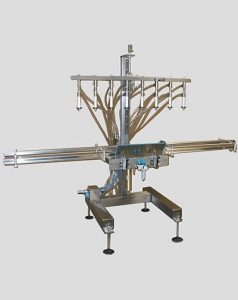
Semi-Automatic Pneumatic Piston Filler
Compact, heavy-duty benchtop piston filler designed for pilot plants, small-batch R&D laboratories, craft distilleries, and boutique cosmetic manufacturers.
- Fill Volume Range: 5 mL to 1,000 mL
- Viscosity Capacity: Up to 50,000 cPs
- Control Mechanism: Pneumatic Foot Pedal / Auto Cycle
- Contact Metallurgy: 316L Stainless Steel & PTFE
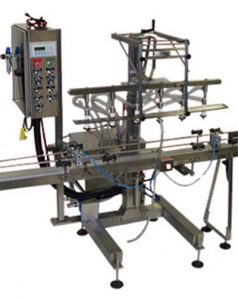
Automatic Inline Multi-Head Piston Filler
High-throughput, fully automated straight-line piston filling machine with integrated variable-speed indexing conveyor and automatic dive nozzles for anti-foaming bottom-up fill cycles.
- Nozzle Configuration: 2 to 12 Synchronized Heads
- Throughput Capacity: Up to 120 Containers/Min
- Drive System: Servo Motor or Precision Pneumatic
- Automation Level: PLC Touchscreen Interface
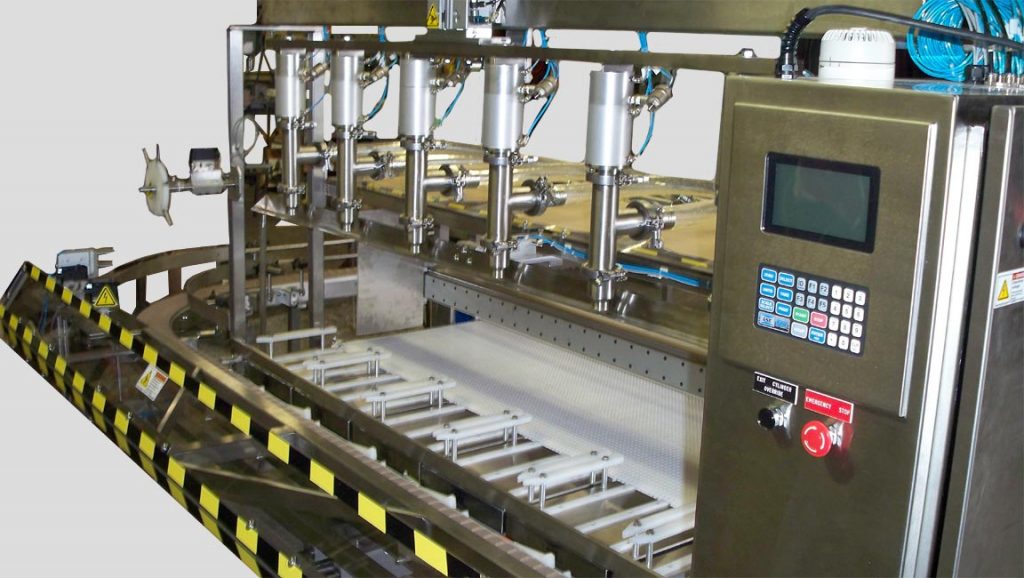
Heavy-Duty Rotary Valve Viscous Piston Filler
Engineered specifically for heavy pastes, chunky sauces, peanut butter, and thick chemical compounds. Features positive-driven rotary spool valves to process suspended particulates without crushing.
- Particulate Limit: Up to 12.7 mm (1/2") Diameter
- Hopper Configuration: Jacketed / Heated Options
- Dosing Precision: ±0.25% Volumetric
- Compliance Standard: Sanitary Tri-Clamp / FDA Approved
Corrosive-Resistant Chemical Piston Filler
Specialized non-metallic fluid paths incorporating PVC, Hastelloy, Titanium, and PTFE seals designed for aggressive acids, pool chemicals, solvents, and industrial reagents.
- Fluid Path Material: Hastelloy / PVC / PTFE
- Enclosure Rating: Class 1 Div 1 Explosion-Proof
- Drip Control: Positive Pneumatic Shutoff Nozzles
- Safety Features: Polycarbonate Interlocked Cabinet
3. Global Procurement Trends in Piston Filling Technology (2026–2030)
As enterprise buyers navigate supply chain volatility, labor shortages, and stringent sustainability metrics, global procurement requirements for liquid packaging machinery are undergoing fundamental shifts. Based on empirical data and global RFQ patterns analyzed by our engineering team, four dominant trends are shaping modern piston filling equipment specifications:
A. Migration from Pure Pneumatics to Servo-Electric Actuation
While traditional pneumatic piston fillers remain popular for their mechanical simplicity and lower initial capital outlay, global plants are increasingly mandating Servo-Driven Piston Systems. Direct-drive servo motors provide precise micro-adjustments to piston travel distances directly via the PLC touchscreen. This eliminates manual mechanical hand-crank adjustments, cuts changeover times from 45 minutes down to under 2 minutes, and provides real-time volumetric dosing calibration for varying batch temperatures.
B. Integration of IoT, OPC-UA Connectivity, and Predictive Maintenance
Industry 4.0 integration has transitioned from an optional upgrade to a mandatory procurement specification for Fortune 500 chemical and pharmaceutical manufacturers. Modern piston fillers now incorporate vibration sensors, thermal transducers on dynamic piston seals, and stroke-count telemetry. Transmitting machine analytics over OPC-UA protocols enables plant managers to detect seal wear, valve seal degradation, or piston rod misalignment before catastrophic line stoppages occur.
C. Hygiene Ergonomics & Automated Clean-in-Place (CIP / SIP) Protocols
Regulatory enforcement by the FDA, EMA, and USDA has heightened scrutiny on cleaning validation. Traditional manual tear-down cleaning ("Clean-out-of-Place") incurs excessive labor costs and risk of operator error. Next-generation piston fillers incorporate automated pneumatic valve bypass loops and CIP manifolds, allowing CIP sanitizing solutions (such as caustic wash and hot water rinses) to circulate through the piston cylinder and filling nozzles at high velocity without removing a single clamp.
D. Modular Packaging Line Scalability
Global buyers no longer purchase single-purpose, rigid machines. Procurement contracts now demand modular, expandable machine frames. For example, a 4-head automatic piston filler built on an extended stainless steel frame allows manufacturers to install 2 or 4 additional piston head assemblies in the future as production volumes scale, protecting original capital investments.
4. Technical Evolution & Mechanical Breakthroughs in Piston Fillers
To achieve near-zero product giveaway and maintain continuous 24/7 reliability, engineering advances in piston filling machinery focus on seal metallurgy, valve fluid flow mechanics, and nozzle shut-off dynamics:
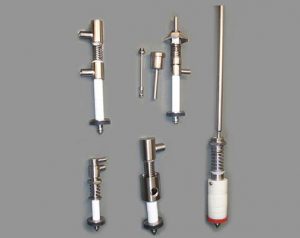
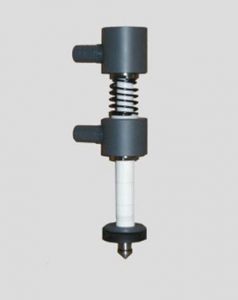
Precision-engineered stainless steel zero-drip piston filling nozzles.
Zero-Drip & Anti-Foam Nozzle Technology
Product dripping or tailing onto container threads compromises cap seals and causes labeling failures down the line. Advanced piston fillers deploy pneumatic positive-cut nozzles paired with vacuum-snuck back mechanisms. During bottom-up filling, servo-actuated nozzle bars submerge nozzles to the very bottom of the bottle, raising them in exact synchronization with the rising liquid surface to eliminate air bubble entrapment and surface foaming.
Advanced Elastomer & Fluoropolymer Seal Metallurgy
Historically, chemical aggressive solvents or abrasive food slurries caused rapid wear on standard O-ring seals, resulting in volumetric drift. Modern filling equipment utilizes proprietary compound seals—such as virgin PTFE filled with 15% glass fiber, UHMWPE (Ultra-High-Molecular-Weight Polyethylene), or Perfluoroelastomers (FFKM). These materials offer near-zero friction coefficients alongside extreme resistance to corrosive acids, hot oils, and abrasive suspension particulates.
Need Custom Engineering Advice for Your Product Line?
Our senior packaging engineers evaluate your liquid viscosity, container geometry, and target throughput to specify the ideal piston filler configuration.
Get a Quote5. Frequently Asked Questions (FAQ) for Global Procurement Teams
Below are detailed responses to the most critical technical and commercial queries submitted by international procurement officers, contract packaging managers, and system integrators:
Q1: How do I select between a rotary valve and a ball check valve for my piston filling machine?
Answer: The choice is dictated by product viscosity and particulate presence.
Ball Check Valves rely on gravity and fluid pressure differentials to seat a precision sphere against a seal orifice. They are highly efficient for low-to-medium viscosity fluids without solids (e.g., liquid soaps, essential oils, cough syrups, thin sauces).
Rotary Valves (Spool Valves) use a mechanically driven rotating cylinder to create an open fluid channel between the intake hopper and piston cylinder, and subsequently between the cylinder and nozzle. Rotary valves are mandatory for thick pastes (e.g., peanut butter, cosmetics, spackling paste) and products containing solid bits (e.g., salsa, marinades with seeds, body scrubs with exfoliants), as they will not pinch or shear particulates.
Q2: What is the impact of liquid temperature and viscosity fluctuations on piston volumetric accuracy?
Answer: Because a piston filler operates by physical volume displacement (swept volume = π × r² × stroke length), variations in fluid viscosity caused by ambient temperature drops or heating cycles do not alter the physical stroke volume. This gives piston fillers a distinct advantage over timed-gravity or pressure fillers. However, if a fluid experiences significant thermal expansion (density changes), servo-driven piston machines can adjust stroke lengths automatically based on real-time temperature feedback from inline sensors to ensure true mass consistency.
Q3: How do automatic piston fillers handle particulate-laden or shear-sensitive fluids?
Answer: Particulate-laden fluids are protected by equipping the filler with oversized internal fluid passages, polished sanitary elbow joints, and wide-port rotary valve bodies. To protect shear-sensitive liquids (such as cosmetic emulsions or polymeric gels), the acceleration and deceleration profiles of the piston stroke are programmatically smoothed using servo drives, ensuring gentle product handling without fluid phase separation.
Q4: What are the recommended maintenance protocols to prevent seal degradation in industrial piston pumps?
Answer: A proactive preventive maintenance schedule includes:
1. Daily cleaning cycles (CIP or warm sanitizing flush) to prevent product crystallization behind the piston seal head.
2. Weekly visual inspection of the piston rod guide bushings and alignment seals.
3. Lubrication of external pneumatic cylinder slide rails using food-grade lubricants.
4. Scheduled seal replacement intervals based on stroke counts (typically replacing primary dynamic PTFE seals every 500,000 to 1,000,000 cycles depending on product abrasiveness).
Q5: What electrical, sanitary, and safety standards should a global procurement team require for piston fillers?
Answer: For food and dairy applications, specify 3-A Sanitary Standards or EHEDG design compliance. For pharmaceutical operations, demand cGMP compliance with 316L stainless steel contact parts and material traceability certification (EN 10204 3.1). For electrical safety, verify UL 508A or CSA certification for North America and CE Directives (Machinery Directive 2006/42/EC) for Europe. If filling flammable solvents, alcohol spirits, or volatile chemicals, verify Class 1 Division 1 (C1D1) or ATEX Zone 1 explosion-proof engineering.
Q6: How do I calculate Total Cost of Ownership (TCO) when upgrading from semi-automatic to automatic piston filling lines?
Answer: TCO calculation balances initial equipment procurement costs against three key operating savings:
1. Direct Labor Savings: An automatic line operating at 60 CPM typically frees 2 to 4 manual operators for re-allocation.
2. Product Giveaway Reduction: Improving volumetric fill precision from ±2% (manual/timed filling) to ±0.25% (precision piston) saves substantial raw material over millions of fills.
3. Reduced Downtime & Scrap: Automated container indexing and zero-drip nozzles reduce spilled product cleanups and reject container rates. Most plants achieve full ROI on automatic piston lines within 8 to 14 months.
6. Enterprise Brand Advantage: Filling Equipment Company, Inc.
Proven American Manufacturing Expertise Since 1959
For over six decades, Filling Equipment Company, Inc. has designed, engineered, and manufactured precision packaging machinery at our headquarters in College Point, New York. Our long-standing industry authority rests upon uncompromised engineering principles:
- Factory-Direct USA Engineering: Every piston filler, capping machine, and nozzle assembly is manufactured in-house by expert American machinists, providing direct factory accountability and rapid replacement parts fulfillment.
- Custom Metallurgy & Machining: We utilize heavy-gauge 304 and 316L stainless steel, solid billet aluminum structural frames, and custom-milled sanitary valves designed for decades of continuous operation.
- Turnkey System Integration: We deliver fully integrated packaging lines—matching piston fillers with accumulating tables, bottle capping machinery, neck banders, and inline labeling systems.
- Lifetime Technical Support: Our factory-trained technical staff provides remote diagnostic support, on-site commissioning assistance, and comprehensive maintenance training for your plant personnel.
Ready to Optimize Your Liquid Packaging Line?
Speak directly with our liquid filling specialists to analyze your product samples, review container drawings, and receive a customized technical proposal.