
1. Executive Engineering Overview: The Mechanics of Rotary Liquid Filling Systems
In modern high-speed liquid packaging, selecting the optimal container handling architecture is the single most critical factor influencing Overall Equipment Effectiveness (OEE), line efficiency, and product loss metrics. While straight-line (inline) liquid fillers serve short-run and variable-batch operations effectively, the Rotary Liquid Filling Machine represents the pinnacle of continuous-motion fluid displacement engineering for medium-to-high volume manufacturing environments.
At its engineering core, a rotary filling machine operates on a continuous pitch-circle diameter (PCD) carousel. Containers enter the machine via an timing screw and an infeed starwheel, which precisely index bottles into pockets supported beneath individual filling nozzles. Unlike intermittent inline fillers—where container acceleration and deceleration create fluid sloshing, splashing, and neck stress—a rotary liquid filling machine maintains fluid motion under constant centrifugal equilibrium. Filling occurs smoothly as the central carousel rotates, allowing maximum dwell time for fluid transfer without stopping the container path.
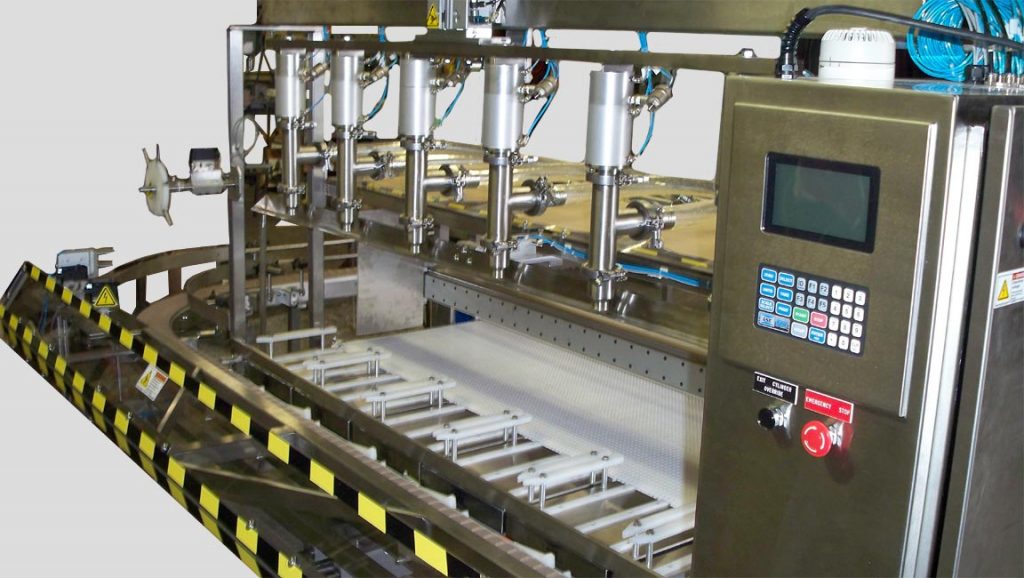 Figure 1: Industrial Automatic Multi-Head Weight Rotary Filling Machine designed by Filling Equipment Company for precision high-speed liquid dispensing.
This structural dynamic eliminates the mechanical shock associated with linear stop-and-go pneumatics. As a result, rotary liquid filling equipment achieves throughput rates from 100 to over 600 bottles per minute (BPM) while maintaining dosing accuracies within ±0.2% to ±0.5%. Furthermore, integrating the filling carousel directly with rotary capping and corking turrets creates a compact, unified Monoblock Architecture. Monoblock systems reduce conveyor transfers, eliminate container tipping risks, and reduce floor space requirements by up to 45% compared to modular linear layouts.
Technical Comparison Matrix: Rotary Liquid Filling vs. Inline Filling Systems
To assist procurement committees in evaluating technical trade-offs, the engineering team at Filling Equipment Company, Inc. has compiled a performance benchmark comparison:
| Performance Metric | Rotary Liquid Filling Machine | Inline (Linear) Liquid Filler |
|---|---|---|
| Production Speed Range | 120 – 600+ BPM (Continuous Motion) | 20 – 120 BPM (Intermittent Motion) |
| Container Handling Dynamics | Zero-inertia continuous rotation via starwheel indexing | Intermittent start-stop linear shuttle belts |
| Fluid Hydrodynamics & Splash | Laminar fluid control; negligible splash during transfer | High liquid wave/splash risk at stop indexing points |
| Fill Dosing Accuracy | High precision (±0.15% to ±0.25% with Flowmeter/Net Weight) | Standard precision (±0.5% to ±1.0% with Piston/Gravity) |
| Footprint Density (OEE / m²) | Ultra-Compact Monoblock Integration (Fill + Cap) | Extended conveyor layout requiring long indexing spans |
| Changeover Execution Time | 15 – 25 Minutes (Toolless quick-change starwheels) | 30 – 60 Minutes (Manual railing & nozzle repositioning) |
| Ideal Applications | High-speed beverages, edible oils, pharmaceuticals, personal care | Small batches, contract packing, wide multi-format short runs |
2. Recommended Rotary Liquid Filling Machine Technologies
Filling Equipment Company offers four core rotary dosing architectures designed for specific fluid characteristics, viscosity bands, container geometries, and hygiene compliance levels:
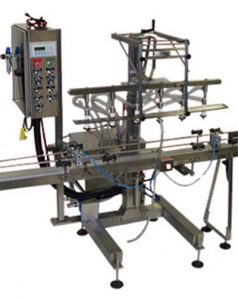
A. Rotary Volumetric Piston Filling Machines
Engineered specifically for medium to high-viscosity products (500 to 50,000 cPoise) such as cosmetics, lotions, viscous oils, sauces, and heavy chemicals. Precision-ground 316L stainless steel cylinders and servo-actuation stroke controls deliver metered doses with exact volumetric repeatability.
Key Features: Rotary liquid joint manifolds, tri-clamp sanitary valves, anti-drip diving nozzle tips, toolless piston disassembly for quick CIP sanitation.
Inquire Now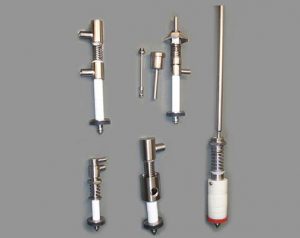
B. Rotary Mass Flowmeter (Coriolis / Mag) Fillers
Designed for ultra-clean, non-contact liquid dosing in pharmaceuticals, edible oils, dairy, and premium spirits. Mass flowmeter sensors calculate fluid mass dynamically independent of viscosity variations, temperature fluctuations, or entrained air bubbles.
Key Features: Zero moving parts in fluid contact zone, hygienic CIP/SIP loops, digital mass feedback, real-time statistical statistical fill corrections via PLC.
Inquire Now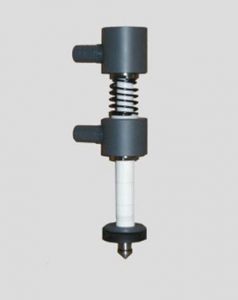
C. Rotary Level Overflow Filling Machines
The industry standard for transparent glass or clear PET containers where visual cosmetic fill height consistency across store shelves is critical. Overflow diving nozzles seal against the container finish, establishing a uniform visual fill level regardless of minor internal bottle volume deviations.
Key Features: PVC/Hastelloy construction for corrosive chemicals, closed-loop fluid return tank, pneumatic diving carriage, bubble-free filling for foaming liquids.
Inquire Now
D. Integrated Rotary Monoblock Filling & Capping Systems
Combining rotary filling turrets with rotary capping heads (screw cappers, snap-on cappers, or aluminum ROPP cappers) on a single heavy-duty machine base. Reduces transfer points, prevents contamination, and ensures immediate hermetic sealing after liquid dosing.
Key Features: Synchronized main gear drive, magnetic hysteresis capping heads, cap elevator sorting feeder, HEPA laminar flow enclosure options.
Inquire Now3. Enterprise Expertise & Manufacturing Legacy: The Filling Equipment Company Advantage
For over six decades—since 1959—Filling Equipment Company, Inc. has designed, engineered, and manufactured precision packaging machinery at our headquarters in College Point, New York. Our longevity in the industrial machinery sector stems from an unyielding commitment to heavy-duty engineering standards, continuous innovation, and direct partnership with global manufacturers.
Why Global Procurement Teams Partner with Filling Equipment Company
- 65+ Years of Proven U.S. Manufacturing Expertise: Founded in 1959, our engineers possess deep institutional knowledge in fluid kinematics, chemical compatibility, container handling, and sanitary machine construction.
- Factory-Direct Custom Engineering: We eliminate unnecessary middleman markups while providing tailored rotary starwheels, custom diving nozzles (including PVC, Hastelloy Type B, and 316L SS), and specialized bottle handling tools built specifically for your container geometries.
- Rigorous Quality Control & FAT/SAT Protocol: Every rotary liquid filling machine undergoes comprehensive Factory Acceptance Testing (FAT) using customer-supplied fluids and containers prior to shipment, guaranteeing turn-key integration upon site delivery.
- Unmatched Component Availability & Lifetime Technical Support: Unlike offshore suppliers using proprietary componentry, our machines are constructed using non-proprietary industrial standards (Allen-Bradley, Festo, SEW-Eurodrive). Spare parts ship rapidly from our New York plant to minimize line downtime.
Industrial Components & Auxiliary Bottling Equipment
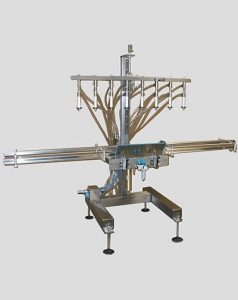 Benchtop Calibration Unit
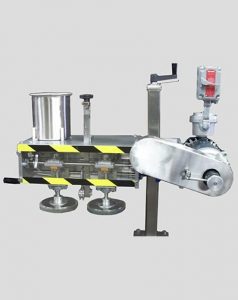 Precision Ball Dropper
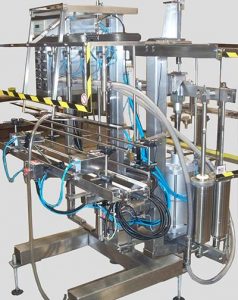 Gallon Nozzle Assembly
Anti-Drip Liquid Nozzles
Gallon Nozzle Assembly
Anti-Drip Liquid Nozzles
4. Future Procurement & Industry Trends in Rotary Filling (2026–2035)
As global supply chains modernize, industrial beverage, chemical, and pharmaceutical producers face shifting market demands: ultra-short product lifecycles, lightweight sustainable packaging, strict regulatory traceability, and compressed operational budgets. Forward-thinking procurement teams must evaluate rotary filling machinery against these key industry transformations:
A. Smart IIoT Diagnostics & AI-Driven Predictive Maintenance
Next-generation rotary fillers are moving beyond static PLC routines toward integrated Industrial Internet of Things (IIoT) platforms. Vibration sensors mounted on main rotary bearings, thermal imaging on motor drives, and real-time pressure transducers monitor mechanical health continuously. Machine learning algorithms analyze sub-millisecond pressure drops across filling valves to predict seal degradation weeks before actual product leaks occur, effectively eliminating unscheduled maintenance downtime during peak production runs.
B. Servo-Driven Adaptive Motion & Toolless Rapid Changeovers
Traditional mechanical rotary fillers relied on rigid gearboxes and physical change cams that required hours of technician labor to adjust for different bottle heights. Modern rotary fillers utilize electronic camming with independent brushless AC servo drives for every filling turret station and diving nozzle carriage. Operators select preset container profiles on an intuitive touchscreen HMI; the machine automatically adjusts carousel deck heights, nozzle dive depths, and dosing parameters. Combined with magnetic quick-release starwheels, total changeover times drop from hours to under 20 minutes.
C. Lightweight Bottle Handling & Sustainable Container Formats
Global environmental mandates are driving beverage and chemical companies to reduce container wall thickness, introducing ultra-lightweight PET bottles, 100% rPET, and thin-walled aluminum containers. These delicate containers collapse under traditional inline mechanical side-grippers. Rotary filling machines equipped with neck-handling starwheels support bottles entirely by their rigid neck rings throughout the filling, capping, and transfer cycle. This neck-suspension design completely isolates the fragile bottle sidewalls from crushing forces, allowing manufacturers to reduce resin usage significantly.
D. Advanced CIP/SIP Hygiene Architecture & EHEDG Compliance
In pharmaceutical, nutraceutical, and dairy processing, minimizing cross-contamination risk is paramount. Modern rotary liquid filling machines integrate fully automated Clean-in-Place (CIP) and Sterilize-in-Place (SIP) manifolds. Automatic CIP cups swing into position beneath filling nozzles to seal fluid loops during sanitation cycles, allowing high-velocity turbulent washing with caustic solutions and superheated steam without operator intervention. Smooth, crevice-free 316L stainless steel surfaces polished to Ra < 0.4 µm prevent bacterial biofilm accumulation, adhering to EHEDG and 3-A Sanitary Guidelines.
Upgrade Your High-Speed Bottling Line Capabilities
Consult directly with our master packaging engineers in College Point, NY to evaluate your liquid viscosity, bottle geometry, and target throughput specifications.
Inquire Now5. Frequently Asked Questions (FAQ) for Global Buyers & Engineers
Addressing the technical, operational, and financial queries most frequently posed by industrial engineers and procurement specialists when evaluating rotary liquid filling systems:
Q1: How does a rotary liquid filling machine differ from an inline liquid filling machine in terms of production mechanics and ROI?
A rotary liquid filling machine transports containers continuously along a circular carousel via pitch-matched starwheels, performing filling while the bottle is in smooth motion. In contrast, inline fillers stop and start container batches along a linear conveyor. Rotary systems eliminate the inertia spikes caused by intermittent stopping, enabling dramatically higher speeds (typically 120 to 600+ bottles per minute), smooth fluid management without splash, superior neck support for lightweight plastics, and significantly lower container stress. While initial capital expenditure is higher for rotary fillers, the reduction in cycle time, minimal maintenance downtime, and massive volumetric throughput yield a substantially lower Cost Per Unit (CPU) and higher long-term Return on Investment (ROI) for medium-to-high volume production lines.
Q2: What viscosity ranges can be processed on a rotary liquid filling machine without compromising dosing accuracy?
Rotary liquid filling machines are engineered to handle an expansive viscosity spectrum ranging from 1 cPoise (aqueous solutions like water, sanitizers, spirits) up to 50,000+ cPoise (viscous creams, heavy lubricants, thick food sauces, gels). Dosing precision is preserved through application-specific filling technologies: Rotary Overflow for low-viscosity aesthetic fills; Rotary Volumetric Servo Piston or Positive Displacement Pump fillers for thick pastes; and Mass Flowmeter (Coriolis/Magmeter) systems for high-precision, sanitary non-contact filling across variable liquid densities.
Q3: How do rotary filling machines prevent foaming, aeration, and liquid dripping during ultra-high-speed operation?
Preventing turbulence and aeration at speeds exceeding 200 units per minute requires advanced fluid dynamics engineering. Rotary fillers utilize bottom-up diving nozzle assemblies driven by synchronized electronic cam profiles. Nozzles lower into the container prior to fluid ejection and retract progressively just above the rising liquid line, maintaining submerged filling. Anti-drip nozzle tips equipped with pneumatic shut-off valves or vacuum-back-draw mechanisms instantly cut off fluid flow at completion. Continuous smooth rotation avoids the liquid sloshing caused by stopping linear conveyors, preserving container cleanliness and seal integrity.
Q4: What downtime reduction mechanisms are incorporated into modern rotary monoblock filling and capping lines for size changeovers?
Modern rotary fillers utilize toolless quick-change starwheels, color-coded guide plates, and servo-automated height adjustments for the central carousel tower. Recipe-driven HMI controls allow operators to adjust dosing stroke, pump speeds, diving nozzle depths, and capper torque at the touch of a button. By replacing mechanical hand-cranks with absolute encoder servo drives, complete changeovers between container geometries (e.g., from 250ml rounds to 1L ovals) can be executed in under 20 minutes.
Q5: What are the primary structural and material standards required for hygienic or chemical-grade rotary fillers?
For food, dairy, and cosmetic applications, machines are constructed with 316L stainless steel fluid pathways, tri-clamp sanitary fittings, surface finishes polished to Ra < 0.4 µm, and fully integrated Clean-in-Place (CIP) and Sterilize-in-Place (SIP) spray ball systems compliant with 3-A Sanitary and FDA standards. For highly corrosive chemical applications (acidic cleaners, bleaches), fluid pathways utilize non-metallic Hastelloy, PTFE, or custom PVC compounds to resist oxidation and chemical degradation.
Q6: Why choose a U.S.-manufactured rotary filling machine from Filling Equipment Company over overseas alternatives?
Filling Equipment Company, Inc. has engineered and built liquid packaging machinery in New York, USA since 1959. Overseas machinery often suffers from non-standard metric components, long lead times for custom replacement parts, ambiguous engineering documentation, and software locks. Our rotary fillers are manufactured using heavy-duty industrial components, standard Allen-Bradley/Siemens automation architectures, and precision-machined U.S. materials. Global buyers benefit from direct factory engineering consultations, guaranteed spare parts availability over decades, lifetime phone/remote tech support, and rigorous Factory Acceptance Testing (FAT).
6. Strategic RFQ Engineering Checklist for Purchasing Directors
Before requesting a formal quotation (RFQ) for a Rotary Liquid Filling Machine, technical teams should compile the following physical parameters to accelerate engineering evaluation and ensure an exact machine recommendation: