
Technical Articles & Updates

Packaging & Liquid Filling Insights

Expert guides, machinery maintenance tips, and liquid packaging innovations from industry specialists since 1959.

Automation & Efficiency

Industry Trends & Buying Guides

In-depth analysis and technical advice for optimizing your liquid bottling and capping operations.

Solutions & Maintenance

Equipment Optimization Tips

Practical guides on nozzle selection, viscosity handling, and extending machine service life.

0%

Choosing the right Lubricating Oil Filling Machine in 2026 requires more than comparing advertised speed. Viscosity, container shape, filling accuracy, and production volume all influence the final decision. A machine that fills thin hydraulic oil smoothly may struggle with heavy gear oil. Small differences matter.

This guide examines the leading machine types used in modern lubricant plants. These include piston fillers, gear pump fillers, flowmeter systems, gravity fillers, and servo-driven filling equipment. Each design offers practical advantages under specific operating conditions. Piston systems often handle thicker oils with stable volume control. Gear pumps support continuous production and adjustable flow rates. Flowmeter fillers provide precise measurement for many container sizes. Servo systems can improve repeatability when recipes change frequently.

Real production experience also shows several overlooked details. No single machine wins every plant. A clean filling nozzle reduces dripping around the bottle neck. Heated pipelines may help when low temperatures increase oil resistance. Operators should also check cleaning time, seal durability, maintenance access, and control-system reliability. These factors affect ownership costs more than brochure speed.

Some recommendations remain difficult. A high-speed model is not always the most efficient choice. Overfilling, product waste, and frequent adjustments can reduce its value. Buyers should compare tested samples, service records, and actual viscosity performance before purchasing. Supplier documentation matters, but hands-on trials matter more. This overview aims to support informed evaluation, while recognizing that every facility has different constraints, products, and improvement goals.
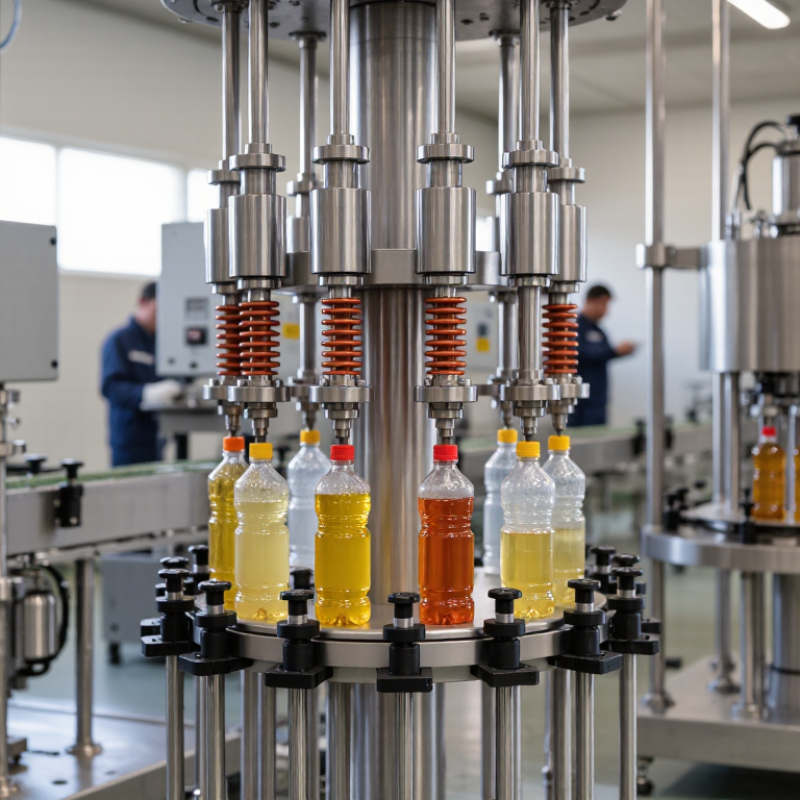
2026 Top Lubricating Oil Filling Machine Types

What Is a Lubricating Oil Filling Machine?

A lubricating oil filling machine is an industrial system that transfers oil into bottles, cans, drums, or containers. It measures and dispenses a controlled volume through pumps, valves, and filling nozzles. Common designs include piston fillers, gear-pump fillers, and flowmeter-based machines. Each type handles different oil viscosities, container sizes, and production speeds.

Unlike water fillers, oil filling equipment must manage thickness, residue, and dripping. In practical installations, I have seen cold oil move slowly through narrow hoses. This can create inaccurate fills and longer cycle times. For 2026 applications, piston fillers suit repeatable volumes and heavier oils. Gear-pump systems provide steady movement during continuous production. Flowmeter systems offer flexible control when container sizes change often. Temperature matters more than many buyers expect. A technician should check calibration after changing oil grades or nozzle settings. No filler is perfect.

Tips: Keep the oil path short and clean. Use wide enough hoses for the oil viscosity. Inspect seals and nozzles regularly. Test several containers before full production. Record actual fill weights, not only screen readings. Small leaks can become costly waste. Even experienced operators sometimes overlook them. A brief manual check can reveal problems that automation misses.

Main Types by Filling Principle

Choosing a lubricating oil filling machine starts with its filling principle, not its advertised speed. Gravity fillers use a tank and controlled valves. They suit thin oils with stable flow. The method is simple and gentle. However, thick oil may drip slowly or form strings. Temperature changes can also alter accuracy. A heated supply line may help, but it adds cleaning work and energy use.

Piston fillers measure each dose inside a cylinder. They handle medium and high viscosities well, including gear oils and assembly lubricants. Operators can adjust the piston stroke for different bottle sizes. Wear in seals can change the delivered volume. That detail is easy to miss. Gear-pump and flowmeter fillers measure oil while it moves through the line. They support fast production and flexible volumes, but air bubbles and unstable pressure can reduce repeatability. Calibration remains essential.

Time-pressure systems push oil with compressed air for a set period. They work best when pressure, temperature, and viscosity remain steady. They can suit smaller production lines, yet they need close monitoring. Cleanliness matters. During practical trials, check the first, middle, and final containers from a run. Compare weights, inspect drips, and record nozzle response. No principle is perfect. The right choice matches viscosity, target volume, container shape, cleaning routine, and accuracy requirements. I would not select a machine from speed alone; real production conditions often disagree with the brochure.

Machine Types for Different Container Formats

2026 Top Lubricating Oil Filling Machine Types

Container format should guide the machine choice, not production speed alone. Small bottles usually suit piston or servo-driven fillers. These systems control precise volumes, even when oil viscosity changes. Anti-drip nozzles help keep bottle necks clean. Small details matter.

For wide-mouth cans and jerrycans, linear piston fillers provide stable dosing and flexible nozzle spacing. Overflow filling can create a consistent visual level when containers vary slightly. It may not suit every oil, especially thicker blends. Trial runs are essential.

Larger pails and drums need stronger frames and wider filling heads. Pump-fed piston systems handle heavier oils with fewer interruptions. Automatic capping can follow, but the container must remain stable during filling. A tilted drum can create inaccurate levels and messy rims. I have seen operators blame the filler when the real issue was poor container alignment.

Some facilities use one machine for several formats. This saves floor space, but changeover parts need careful adjustment. Quick changeovers sound ideal. In practice, they still require checks for nozzle height, pump pressure, and fill tolerance. A reliable setup records these settings for each container type. Even then, a perfect configuration rarely exists. Testing remains necessary.

How Lubricating Oil Filling Machines Operate

Lubricating oil filling machines operate through controlled dosing, not simple pouring. A storage tank feeds oil into a pump, while sensors monitor level and pressure. The system then delivers a measured volume through stainless-steel nozzles. Piston fillers suit thicker oils. Gear pumps handle steady, continuous flow. Servo-driven systems improve control when bottle sizes change.

According to Grand View Research’s 2024 filling machine report, the global market is expected to grow at roughly 4% annually through 2030. This growth reflects stronger demand for accurate, automated packaging.

During operation, the PLC coordinates bottle positioning, filling speed, nozzle movement, and drip prevention. Temperature matters because cold oil moves slowly and may create underfilling. A 5°C change can noticeably affect viscosity in some formulations. Operators should verify results with calibrated weighing equipment, rather than trusting the display alone.

The 2024 Lubricants Market analysis by Mordor Intelligence estimates continued global lubricant demand growth above 3% annually. That pressure makes repeatable filling more valuable, especially in high-volume production. Still, the calculation is not perfect. Foam, trapped air, and uneven bottle placement can distort each cycle.

Tips

  • Warm the product only within its approved specification.
  • Check nozzle height before every format change.
  • Record fill-weight trends each shift.
  • Clean valves and seals before residue hardens.
  • A short trial run often reveals problems faster than software settings.
  • No machine fits every oil. Product testing remains essential.

How to Choose the Right Machine for Your Production Needs

Choosing a lubricating oil filling machine starts with the product, not the advertised speed. Grand View Research estimated the global lubricants market at USD 162.7 billion in 2023. This scale increases pressure for accurate, flexible packaging lines.

Piston fillers suit thicker oils and stable volume control. Flowmeter fillers work well when viscosity changes during production. Servo-driven systems can improve repeatability across different bottle sizes. Speed is not everything. PMMI’s 2024 State of the Industry report highlights labor shortages and growing demand for connected automation. Therefore, a machine with recipe storage, alarm tracking, and simple changeover may deliver more value than higher peak output.

Check the oil’s viscosity range, foaming behavior, temperature, and additive content. Test the actual oil. A clean, low-viscosity fluid may run smoothly through a flowmeter system, while heavy gear oil may need heated lines and piston filling. Container shape also matters. Narrow necks can require longer nozzles and slower filling speeds.

Compare rated output with realistic production conditions. Include stoppages, cleaning, container changes, and operator adjustments. I have seen theoretical capacity look impressive, yet daily output fall after frequent format changes. Ask for a trial using your own oil and containers. Record fill accuracy, drip control, changeover time, and waste. The right machine is the one that remains reliable after the first week.

2026 Top Lubricating Oil Filling Machine Types - How to Choose the Right Machine for Your Production Needs
Machine Type Typical Lubricant Viscosity Typical Filling Range Practical Accuracy Typical Output Suitable Containers Best Production Application Key Selection Consideration
Gravity Filling Machine Low to medium viscosity oils, approximately 10–500 cP 50 mL–5 L About ±1% to ±2% Up to approximately 30–60 containers/minute, depending on fill volume Rigid bottles, cans, and jerrycans with consistent neck openings Simple, cost-sensitive lines for free-flowing lubricants Choose only when the oil flows consistently and the required accuracy is moderate.
Piston Filling Machine Medium to high viscosity oils, approximately 100–100,000 cP 20 mL–20 L About ±0.5% to ±1% Approximately 10–40 containers/minute Bottles, cans, pails, and small drums High-accuracy filling of gear oils, engine oils, greases, and thicker blends Confirm piston seal compatibility with the oil additives and operating temperature.
Gear Pump Filling Machine Low to high viscosity oils, approximately 50–100,000 cP 100 mL–25 L About ±0.5% to ±1% Approximately 10–60 containers/minute Bottles, cans, pails, and flexible production formats Controlled volumetric filling where stable metering and compact equipment are required Check pump shear characteristics, dry-running protection, and compatibility with abrasive additives.
Mass Flow Meter Filling Machine Low to high viscosity oils, approximately 1–50,000 cP 100 mL–1,000 L About ±0.1% to ±0.5% Approximately 5–40 containers/minute, depending on product and container size Bottles, cans, pails, drums, totes, and intermediate bulk containers Applications requiring accurate mass-based filling and reduced influence from temperature or density changes Evaluate meter range, calibration procedures, pressure drop, and the required cleaning method.
Net Weight Filling Machine Medium to high viscosity oils and oil-based products 1–1,500 kg per container About ±0.1% to ±0.5% of target weight Approximately 2–20 containers/minute Pails, drums, barrels, totes, and bulk containers Large-container filling where legal weight control and material savings are important Allow sufficient settling time and use stable, vibration-controlled weighing platforms.
Servo Auger or Screw-Assisted Filler Very thick, semi-solid, or grease-containing lubricants 50 g–25 kg About ±0.5% to ±1.5% Approximately 5–30 containers/minute Jars, cartridges, tubs, and small pails Greases, assembly pastes, and lubricants that do not flow reliably through standard liquid fillers Verify product texture, temperature control, and whether the screw creates unacceptable air entrainment.
Overflow Filling Machine Low to medium viscosity oils, approximately 10–2,000 cP 100 mL–5 L Consistent visible fill level; volumetric accuracy commonly about ±1% to ±2% Approximately 10–40 containers/minute Transparent or translucent bottles with uniform internal geometry Retail packaging where an identical liquid level improves shelf appearance Use only with containers having consistent internal dimensions and controlled foaming behavior.
Servo Volumetric Filling Machine Low to high viscosity oils, approximately 10–100,000 cP 20 mL–30 L About ±0.2% to ±0.5% Approximately 15–80 containers/minute Bottles, cans, pails, and other rigid containers Flexible automated lines requiring repeatable recipes, fast changeovers, and precise dosing Prioritize recipe control, servo resolution, filling-nozzle design, and integration with upstream and downstream equipment.
Semi-Automatic Drum and Tote Filler Medium to high viscosity lubricants, approximately 100–100,000 cP 20–1,500 kg per container About ±0.1% to ±0.5% Approximately 1–8 containers/minute Drums, barrels, totes, and large industrial containers Low-to-medium volume industrial packaging and multiple product changeovers Choose based on container handling, nozzle reach, weighing capacity, and operator safety requirements.
Fully Automatic Inline Filler Low to high viscosity oils, depending on the installed dosing system 50 mL–25 L About ±0.2% to ±1% Approximately 20–120 containers/minute Bottles, cans, jerrycans, and pails Continuous high-volume production with automatic indexing, filling, capping, and inspection Confirm line speed, container size range, changeover time, safety guarding, and available floor space.
Explosion-Protection-Ready Filler Lubricants handled in areas where flammable vapors may be present 100 mL–1,500 L, depending on the dosing system Determined by the selected pump, meter, or weighing system Approximately 2–60 containers/minute Approved bottles, cans, drums, and bulk containers Facilities requiring controls for hazardous-area electrical and static risks Perform a formal hazardous-area assessment and specify suitable electrical, grounding, ventilation, and bonding provisions.

FAQS

What filling principle suits thin lubricating oils?

Gravity filling works well for thin oils with stable flow. It is gentle and relatively simple.

Can gravity fillers handle thick oil effectively?

Thick oil may drip slowly or form strings. Heating the supply line can help, but cleaning becomes harder.

Why are piston fillers useful for thicker oils?

Piston fillers measure each dose inside a cylinder. They suit gear oils, assembly lubricants, and other medium-viscosity fluids.

What maintenance issue can affect piston filling accuracy?

Worn seals may change the delivered volume. This small detail is easy to overlook.

How do pump and flowmeter fillers improve production?

They measure oil during movement through the line. They support fast output and flexible filling volumes.

What can reduce repeatability in pump-based systems?

Air bubbles and unstable pressure can affect results. Calibration remains necessary.

Which machines suit small bottles?

Piston or servo-driven fillers usually suit small bottles. Anti-drip nozzles help keep bottle necks clean.

What should be considered when filling cans, jerrycans, or drums?

Use suitable nozzle spacing, strong frames, and stable container support. A tilted container can cause inaccurate levels and messy rims.

Is one machine suitable for several container formats?

Sometimes, but changeover parts need careful adjustment. Check nozzle height, pump pressure, and fill tolerance each time.

How should a filling machine be tested before regular production?

Check the first, middle, and final containers. Compare weights, inspect drips, and record nozzle response.

Is advertised filling speed enough for machine selection?

No. Match viscosity, volume, container shape, cleaning needs, and accuracy requirements. Real production may disagree with the brochure.

Conclusion

A Lubricating Oil Filling Machine is designed to measure and dispense oils accurately into containers such as bottles, cans, pails, or drums. Depending on the filling principle, common options include volumetric piston filling, flowmeter-based filling, gravity filling, and time-pressure filling. Each method offers different advantages in terms of accuracy, viscosity handling, speed, and equipment complexity. The best choice depends on the oil’s characteristics and the required production capacity.

These machines typically feed containers into position, control the filling volume, minimize dripping, and transfer filled containers to the next packaging stage. Some systems can accommodate multiple container formats through adjustable filling heads, nozzles, and conveyors. When selecting equipment, manufacturers should consider oil viscosity, target fill volume, container design, accuracy requirements, production speed, cleaning needs, automation level, and future expansion plans. A properly matched machine can improve consistency, reduce material waste, and support efficient, reliable production.

Ethan

Ethan

Ethan is a seasoned marketing professional with a deep knowledge of the company's product offerings. With years of experience in the industry, he brings a unique perspective to the team, consistently demonstrating his expertise through detailed blog posts that are published on the company website.......