Selecting a Chemical Liquid Filling Machine is not merely a capacity decision. It affects operator safety, product quality, cleaning time, and production stability. A machine that performs well with water may struggle with solvents, acids, oils, or high-viscosity formulations. Small differences matter. Nozzle design, seal material, pump accuracy, and grounding arrangements can change the result.
Trevor Kletz, a respected process-safety author, warned, “If you think safety is expensive, try ignorance.” His message applies strongly to chemical filling equipment. A reliable selection process should examine the liquid’s viscosity, temperature, corrosiveness, foaming behavior, and vapor risks. It should also consider the container shape and the required filling volume. For example, a narrow bottle may need a different nozzle profile than a wide-mouth pail. A sticky liquid may leave residue around the valve. That detail can become a costly cleaning problem.
This guide presents seven practical tips for choosing a Chemical Liquid Filling Machine. It considers real production concerns, including material compatibility, filling precision, automation level, maintenance access, and safety controls. It also encourages careful supplier evaluation. Certifications help, but they do not replace testing with your actual liquid and container. That step is often skipped. It should not be.
There is no perfect machine for every plant. A sensible choice balances performance, compliance, budget, and future expansion. The right questions should come before the purchase order.
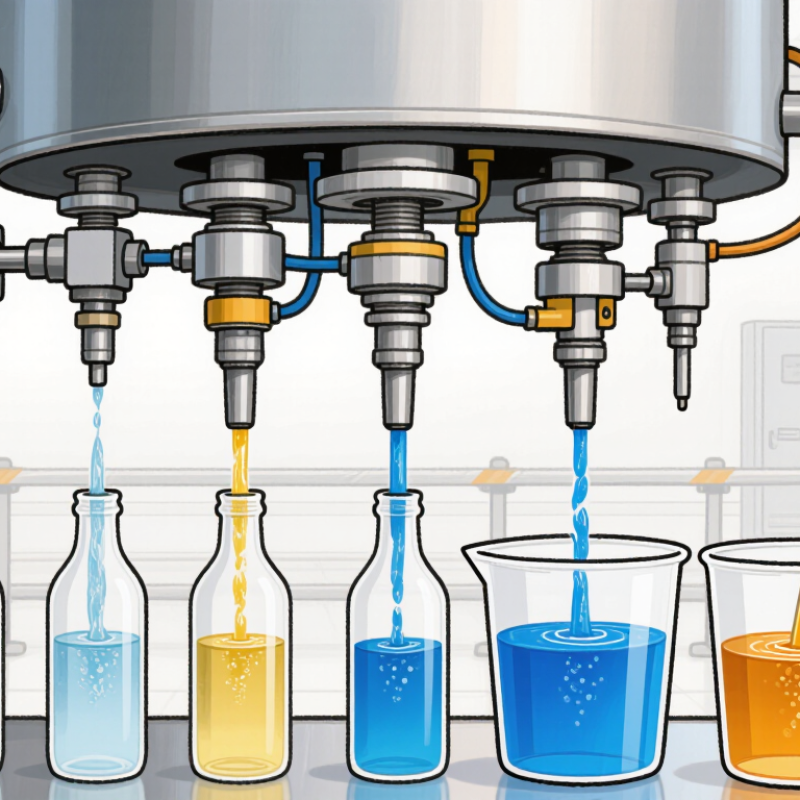
Identify the Chemical Properties and Filling Requirements
Before choosing a chemical liquid filling machine, create a clear material profile. Record viscosity, density, acidity, volatility, and temperature sensitivity. These properties can change during storage or production. A thin solvent may drip from the nozzle, while a thick gel may require heated lines. Foaming liquids need slower filling and controlled nozzle movement. Small details matter.
Check every wetted component for chemical compatibility. Stainless steel may suit one liquid but fail with another concentration. Seals, hoses, valves, and pump parts also need careful review. Ask for compatibility data, then confirm it with a controlled material test. Laboratory results are useful, but factory conditions can expose weaknesses. That gap deserves attention.
Define the filling requirements beside the chemical data. Specify container size, target volume, acceptable tolerance, production speed, and required cleaning method. A corrosive liquid may need a sealed filling area and splash protection. A volatile liquid may require enclosed transfer and suitable ventilation. Consider the smallest and largest containers, not only the standard size. An overlooked format can disrupt the entire line.
During trials, measure actual fill weights across several cycles. Watch for dripping, foaming, temperature changes, and residue on contact surfaces. Do not rely only on the machine’s stated speed. Real performance depends on the liquid, operator settings, and container design. Revise the specification when testing reveals an inconvenient truth.
Select Compatible Machine Materials and Sealing Components
7 Tips for Choosing a Chemical Liquid Filling Machine
Select Compatible Machine Materials and Sealing Components
Material compatibility should guide every chemical filling machine decision. The liquid may touch tanks, pumps, valves, nozzles, tubing, and seals. A single weak component can cause swelling, leakage, contamination, or unexpected downtime.
For many aggressive liquids, 316L stainless steel offers strong corrosion resistance. However, it is not suitable for every formula. Acids, solvents, oxidizers, and high-salt mixtures require separate evaluations. PTFE often handles demanding chemical exposure well, while EPDM and FKM suit different temperature and chemical conditions. Check the entire fluid path, not only the visible nozzle. Small parts matter.
Seal selection needs equal attention. A seal may look perfect during installation, then soften after repeated cleaning cycles. Review chemical concentration, operating temperature, pressure, filling speed, and contact time. Ask for immersion data or conduct a controlled compatibility test. A useful test uses the actual liquid, seal material, and expected temperature. Measure swelling, hardness, weight change, and surface damage.
Compatibility charts help, but they are not final answers. Real formulations contain additives that can change performance. This is where careful testing matters. In practical equipment reviews, technicians often discover that a gasket, rather than the pump, creates the failure. That detail is easy to miss. Request material certificates, batch traceability, and documented test conditions. Replace questionable components before production, even if they appear acceptable. The cheapest seal can become the most expensive mistake.
7 Tips for Choosing a Chemical Liquid Filling Machine - Select Compatible Machine Materials and Sealing Components
| Tip |
Application or Chemical Condition |
Preferred Wetted-Part Material |
Suitable Sealing Component |
Compatibility Level |
Important Selection Considerations |
| 1 |
Water-based acids and alkaline cleaners at moderate concentration |
316L stainless steel |
PTFE gasket or PTFE-lined seal |
Generally suitable |
316L offers good corrosion resistance for many dilute formulations, but strong acids, high chloride levels, elevated temperature, and stagnant conditions require a specific corrosion review. |
| 2 |
Strongly corrosive acids, oxidizers, or high-purity chemical liquids |
PTFE, PFA, or glass-lined contact surfaces |
PTFE or expanded PTFE |
Often preferred |
Fluoropolymer contact materials provide broad chemical resistance. Confirm permeation, pressure, temperature, and mechanical-strength requirements before final selection. |
| 3 |
Hydrocarbon solvents, oils, fuels, and petroleum-based liquids |
316L stainless steel |
FKM or PTFE |
Generally suitable |
FKM performs well with many mineral oils and hydrocarbons. PTFE is a safer broad-compatibility option when the formulation contains mixed solvents or uncertain additives. |
| 4 |
Ketones, esters, ethers, or mixed organic solvents |
316L stainless steel or PTFE/PFA-lined parts |
PTFE |
Verify carefully |
PTFE is broadly resistant to many organic chemicals. FKM and some elastomers may swell or lose mechanical properties in ketones, esters, or selected ethers. |
| 5 |
Aqueous products, detergents, mild acids, and alkaline solutions |
Polypropylene or 316L stainless steel |
EPDM or PTFE |
Commonly suitable |
EPDM is well suited to many water-based and polar formulations, but it is generally unsuitable for petroleum oils and many hydrocarbon solvents. |
| 6 |
Products containing suspended particles, pigments, or abrasive solids |
316L stainless steel with polished surfaces |
PTFE or abrasion-resistant engineered seal design |
Application dependent |
Use smooth, cleanable flow paths and minimize dead legs. Check seal wear, particle size, pump shear, valve clearance, and the required cleaning procedure. |
| 7 |
High-purity, sterile, or contamination-sensitive chemical liquids |
Electropolished 316L stainless steel, PTFE, or PFA |
PTFE or validated sanitary elastomer |
Suitable with validation |
Specify hygienic connections, drainable geometry, documented surface finish, compatible cleaning agents, and a validated cleaning or sterilization cycle. |
|
Compatibility depends on chemical concentration, temperature, exposure time, pressure, mechanical movement, and cleaning conditions. Always verify the complete formulation with current chemical-resistance data and, when necessary, conduct a seal and wetted-material compatibility test before purchasing the filling machine.
|
Evaluate Filling Accuracy, Speed, and Container Compatibility
7 Tips for Choosing a Chemical Liquid Filling Machine
Evaluate Filling Accuracy, Speed, and Container Compatibility
Filling accuracy should be your first measurement, not a sales promise. Check the target volume, allowable variation, and actual test results. Ask for trials using your liquid, container, and production temperature. Viscosity can change during a shift. That small change may affect every bottle.
Speed matters, but only when accuracy stays stable. Measure bottles per minute at your planned fill volume. Also inspect the indexing system, nozzle movement, and drip control. A fast machine that creates foam or splashes can increase waste. It can also slow cleaning and inspection. Look at daily output, not only the highest advertised speed.
Container compatibility needs practical testing. Run different heights, neck sizes, materials, and shapes. Confirm that the machine holds each container firmly without scratches or tipping. Check whether the filling nozzles reach the correct depth. Leave room for future container changes if possible. Otherwise, a minor packaging update may require expensive modifications.
Review wetted materials against the liquid’s chemical properties. Confirm seals, hoses, pumps, and valves can withstand repeated contact. Request maintenance intervals and calibration procedures in writing. Verify that operators can adjust settings without complicated tools. Keep records from every trial.
Perfect performance is unlikely. One early test may fail. That failure is useful. Recheck temperature, viscosity, pressure, and container positioning before choosing. A reliable decision comes from repeatable data, not one impressive demonstration.
7 Tips for Choosing a Chemical Liquid Filling Machine
Use these measurable evaluation criteria to compare chemical liquid filling equipment. Accuracy, production speed, material compatibility, cleanability, safety, flexibility, and serviceability should all be reviewed before making a purchasing decision.
Check Safety Features, Automation, and Regulatory Compliance
Choosing a chemical liquid filling machine starts with the liquid, not the catalog. Its viscosity, temperature, vapor behavior, and corrosiveness affect every wetted component. Request material certificates for tanks, hoses, seals, and nozzles. Stainless steel may suit one formulation, but not every chemical. That detail is often missed. During factory trials, check for leaks, dripping, foaming, and accurate shutoff. A clean floor around the nozzle is practical evidence of control.
Safety features deserve direct testing. Guards should stop motion when opened, and emergency stops must be easy to reach. Sensors can detect missing containers, low supply, or abnormal pressure. Interlocks should prevent filling when conditions are unsafe. Automation improves repeatability, but it does not replace trained operators. Ask whether recipes, access levels, alarms, and batch records are protected from casual changes. Simple screens help. Poorly designed software can still create confusion.
Regulatory compliance must be documented before purchase. Check requirements for worker protection, electrical systems, machine safety, chemical handling, and labeling in the installation region. Ask for risk assessments, manuals, validation support, and test records. Do not accept “compliant” as a complete answer. Confirm which standard was used and who verified it. Calibration plans should cover flow meters, load cells, and pressure instruments. Schedule a small production trial after installation. Real conditions reveal problems that factory demonstrations sometimes hide. A second review is worthwhile when production changes.
Compare Maintenance Needs, Customization, and Total Operating Cost
A filling machine is cheap only when its entire operating life is cheap. Compare pump seals, valves, sensors, and control access before comparing purchase prices. The U.S. Department of Energy reports that preventive maintenance can reduce costs by 12–18% compared with reactive maintenance. Ask how quickly technicians can replace a seal beside a warm, crowded production line. Small delays become expensive.
Customization should match the liquid, container, and cleaning routine. Check viscosity range, foaming behavior, dosing accuracy, nozzle design, and wetted materials. Request documented test results using your actual liquid. A machine that performs well with water may struggle with a thick solution. That assumption often fails. Also measure changeover time, recipe storage, and tool requirements. PMMI industry reports continue to identify labor shortages and automation needs as major packaging investment pressures.
Calculate total operating cost over five years. Include electricity, compressed air, spare parts, cleaning chemicals, calibration, rejected containers, training, and planned downtime. Deloitte’s 2024 Smart Manufacturing and Operations Survey found that 86% of manufacturing leaders consider smart manufacturing important to competitiveness. Remote alarms and condition monitoring may reduce emergency visits, but software subscriptions deserve scrutiny. Demand maintenance intervals, response times, and parts availability in writing. No estimate is perfect. Leave room for operator feedback and one uncomfortable question: which feature will we rarely use?
FAQS
The liquid may contact tanks, pumps, valves, nozzles, tubes, and seals. One weak part can swell, leak, or contaminate the product. Small parts matter.
No. It resists many corrosive liquids, but acids, solvents, oxidizers, and salty mixtures need separate evaluation. Review the complete fluid path, not only the visible nozzle. A familiar material can still fail.
Consider chemical concentration, temperature, pressure, filling speed, and contact time. Test the actual liquid with the proposed seal at the expected temperature. Measure swelling, hardness, weight change, and surface damage. Shortcuts create doubt.
Compatibility charts are useful starting points, not final answers. Additives may change the liquid’s behavior. A controlled test can reveal softening, discoloration, or surface damage. Real formulas are less predictable.
Check for leaks, dripping, foaming, and accurate shutoff. Inspect the floor beneath the nozzle for liquid residue. Test the machine with realistic containers and operating conditions. Demonstrations can look better than production.
Guards should stop movement when opened. Emergency stops must be easy to reach. Sensors can detect missing containers, low supply, or abnormal pressure. Interlocks should block filling during unsafe conditions. Test every feature.
Recipes, access levels, alarms, and batch records improve repeatability. Clear screens reduce operator confusion. Automation does not replace trained workers or careful supervision. Poor software design can still cause mistakes.
Request risk assessments, manuals, validation support, material certificates, and test records. Confirm the exact safety and electrical standards used in the installation region. Ask who verified compliance. “Compliant” alone is too vague.
Calibration should cover flow meters, load cells, and pressure instruments. Run a small production trial after installation. Real conditions may expose leaks, unstable filling, or confusing controls. A second review is wise when production changes.
Conclusion
Choosing the right Chemical Liquid Filling Machine requires careful consideration of both the product and the production environment. Begin by identifying the liquid’s viscosity, corrosiveness, foaming tendency, temperature, and required fill volume. These properties will guide the selection of suitable pumps, valves, wetted parts, and sealing components. Materials must resist chemical reactions and maintain performance over time. It is also important to evaluate filling accuracy, operating speed, and compatibility with different container shapes and sizes to ensure consistent results and flexible production.
Safety and compliance should remain central throughout the selection process. Look for features such as leak prevention, enclosed filling areas, emergency stops, grounding, and systems that reduce operator exposure. Automation options can improve consistency and minimize manual errors, while documentation and design should support applicable safety and quality requirements. Finally, compare cleaning procedures, maintenance frequency, spare-part availability, customization options, energy use, and long-term operating costs. A machine with a balanced combination of reliability, safety, flexibility, and lifecycle value will provide stronger performance than one chosen solely for its initial price.