Packaging & Liquid Filling Insights
Expert guides, machinery maintenance tips, and liquid packaging innovations from industry specialists since 1959.
Industry Trends & Buying Guides
In-depth analysis and technical advice for optimizing your liquid bottling and capping operations.
Equipment Optimization Tips
Practical guides on nozzle selection, viscosity handling, and extending machine service life.
Which Hand Sanitizer Filling Equipment Is Best in 2026?
Table of Contents
- Hand Sanitizer Filling Equipment: Types, Functions, and Applications
- How to Match Filling Equipment With Sanitizer Formulas and Container Sizes
- Key Factors for Comparing Accuracy, Speed, Hygiene, and Operating Costs
- Choosing Equipment for Different Production Scales and Packaging Requirements
- Safety, Maintenance, Automation, and Regulatory Considerations in 2026
- FAQS
- Conclusion
- Related Posts
Choosing the right Hand Sanitizer Filling Equipment in 2026 requires more than comparing machine prices. Demand remains significant, but market forecasts vary. Grand View Research estimated the global hand sanitizer market at approximately USD 6.6 billion in 2023, with continued growth expected through 2030. Allied Market Research also projects long-term expansion, although its figures differ because of varying market definitions. That inconsistency matters. Buyers should examine real production data, not rely on one headline.
A suitable filling system must match sanitizer viscosity, alcohol content, container shape, and daily output. Rotary and inline piston fillers can provide accurate dosing for medium and high-volume production. Peristaltic systems may reduce product contact, while time-pressure fillers can support flexible packaging lines. The best choice depends on the formula. Not the brochure.
PMMI industry reports continue to identify automation, quick changeovers, and labor efficiency as major packaging priorities. These trends are visible on the factory floor: operators adjust fewer valves, clean fewer product paths, and monitor fill levels through digital controls. However, automation is not automatically better. A complicated machine can create expensive downtime when spare parts or trained technicians are unavailable. Equipment should support documented cleaning procedures, batch traceability, and quality checks aligned with applicable GMP and ISO 9001 practices. The U.S. FDA and WHO publications also emphasize formulation control, accurate labeling, and contamination prevention. Those principles should guide equipment selection, even when local requirements differ. In 2026, the strongest investment will balance filling accuracy, material compatibility, maintenance access, and verifiable supplier support. Performance claims still need testing.
Hand Sanitizer Filling Equipment: Types, Functions, and Applications
Which Hand Sanitizer Filling Equipment Is Best in 2026?
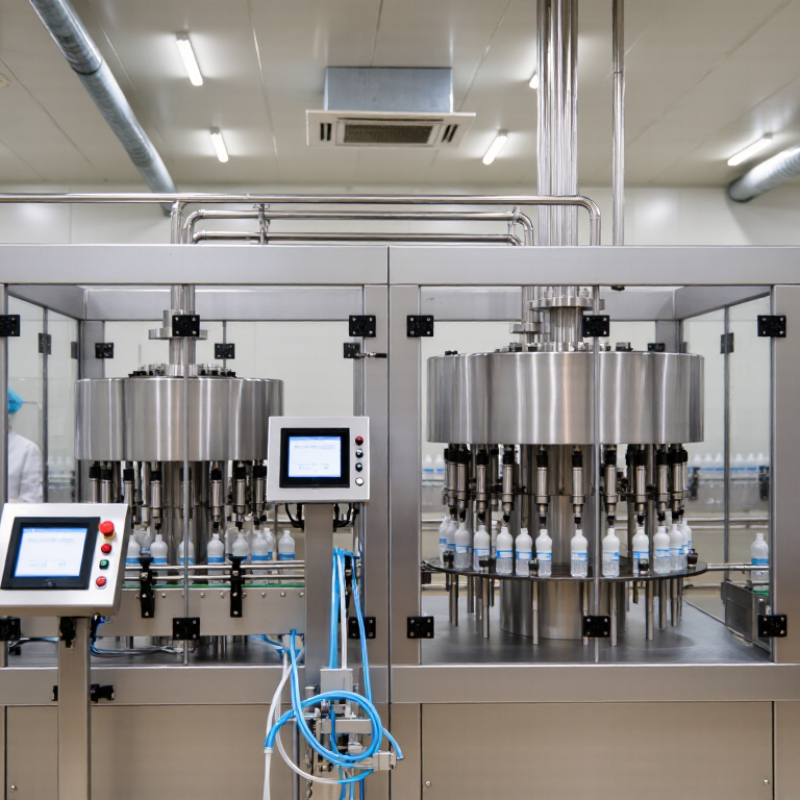
Hand sanitizer filling equipment must match the formula, container, and production scale. Piston fillers suit thicker gels and deliver accurate volumes. Peristaltic pumps handle smaller batches with limited product contact. Overflow fillers create consistent bottle levels, even when containers vary slightly. Gravity systems remain useful for low-viscosity liquids and simpler packaging lines.
The choice is practical, not fashionable. Grand View Research estimated the global hand sanitizer market at about US$5.7 billion in 2023, with continued growth forecast through 2030. That expansion increases pressure for cleaner, faster, and more flexible filling systems. A rotary machine may support high-volume applications, while a compact linear filler better fits contract production or frequent format changes. Foaming can still disrupt accuracy. Product temperature matters too.
Hygiene controls should guide equipment selection. Smooth, drainable surfaces, tool-free changeovers, and controlled dosing reduce contamination risks. The World Health Organization recommends formulations containing at least 60% ethanol or 70% isopropanol for effective hand antisepsis. These ingredients can affect seals, tubing, and pump compatibility. Many buyers focus on speed first. That can be a mistake. Testing the actual sanitizer, closure, and bottle together is more reliable than trusting a catalog rating. Some production assumptions will fail in practice.
How to Match Filling Equipment With Sanitizer Formulas and Container Sizes
Which Hand Sanitizer Filling Equipment Is Best in 2026?
The formula should decide the filling system, not the other way around. The WHO Guide to Local Production specifies 80% ethanol or 75% isopropanol formulations. The U.S. CDC recommends products containing at least 60% alcohol. These liquids are low-viscosity and highly volatile. A piston filler may work well, but excessive speed can create foaming, dripping, and vapor loss. Servo-controlled peristaltic or time-pressure systems can offer gentler dosing. Validate compatibility with seals, tubing, and wetted metal surfaces.
Container size changes the machine’s practical performance. Small 30–100 milliliter bottles need narrow nozzles, accurate indexing, and fast cap handling. Larger 500-milliliter bottles may need stronger conveyors and wider spacing. Pump bottles also require neck-height control. A few millimeters matter. For gel formulas containing thickeners, piston filling usually provides better volume control than basic gravity filling. The European Chemicals Agency reports that alcohol-based mixtures require careful handling because of their flammable properties. Equipment grounding, ventilation, and area classification deserve early review.
Do not choose by advertised speed alone. Test the actual formula at its lowest and highest expected temperature. Measure fill accuracy after production pauses. This step is often skipped. It should not be. The Packaging Machinery Manufacturers Institute reports that changeover flexibility remains a major packaging investment concern. Therefore, select tool-free adjustments when switching between container sizes. Keep records of nozzle wear, rejected bottles, and cleaning time. Real operating data may challenge the original equipment choice.
Key Factors for Comparing Accuracy, Speed, Hygiene, and Operating Costs
Which Hand Sanitizer Filling Equipment Is Best in 2026?
Choosing hand sanitizer filling equipment requires more than checking its advertised output. Accuracy should come first, especially when each bottle holds only a small volume. During production trials, compare the actual fill weight across different speeds and container sizes. A machine that stays within a tight tolerance reduces product waste and customer complaints.
Speed still matters, but only when hygiene remains controlled. Look for smooth, easy-to-clean product paths, minimal dead corners, and tool-free access to contact parts. Stainless steel construction helps, but it does not replace proper cleaning procedures. Test how quickly operators can disassemble, wash, inspect, and reassemble the filling system. Small delays can become expensive over a long shift.
Operating costs include more than electricity. Consider labor, compressed air, spare parts, calibration, cleaning time, and changeover losses. Peristaltic systems may simplify product contact management, while piston systems can provide strong control for thicker formulas. The best choice depends on viscosity, bottle design, and daily volume. A faster filler may look efficient, yet frequent stoppages can erase that advantage. I have found that real-world testing often challenges the sales specification. Leave room for imperfect bottles, tired operators, and occasional nozzle adjustment. Reliable equipment should perform well on ordinary production days, not only during demonstrations.
Which Hand Sanitizer Filling Equipment Is Best in 2026? - Key Factors for Comparing Accuracy, Speed, Hygiene, and Operating Costs
| Equipment Type | Best-Fit Product | Typical Filling Accuracy | Typical Speed Range | Hygiene and Contamination Risk | Cleaning and Changeover | Relative Operating Cost | Overall Assessment for 2026 |
|---|---|---|---|---|---|---|---|
| Peristaltic Pump Filler | Low-to-medium viscosity alcohol gels and liquid sanitizers; small batches and frequent product changes | Typically ±0.5% to ±1.0% of target volume | Approximately 10–40 containers/minute | The product contacts only the tubing, which reduces cross-contamination risk. Tubing must be compatible with ethanol, isopropanol, fragrances, and thickeners. | Fast product changeover; tubing can be replaced or sanitized. Regular tubing replacement is required because of wear and solvent exposure. | Low equipment cost; low-to-medium consumable and maintenance cost | Best for laboratories, contract packers, and small-to-medium production where hygiene and flexibility matter more than maximum throughput. |
| Piston Filler | Medium-to-high viscosity gels, lotions, and thicker sanitizer formulations | Typically ±0.5% to ±1.0% of target volume | Approximately 20–80 containers/minute | Suitable for hygienic filling when stainless-steel product-contact parts, sanitary seals, and controlled air quality are used. Pistons and valves create more internal contact surfaces than peristaltic systems. | Moderate changeover time; requires disassembly or validated clean-in-place procedures for pistons, valves, and seals. | Medium equipment and maintenance cost; seal replacement is a routine expense | A strong choice for accurate filling of thicker gels, especially when the formula has stable viscosity and production volumes are moderate to high. |
| Servo-Driven Piston Filler | High-volume gel and liquid sanitizer lines requiring repeatable recipes and electronic control | Typically ±0.2% to ±0.5% of target volume after calibration | Approximately 40–120 containers/minute, depending on container size and number of heads | Supports controlled dosing, recipe management, and reduced operator intervention. Hygienic design still depends on drainability, seal selection, and validated cleaning. | Moderate changeover time; electronic recipes reduce setup errors, while product-contact parts still require cleaning and inspection. | Higher initial cost; medium operating cost and potentially lower product giveaway | Often the best balance for large-scale production because high accuracy can reduce overfill losses while maintaining strong throughput. |
| Gear Pump Filler | Low-to-medium viscosity liquids and selected gels requiring continuous, controlled flow | Typically ±0.5% to ±1.0% of target volume | Approximately 20–100 containers/minute | Provides consistent flow but has internal moving parts and seals in contact with the product. Hygienic construction and solvent-compatible materials are essential. | Moderate to difficult cleaning, particularly when fragrances, polymers, or sticky gel residues are present. | Medium-to-high maintenance cost because pumps, seals, and clearances require periodic inspection | Useful for continuous production, but it should be selected only after confirming chemical compatibility and cleaning validation. |
| Overflow Filler | Free-flowing, low-viscosity sanitizing liquids where a uniform visible fill level is important | Typically ±1.0% to ±2.0% of target volume | Approximately 30–150 containers/minute | Good visual consistency, but excess liquid returns through the filling circuit. The return path must be designed to prevent evaporation, foaming, and contamination. | Moderate cleaning requirement because recirculation lines and nozzles retain product. Alcohol-resistant seals and grounded components are important. | Medium equipment cost; product-recovery and solvent-handling requirements can increase operating cost | A practical option for thin liquids in bottles with consistent internal geometry, but less suitable for viscous gels or highly foaming formulas. |
| Time-Pressure Filler | Low-viscosity alcohol-based liquids and water-like sanitizer formulations | Typically ±1.0% to ±2.0% of target volume | Approximately 20–100 containers/minute | Few moving product-contact parts can simplify sanitation. However, compressed air must be clean, dry, oil-free, and suitable for the product environment. | Relatively simple product path and quick changeover; air lines, pressure vessels, and nozzles require routine inspection. | Low-to-medium equipment cost; compressed-air consumption adds operating cost | Best suited to straightforward liquid products and moderate output when compressed-air infrastructure is already available. |
| Gravimetric Filler | Products where fill weight, batch traceability, or formulation density variation must be tightly controlled | Typically ±0.1% to ±0.5% by weight, depending on scale and process conditions | Approximately 10–60 containers/minute | Can reduce overfill by measuring actual mass. Load cells must be protected from vibration, spills, static electricity, and unstable containers. | Moderate cleaning and calibration requirements; product-contact design remains the main hygiene consideration. | Higher initial cost; potentially low product giveaway and low long-term material waste | A premium choice when material cost, density variation, and batch-to-batch accountability are more important than maximum speed. |
Data note: The performance figures are typical engineering ranges for commercial filling systems and are not guarantees. Actual results vary with sanitizer viscosity, alcohol concentration, foaming behavior, container size and geometry, nozzle configuration, automation level, calibration, and cleaning procedures.
Choosing Equipment for Different Production Scales and Packaging Requirements
Which Hand Sanitizer Filling Equipment Is Best in 2026?
Choosing Equipment for Different Production Scales and Packaging Requirements
Small producers usually need flexible, easy-to-clean filling equipment. A compact semi-automatic filler can handle bottles from 50 to 500 milliliters. It suits seasonal demand, frequent product changes, and limited floor space. Operators should check the pump type, filling accuracy, and adjustment time. A machine that fills eight bottles per minute may be better than a faster model that creates frequent spills.
Growing facilities often benefit from automatic piston or peristaltic filling systems. These machines support steadier output and reduce repetitive manual work. Servo-controlled systems can improve volume consistency, especially with thicker gel formulations. However, automation adds sensors, controls, and maintenance points. More technology is not always better. It can become expensive when production remains unpredictable.
Packaging requirements should guide the final choice. Narrow-neck bottles may need specialized nozzles to prevent dripping. Foaming products require slower filling speeds and suitable air management. Trigger bottles, pump containers, and pouches may need different feeding and capping arrangements.
Test the actual container, closure, and formula before ordering equipment. Small differences in viscosity can change results. A practical trial with filled samples often reveals problems that brochures miss.
Cleaning access also matters, because residue around seals can affect later batches. The perfect machine rarely exists. A reliable setup usually balances capacity, accuracy, operator skill, maintenance access, and future packaging changes.
Safety, Maintenance, Automation, and Regulatory Considerations in 2026
The best hand sanitizer filling equipment in 2026 is not simply the fastest machine. It must protect operators, preserve alcohol-based formulations, and support reliable batch records. A piston or peristaltic filler with explosion-conscious electrical design can reduce ignition risks. The WHO Guide to Local Production recommends 80% v/v ethanol or 75% v/v isopropanol formulations. Therefore, material compatibility and vapor control deserve serious attention.
Automation improves consistency, but it also creates new maintenance demands. The International Federation of Robotics reported 541,302 industrial robots installed worldwide in 2023. That growth supports automated filling, capping, labeling, and inspection. However, sensors still drift. Pumps still wear. A flexible line with tool-free contact parts may outperform a faster system during frequent product changes. Under 21 CFR Parts 210 and 211, manufacturers need controlled processes, documented cleaning, calibration, and traceable quality records. European operations should also align equipment qualification with applicable GMP expectations.
Tips: Test fill accuracy at the lowest and highest target volumes. Check foaming with real containers. Keep spare seals, tubing, and sensors on site. Review alarm history weekly. A useful acceptance test includes leak checks, emergency-stop trials, cleaning verification, and three consecutive accurate batches. I would not over-automate a small facility. That judgment can be wrong when labor shortages increase, so capacity planning should include future demand, training time, and regulatory changes.
FAQS
Filling accuracy should come first, especially for 50-milliliter bottles. Test actual fill weights at different speeds and container sizes. Small errors create waste. Reliable performance matters more than advertised output.
Run repeated trials using the real formula and containers. Record fill weights from the beginning, middle, and end of production. Check results after speed changes and nozzle adjustments. A brochure cannot replace production evidence.
Choose smooth product paths with few dead corners. Contact parts should be easy to remove, wash, inspect, and reinstall. Stainless steel helps, but it does not replace proper cleaning. Residue near seals can affect later batches.
Not always. A slower machine may reduce spills, stoppages, and cleaning delays. Observe performance during a long shift, not only during a short demonstration. Tired operators and imperfect bottles can change the result.
Compact semi-automatic equipment often suits seasonal production and limited floor space. It can handle containers from about 50 to 500 milliliters. Check adjustment time, pump behavior, and cleaning access. Eight clean fills per minute may beat a faster, messier system.
Automatic piston or peristaltic systems can support steadier output. They also reduce repetitive manual work. Servo control may improve consistency with thicker gel formulas. More sensors mean more maintenance points, though.
Narrow-neck bottles may need specialized nozzles to limit dripping. Foaming formulas often require slower filling and suitable air management. Pump containers, trigger bottles, and pouches may need different feeding arrangements. Test the complete container, closure, and formula together.
Include labor, electricity, compressed air, spare parts, calibration, cleaning, and changeover losses. A cheap machine may become costly after frequent adjustments. Measure cleaning minutes and stoppages across ordinary production days. My estimate could still miss hidden maintenance work.
Conclusion
Choosing the best Hand Sanitizer Filling Equipment in 2026 depends on the sanitizer formula, container design, production volume, and required level of automation. Common options include piston, peristaltic, gravity, and gear-pump fillers, each suited to different viscosities, foaming characteristics, and dosing requirements. Equipment should be matched carefully with alcohol-based or gel formulations, bottle sizes, closures, and packaging formats to achieve consistent filling without excessive foam, dripping, or product waste.
When comparing systems, manufacturers should evaluate filling accuracy, operating speed, hygienic design, cleaning access, changeover time, energy use, and total operating costs. Small producers may benefit from flexible semi-automatic equipment, while larger operations often require integrated automatic lines with conveying, capping, labeling, and inspection functions. Safety features, routine maintenance, corrosion-resistant materials, automation controls, operator protection, and applicable regulatory requirements are also essential. The most suitable solution is one that balances reliable performance, scalable capacity, product integrity, and long-term production efficiency.

Blog Tags: