
Technical Articles & Updates

Packaging & Liquid Filling Insights

Expert guides, machinery maintenance tips, and liquid packaging innovations from industry specialists since 1959.

Automation & Efficiency

Industry Trends & Buying Guides

In-depth analysis and technical advice for optimizing your liquid bottling and capping operations.

Solutions & Maintenance

Equipment Optimization Tips

Practical guides on nozzle selection, viscosity handling, and extending machine service life.

0%

Choosing among China’s top Rotary Liquid Filling Machine suppliers requires more than comparing prices or polished product photos. Buyers should examine the details that shape daily production: filling accuracy, changeover time, cleanability, spare-parts availability, and the supplier’s ability to support commissioning. A machine may look impressive in a showroom. The real test comes when it handles your product, container, and target speed on a working line.

Supplier claims deserve careful checking. Ask for test data using a product with similar viscosity and foaming behavior. Confirm which container sizes the machine can handle, what adjustments operators make between runs, and how quickly service teams respond. Request a factory acceptance test plan, clear warranty terms, and references from customers with comparable production needs. Small details matter: a difficult-to-clean valve or delayed replacement seal can interrupt a whole shift.

For a trustworthy article, any expert quotation should be verified against its original source. No source material identifying a Rotary Liquid Filling Machine specialist or recording their exact words was provided, so attributing a quote to a named person here would risk inventing evidence. The comparison can still assess suppliers through observable criteria: machine configuration, documented performance, customization capability, training, and after-sales support. Some judgments will remain uncertain until a machine is tested with the buyer’s own product. That uncertainty should be stated, not hidden.
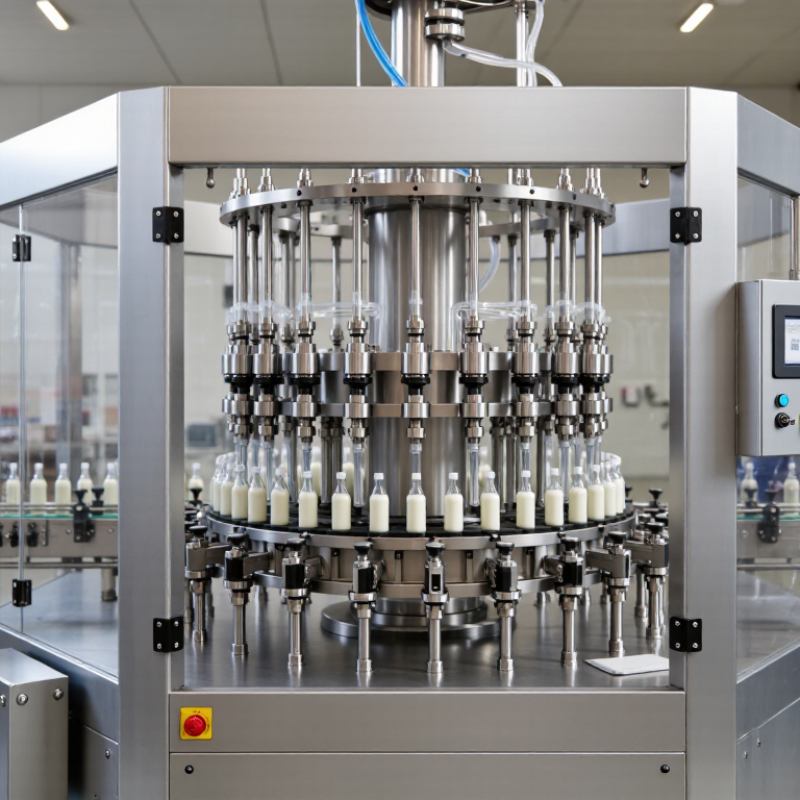
China Top Rotary Liquid Filling Machine Suppliers?

Rotary Liquid Fillers: Core Components, Dosing Heads, and Control Systems

Rotary liquid fillers depend on coordinated parts: a rotating carousel, product tank, transfer valves, dosing heads, and bottle-handling stars. Each head must match the liquid. Piston dosers suit many thicker products, while flow-meter systems can handle some free-flowing liquids. Viscosity changes with temperature, so a setting that works in the morning may drift later. Small details matter. Check hose length, seal materials, and whether operators can remove valves without tools.

Control systems connect the mechanics to repeatable production. A PLC can synchronize carousel speed, bottle detection, filling, and capper signals; sensors can stop dosing when a container is missing. The control panel should show alarms clearly and store recipes with access controls. Grand View Research estimated the global filling machines market at USD 7.17 billion in 2023 and forecast 4.8% annual growth through 2030. This covers filling machines broadly, not rotary liquid fillers alone. It signals investment, not guaranteed performance. Ask suppliers to demonstrate changeovers and test the actual liquid, container, and target fill volume. A polished screen can still hide awkward cleaning or slow fault recovery.

Rotary Liquid Filler Capacity by Dosing-Head Count

Theoretical output at a constant 10 revolutions per minute, assuming one container is filled by each dosing head per revolution.

Calculated as dosing heads × 10 revolutions per minute × 60 minutes per hour. These are theoretical cycle counts, not guaranteed production rates; actual output depends on filling time, product properties, container handling, and control settings.

Operating Sequence: How Rotary Lines Reach 60–600 Containers per Minute

China Top Rotary Liquid Filling Machine Suppliers?

A rotary line moves containers through a circular sequence of stations rather than stopping for each operation. Infeed timing screws and starwheels space bottles before rotating platforms carry them beneath filling heads. At 60 containers per minute, operators can inspect each stage closely. At 600, synchronization matters far more.

The sequence begins with container detection and positioning. Filling valves then open for a set time or respond to a flow meter, depending on the product and machine design. Nozzles may rise during filling to reduce splashing, especially with foamy liquids. After filling, containers pass through a drip-control area, then move to capping, inspection, and discharge. Sensors can flag missing caps or incorrect fill levels. Small changes matter.

A quoted speed is not a production guarantee. Container shape, liquid viscosity, fill volume, cleaning cycles, and operator adjustments all affect sustained output. A fast carousel may still wait on a slower capper or labeler. Watch a trial with your actual container and product, and record both peak and steady output. The awkward part? A clean test run can hide changeover delays. Those deserve attention too.

Filling Methods Compared: Flowmeter, Piston, and Gravimetric Dosing

China’s rotary liquid filling machine suppliers often offer flowmeter, piston, and gravimetric dosing options. The right choice depends on product behavior, target accuracy, and cleaning needs. A sample test matters more than a polished brochure.

Flowmeter dosing measures liquid passing through a sensor and suits many free-flowing products. It supports quick changeovers and recipe adjustments. But bubbles, foam, or changing viscosity may affect readings. Ask suppliers how the meter is calibrated, then test with your actual liquid at operating speed. Watch the first and last nozzles.

Piston dosing uses a cylinder to deliver a set volume. It handles thicker products, such as sauces or creams, with steady portions. However, seals and cylinders need routine inspection, and format changes may take longer. Gravimetric dosing measures weight directly, which helps when density varies or fill weight is critical. It may require a stable platform and can run slower. Not always faster. When comparing suppliers, review measured accuracy, line speed, product-contact materials, cleaning access, and commissioning support. Request trial data across several containers, not just one ideal sample. A small mismatch between test conditions and your plant can change results.

Accuracy Benchmarks: Assess ±0.5% Claims by Product and Test Method

A ±0.5% accuracy claim means little without a defined product and test method. Ask suppliers to clarify whether the figure describes average fill deviation or the error of every container. Those are different benchmarks. A test with water may not predict results with a thicker liquid that drips or foams.

Request a written protocol. It should specify product temperature and viscosity, target fill volume, container type, machine speed, and sample size. For example, weigh consecutive bottles on a calibrated scale, then compare each net fill with the target. Record individual results, not just the average. Small samples can hide occasional overfills. They can.

When comparing rotary liquid filling machine suppliers in China, ask for repeat tests at your intended production speed. Check whether the ±0.5% figure uses the target volume as its basis, and whether startup containers are included. Product changes, nozzle wear, and unstable supply pressure can shift results. A clean factory demonstration is useful, but it is not your production line. I would treat an unsupported percentage as a prompt for more evidence, not a guarantee. Calibration records and a witnessed trial make the number more credible. Even then, real operating conditions may expose gaps in the test.

China Top Rotary Liquid Filling Machine Suppliers? — Accuracy Benchmarks: Assess ±0.5% Claims by Product and Test Method

How to read this table: The figures below define a proposed buyer-side acceptance protocol; they are not measured results or verified claims for any supplier. A ±0.5% limit is meaningful only when the product, target fill, operating conditions, sample count, and calculation method are stated.
Product / application Filling principle to evaluate Suggested test fill Test liquid and conditions Measurement method Proposed ±0.5% check What to report
Still water and other low-viscosity liquids Flowmeter or timed-flow rotary filler 100 mL; ±0.5% equals ±0.50 mL Water at a recorded, stable temperature; use the same liquid and settings throughout the run. Collect and weigh each fill on a calibrated balance; convert mass to volume using the measured liquid density at test temperature. Compare the mean measured volume with the setpoint. Report individual-fill results separately; a passing mean does not prove that every fill is within tolerance. Mean error, standard deviation, coefficient of variation (CV), min–max, and results by filling head.
Bottled beverages and similar liquids Volumetric piston or flowmeter filler 500 mL; ±0.5% equals ±2.50 mL Use the actual product where practical. Record temperature, foaming behavior, line pressure, and machine speed; use a consistent container and drainage procedure. Gravimetric measurement with product-specific density; tare containers and avoid confusing foam or retained liquid with delivered volume. Assess mean bias against the 500 mL setpoint and assess repeatability independently. State whether the claimed limit applies to the mean or to each individual container. Setpoint, actual mean, signed and absolute error, CV, speed, and any rejected or excluded fills.
Edible oil and other low-to-medium-viscosity liquids Piston, flowmeter, or mass-based filling system 1,000 mL; ±0.5% equals ±5.00 mL Test the intended product at a recorded temperature. Keep product supply and machine settings stable; note drips, stringing, or nozzle suck-back. For a mass-based filler, compare delivered mass with the target mass. For a volume claim, convert using measured density and document the conversion. Check accuracy at the specified operating speed and at a stated target volume. Do not infer performance at other volumes or speeds from this test alone. Liquid density and temperature, mean error, CV, head-to-head variation, operating speed, and nozzle condition.
Syrup, sauce, or other viscous products Piston or servo-driven positive-displacement filler 250 mL; ±0.5% equals ±1.25 mL Use the actual product where possible. Record temperature and product condition; viscosity and flow behavior can change with temperature and formulation. Weigh each delivered fill, determine product density under the test conditions, and convert to volume if the specification is volumetric. Use a consistent post-fill settling interval. Run at the intended production speed and include normal nozzle cut-off behavior. Treat strings, drips, and product retained on the container as part of the defined measurement procedure. Mean error, CV, temperature, speed, nozzle settings, settling interval, and the procedure used for strings or drips.
Minimum test controls: Test every filling head rather than relying only on a machine-wide average; collect at least 30 consecutive fills per head at each stated operating condition; identify the balance and its calibration status; record the target, actual readings, liquid temperature, density, and machine speed. Report mean bias and repeatability separately. For a ±0.5% volume claim, the allowable absolute error is 0.005 × target volume; it is ±0.50 mL at 100 mL, ±2.50 mL at 500 mL, and ±5.00 mL at 1,000 mL.

China Supplier Evaluation: Verify ISO 9001, CE Scope, FAT, and Service Support

China Top Rotary Liquid Filling Machine Suppliers?

Choosing a rotary liquid filling machine supplier takes more than comparing quoted prices. Check whether the supplier has built machines for products with similar viscosity, foaming behavior, and container shapes. Ask for a written equipment scope, including filling range, changeover parts, and expected line speed. Small omissions can become costly. I would also ask how the supplier handles adjustments when the product behaves differently during production; a neat demonstration may not reveal every issue.

Review the ISO 9001 certificate and confirm the issuing body, validity, and certified site. Verify that its scope covers relevant manufacturing activities, not just an unrelated office. For CE documentation, check which machine configuration and components it covers, and request the supporting documents. Arrange a Factory Acceptance Test (FAT) using agreed criteria, such as fill-volume checks, leak inspection, and a sustained run with representative containers. Record deviations and corrective actions. FAT results are useful, but they cannot guarantee every condition at your plant.

Tips: Get service response times, spare-parts lead times, training details, and warranty exclusions in writing. Ask who will support installation and what remote troubleshooting requires. Request a sample FAT record. Read it closely. If a requirement is vague, clarify it before payment; I have seen overlooked details cause avoidable delays.

FAQS

What are the main parts of a rotary liquid filler?

A typical system has a rotating carousel, product tank, transfer valves, dosing heads, and bottle-handling stars. Each part must suit the liquid and container.

Which dosing system works best for different liquids?

Piston dosers suit many thicker products. Flow-meter systems can handle some free-flowing liquids. Test the actual product, since temperature can change viscosity.

How can controls improve filling consistency?

A PLC can coordinate carousel speed, bottle detection, filling, and capper signals. Sensors can stop dosing when a container is missing. Clear alarms help operators respond faster.

What should an accuracy claim of ±0.5% include?

Ask whether it describes average deviation or every bottle’s error. Require a written test protocol covering product, temperature, target volume, speed, and sample size.

How should fill accuracy be tested?

Weigh consecutive bottles on a calibrated scale and record individual results. Small samples can mislead. Include startup containers and test at your intended production speed.

Why might a factory demonstration differ from production?

Water may behave differently from a thicker or foaming liquid. Nozzle wear, supply pressure, and product changes can also affect results. I would not trust a tidy demonstration alone.

What documents and tests should be checked when evaluating a supplier?

Verify the ISO 9001 certificate’s issuing body, validity, site, and scope. Check which machine configuration the CE documents cover. Agree on FAT criteria, including fill checks, leak inspection, and a sustained run.

What service details should be agreed in writing?

Confirm response times, spare-parts lead times, training, warranty exclusions, and installation support. Ask for a sample FAT record. Read it closely; vague requirements can cause delays.

Conclusion

A Rotary Liquid Filling Machine combines a rotating carousel, container handling, dosing heads, and a coordinated control system to fill products continuously. Its operating sequence typically includes container feeding, positioning, filling, and discharge, with line speed depending on the container, product, and machine configuration. Well-designed rotary lines may operate in the range of 60–600 containers per minute, but actual output should be confirmed under representative production conditions.

Choosing a filling method depends on product behavior and accuracy needs: flowmeters suit many free-flowing liquids, piston dosing handles thicker products, and gravimetric systems measure by weight. Evaluate accuracy claims such as ±0.5% by checking the product tested, measurement range, and test method. When assessing suppliers in China, verify the scope of ISO 9001 certification and CE documentation, request a factory acceptance test (FAT), and clarify installation, training, spare parts, and after-sales support.

Ethan

Ethan

Ethan is a seasoned marketing professional with a deep knowledge of the company's product offerings. With years of experience in the industry, he brings a unique perspective to the team, consistently demonstrating his expertise through detailed blog posts that are published on the company website.......