
Packaging & Liquid Filling Insights
Expert guides, machinery maintenance tips, and liquid packaging innovations from industry specialists since 1959.
Industry Trends & Buying Guides
In-depth analysis and technical advice for optimizing your liquid bottling and capping operations.
Equipment Optimization Tips
Practical guides on nozzle selection, viscosity handling, and extending machine service life.
How to Choose a Piston Filling Machine in 2026?
Table of Contents
- Define Your Product, Formula, and Filling Requirements
- Match Piston Design to Viscosity, Accuracy, and Product Behavior
- Select Machine Capacity, Speed, and Automation Level
- Evaluate Materials, Cleaning, Safety, and Maintenance Features
- Compare Suppliers, Total Cost, and Long-Term Support
- FAQS
- Conclusion
- Related Posts
Choosing a Piston Filling Machine in 2026 requires more than comparing prices and advertised speeds. Packaging lines are becoming more automated, traceable, and format-flexible. PMMI’s 2024 industry reports identify labor availability, automation, and supply-chain resilience as major packaging investment drivers. These pressures affect every filling decision, from nozzle design to service access.
Market research from Grand View Research and Mordor Intelligence also shows continued growth in filling and packaging equipment demand. Their findings point toward stronger interest in hygienic designs, accurate dosing, quick changeovers, and flexible systems for liquid, cream, and viscous products. Yet market forecasts are not plant specifications. A machine rated at 60 bottles per minute may perform differently with shampoo, honey, lotion, or particulate sauces. Product temperature, viscosity, container shape, and foam behavior can change the result.
Real testing matters.
A reliable selection process should examine fill accuracy, cylinder volume, contact materials, cleaning procedures, and maintenance records. It should also consider controls, spare-parts availability, operator training, and future container formats. Standards and guidance from organizations such as EHEDG, 3-A SSI, and ISO can support hygienic and quality-focused decisions. Still, compliance claims must be verified against the actual machine configuration.
There is no perfect specification sheet. A cheaper filler may create hidden costs through dripping, product waste, or difficult sanitation. Conversely, an advanced system may be unnecessary for a stable, low-volume product. This guide evaluates the practical trade-offs, using published industry evidence and plant-level reasoning to help buyers choose confidently in 2026.
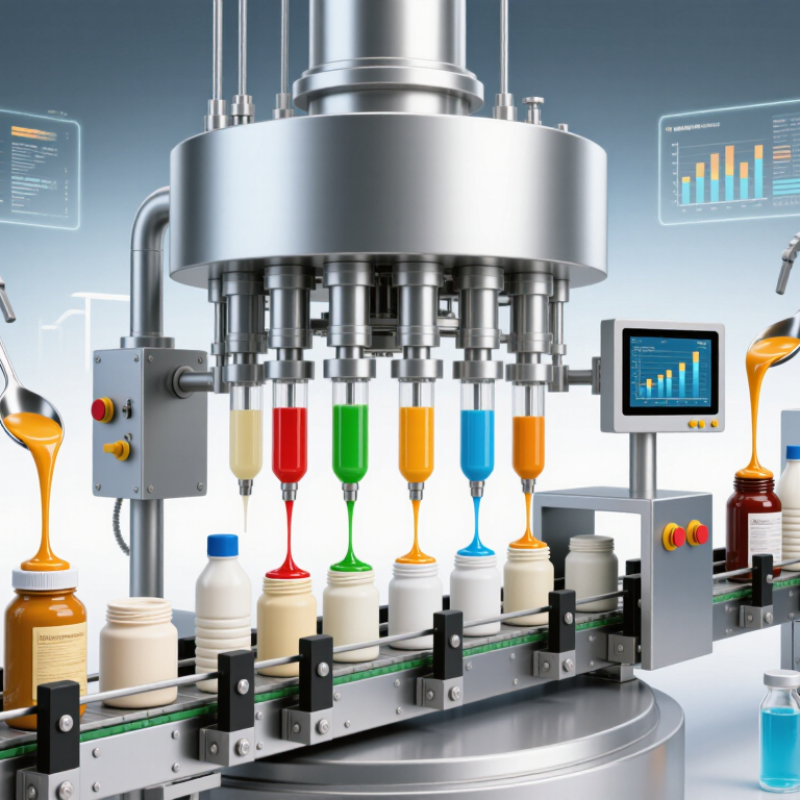
Define Your Product, Formula, and Filling Requirements
How to Choose a Piston Filling Machine in 2026?
Define Your Product, Formula, and Filling Requirements
Start with the product, not the machine. Map its viscosity, density, temperature, and flow behavior before comparing equipment. A thin syrup may fill smoothly, while a thick cream can string, drip, or trap air. Check whether the formula contains particles, fibers, oils, or abrasive powders. These details affect piston diameter, valve design, and contact-material selection. Also record the container shape and opening size. A narrow neck demands better nozzle control.
Filling accuracy depends on more than the piston. Define your target volume, acceptable tolerance, container size range, and production speed. If the formula settles quickly, gentle agitation may be necessary. If it foams, a slower bottom-up fill could reduce waste. I once saw a line specification built around an ideal viscosity. The real product changed after cooling. The original estimate failed. Test the formula at actual operating temperatures, then review the results with production and quality teams.
Tips: Prepare a small test batch. Measure five consecutive fills. Check weight variation, dripping, foam, cleaning time, and changeover effort. Ask for documented calibration procedures and service access. Do not trust a perfect laboratory result alone. Your operators should test the machine with real containers, real closures, and realistic production pauses. A simple trial often exposes problems that polished specifications hide.
How to Choose a Piston Filling Machine in 2026?
Define your product, formula, and filling requirements first. Viscosity is a key factor because it affects piston sizing, filling speed, nozzle selection, and the need for heated or jacketed product paths.
Typical dynamic viscosity at 20–25°C: Water-like products require fast, low-resistance filling, while high-viscosity products such as honey and toothpaste generally require larger product passages, slower dosing speeds, and more powerful pneumatic or servo-driven piston systems. Actual viscosity varies with temperature, shear rate, and formulation, so test the finished product before selecting the machine.
Match Piston Design to Viscosity, Accuracy, and Product Behavior
How to Choose a Piston Filling Machine in 2026?
Match Piston Design to Viscosity, Accuracy, and Product Behavior
Piston design should follow the product, not the catalog headline. Thin liquids usually suit standard single-piston systems. Thick creams need larger inlet paths, stronger drive systems, and slower, controlled strokes. Products containing particles may require wider valves and gentle filling speeds. A narrow passage can create pressure spikes, foaming, or uneven deposits.
The 2024 PMMI State of the Industry report identifies flexibility, labor efficiency, and faster changeovers as major packaging priorities. These pressures make repeatable piston control valuable. For accuracy, examine cylinder volume, servo resolution, fill-speed control, and the machine’s performance at the target range. A machine rated for 10–1,000 milliliters may perform less consistently near its smallest volume. That detail is often missed. The EHEDG hygienic design principles also support smooth surfaces, drainability, and reduced product retention. These features matter when formulas change daily.
Tips: Test the actual product at its coldest and warmest processing conditions. Record fill weight, drip behavior, and recovery after pauses. Review at least 30 consecutive fills, not only three attractive samples. The PMMI 2024 report also reinforces the value of practical automation data. Ask for documented repeatability, but verify it on your line. Paper accuracy can disappoint.
Select Machine Capacity, Speed, and Automation Level
How to Choose a Piston Filling Machine in 2026?
Select capacity from real demand, not an optimistic forecast. Grand View Research estimates the global filling machine market will grow at about 4.8% annually through 2030. That growth does not justify buying the fastest machine. Measure containers per hour, product viscosity, fill volume, and daily operating time. Then allow 15–25% spare capacity for changeovers, cleaning, and minor stoppages. A 40-nozzle machine may look impressive, but it can become wasteful when production runs are short.
Speed must reflect usable output. Ask suppliers for tested results with your product and container, not empty-machine figures. In plant trials, thick creams often slow piston return and increase dripping. A stable 3,000 containers per hour may outperform a claimed 5,000. PMMI’s 2024 State of the Industry report highlights labor availability and flexible equipment as continuing packaging concerns. That supports practical automation, but not automation everywhere. A neat spreadsheet can still mislead.
Choose automation by labor risk, recipe changes, and quality requirements. Manual machines suit low-volume products and frequent format changes. Semi-automatic systems can reduce operator fatigue while preserving control. Fully automatic lines need synchronized conveyors, sensors, recipe management, and reliable cleaning procedures. The International Federation of Robotics reported 541,302 industrial robot installations globally in 2023, showing strong automation momentum. Yet robots do not fix poor process design. Review downtime records, training needs, spare parts, and operator access before deciding. The cheapest machine may cost more later.
Evaluate Materials, Cleaning, Safety, and Maintenance Features
Choosing a piston filling machine in 2026 requires more than comparing output rates. Material selection affects hygiene, durability, and product compatibility. In production trials, 316L stainless steel handles frequent washing better than lower-grade alloys. However, the product may still attack seals or valve seats. Ask for compatibility data, not general promises. Check whether seals can withstand your product, temperature, and cleaning chemicals.
Cleaning design deserves close inspection. A smooth filling path reduces residue around piston chambers and connection points. Look for clean-in-place capability, drainable piping, and quick-release parts. These features save labor during shift changes. They also reduce contamination risks. Watch a full cleaning cycle if possible. A brochure cannot show hidden dead zones. Shorter cleaning times sound attractive, but rushed washing can create problems.
Safety features should include guarded moving parts, door interlocks, emergency stops, and controlled restart functions. Operators should reach adjustment points without placing hands near the piston. Maintenance access matters just as much. Request lubrication schedules, spare-part lists, calibration instructions, and service records. No machine is maintenance-free. I have seen small seal leaks become expensive downtime because inspection intervals were ignored. Leave enough space around the frame for tools and technicians. A compact layout may look efficient, yet it can make routine repairs awkward. Ask the supplier to demonstrate sensor checks, piston replacement, and fault recovery before purchase.
How to Choose a Piston Filling Machine in 2026? - Evaluate Materials, Cleaning, Safety, and Maintenance Features
| Evaluation Area | Feature or Specification | Recommended Benchmark | Why It Matters | Acceptance Check |
|---|---|---|---|---|
| Materials | Product-contact surfaces | High Priority Use corrosion-resistant stainless steel such as 316L for wetted parts when the product contains salt, acids, chlorides, or aggressive cleaning chemicals. |
The correct alloy helps reduce corrosion, contamination risk, metallic leaching, and unexpected maintenance. | Request a wetted-parts material list and certificates or traceability records for the piston, cylinder, valves, manifold, and nozzles. |
| Materials | Non-product-contact frame | 304 stainless steel is commonly suitable for general food, cosmetic, and pharmaceutical equipment frames in non-corrosive environments. | It provides a cleanable and durable structure while avoiding unnecessary material cost where 316L is not required. | Confirm the frame has smooth welds, closed or hygienic tubing, minimal crevices, and no exposed rust-prone surfaces. |
| Materials | Gaskets and seals | High Priority Select seals compatible with the product, temperature, pressure, cleaning agents, and expected service life. Common options include EPDM, PTFE, and FKM, depending on compatibility. |
Seal failure can cause leakage, product contamination, unplanned downtime, and inaccurate fills. | Obtain a chemical-compatibility statement and verify seal material, hardness, temperature range, and replacement availability. |
| Materials | Surface finish and weld quality | Product-contact areas should be smooth, free from pits and cracks, and suitable for the required hygiene standard. A commonly specified hygienic finish is approximately Ra ≤ 0.8 µm, where applicable. | Smooth surfaces reduce product retention and make cleaning and inspection easier. | Inspect sample welds, internal corners, dead legs, and surface-finish documentation before approval. |
| Cleaning | Tool-less dismantling | High Priority Product-contact pistons, cylinders, valves, hoses, and nozzles should be removable without complex disassembly; tool-free access is preferred for routine cleaning. |
Fast, repeatable changeover reduces labor time and lowers the chance that residue remains inside the machine. | Perform a supervised strip-down and reassembly using the proposed cleaning procedure and record the time required. |
| Cleaning | Cleaning method | Choose a validated manual-cleaning, COP, or CIP-compatible design according to the product and production volume. CIP capability should not be assumed without documented flow and drainage data. | The correct cleaning method controls microbial, allergen, and cross-product contamination risks. | Review cleaning agents, temperature, concentration, contact time, rinse requirements, drainability, and validation records. |
| Cleaning | Drainability and hygienic design | Product paths should drain effectively, avoid unnecessary dead legs, and provide access for visual inspection. Hoses should be routed to prevent pooling and kinking. | Trapped liquid and inaccessible areas can support microbial growth and cause product carryover. | Use water or the actual product to check drainage, low points, trapped volume, and residue after cleaning. |
| Safety | Guarding and interlocks | High Priority Moving parts should be guarded, and access doors should use safety interlocks that stop hazardous motion when opened. |
Pistons, linkages, conveyors, and indexing mechanisms can create crushing, trapping, or shearing hazards. | Test every guard, interlock, emergency stop, restart inhibit, and safe-access function during commissioning. |
| Safety | Emergency stop and restart control | High Priority Provide clearly marked emergency-stop devices, controlled stopping, and protection against automatic restart after power recovery or fault reset. |
Proper control logic helps prevent unexpected movement and supports safer operator intervention. | Verify the safety circuit, reset location, fault indication, and restart sequence with the machine risk assessment. |
| Safety | Pneumatic and electrical protection | Use pressure regulation, isolation, and safe exhaust for pneumatic circuits, together with protected electrical enclosures and clearly identified disconnects. | Stored pneumatic energy and electrical faults can remain hazardous even when normal operation has stopped. | Confirm lockout points, pressure gauges, isolation valves, enclosure ratings, grounding, and wiring documentation. |
| Maintenance | Wear-part accessibility | Important Seals, O-rings, hoses, check valves, nozzles, and sensors should be accessible from safe service positions without removing unrelated assemblies. |
Accessible wear parts shorten planned maintenance and reduce the risk of incorrect reassembly. | Ask for a preventive-maintenance map and replace representative wear parts during a practical service demonstration. |
| Maintenance | Lubrication requirements | Minimize lubrication points in product areas. Where lubrication is necessary, use the lubricant grade specified for the application and prevent contact with the product. | Incorrect or excessive lubrication can cause contamination, seal damage, and premature component failure. | Review the lubrication schedule, lubricant specifications, access points, and contamination-control procedure. |
| Maintenance | Spare parts and documentation | Important Require an illustrated parts list, pneumatic and electrical diagrams, operating instructions, cleaning procedures, and a recommended two-year spare-parts list. |
Complete documentation improves troubleshooting, training, audit readiness, and parts availability. | Confirm manuals are supplied in the required language and that critical parts have identifiable part numbers and lead times. |
| Maintenance | Control and fault diagnostics | The control system should display understandable alarms for low air pressure, missing containers, sensor faults, overloads, and fill-cycle interruptions. | Clear diagnostics reduce mean time to repair and help operators distinguish process issues from mechanical faults. | Simulate common faults and confirm alarm messages, event history, recovery steps, and data retention. |
| Performance | Fill accuracy and repeatability | High Priority Specify a measurable accuracy target based on product viscosity, fill volume, temperature, and container format. Validate it using a statistically meaningful sample rather than a single fill. |
Piston fillers are volumetric systems; product properties and operating conditions directly affect the delivered mass or volume. | Run factory and site acceptance tests using the actual product or a documented equivalent at minimum, nominal, and maximum fill volumes. |
| Changeover | Format and recipe changeover | Standard Use repeatable recipes for fill volume, speed, acceleration, nozzle position, and container format, with clearly identified change parts. |
Controlled recipes reduce setup errors and improve repeatability between operators and production batches. | Measure changeover time, verify recipe permissions, and confirm the first acceptable batch after setup. |
Selection tip: Give the highest weight to product-contact materials, cleanability, safety circuits, seal compatibility, and validated fill performance. Throughput should be evaluated only after confirming the required fill accuracy and hygiene conditions.
Compare Suppliers, Total Cost, and Long-Term Support
Choosing a piston filling machine in 2026 requires more than comparing purchase prices. Supplier quality often determines daily performance. Ask for documented filling accuracy, material certificates, factory acceptance testing, and service records from similar applications. A reliable supplier should explain how the machine handles product viscosity, temperature changes, cleaning cycles, and container variation. Request a sample run using your actual product and packaging. Numbers from a brochure are not enough.
Total cost includes installation, commissioning, operator training, spare parts, utilities, and planned maintenance. Calculate the cost over five years, not only the invoice value. A cheaper machine may require costly imported seals or longer technician travel. Check the warranty carefully. Confirm response times, remote support hours, and local service coverage. Ask how quickly common parts can arrive. Small delays can stop an entire filling line.
Long-term support deserves equal weight. Review the supplier’s engineering team, software update policy, manuals, and training materials. Speak with existing users, but verify their production conditions first. My first comparison focused too heavily on speed. That was a mistake. A faster filler was less practical during cleaning and changeovers. Real factory experience can reveal these gaps. Leave room for uncertainty, because maintenance needs may change as production grows. The best choice balances accurate filling, manageable ownership costs, and dependable support.
FAQS
Measure viscosity, density, temperature, flow behavior, and particle content. A narrow container opening may require precise nozzle control. Small details matter.
A cream may become thicker after cooling and begin stringing or dripping. Test the formula at actual operating temperatures, not only in a laboratory. The original estimate may fail.
Prepare a small test batch and measure five consecutive fills. Check weight variation, foam, dripping, cleaning time, and changeover effort. Use real containers and closures.
Gentle agitation can help formulas that settle quickly. A slower bottom-up fill may reduce foam and product waste. Results can vary.
Ask for material certificates and compatibility data for seals and valve seats. Check resistance to the product, operating temperature, and cleaning chemicals. General promises are not enough.
Look for smooth product paths, drainable piping, clean-in-place capability, and quick-release parts. Watch a complete cleaning cycle when possible. Hidden residue can remain in dead zones.
The machine should include guarded moving parts, door interlocks, emergency stops, and controlled restart functions. Request lubrication schedules, spare-part lists, calibration instructions, and fault-recovery demonstrations. No machine is maintenance-free.
Include installation, training, spare parts, utilities, commissioning, and planned maintenance. Calculate ownership costs over five years, not only the purchase price. Cheap equipment may create costly downtime.
Request an actual product trial, service response times, software policies, and local support details. Ask how quickly common seals and replacement parts can arrive. Speed is not everything.
Do not focus only on output speed. A faster machine may perform poorly during cleaning, changeovers, or routine repairs. I would review that assumption again.
Conclusion
Choosing the right Piston Filling Machine in 2026 starts with a clear understanding of your product, formula, container type, filling volume, and required accuracy. Consider how viscosity, particulates, temperature, and product behavior may affect performance, then select a piston design that can deliver stable, repeatable results. You should also evaluate production capacity, filling speed, and the appropriate level of automation for your current workflow and future growth.
Beyond output, examine construction materials, hygienic design, cleaning procedures, operator safety, and maintenance accessibility. A machine that is easy to inspect and service can reduce downtime and support consistent production. Finally, compare suppliers based on equipment quality, total ownership cost, training, spare parts availability, warranty terms, and long-term technical support. The best choice is not necessarily the machine with the lowest purchase price, but the one that reliably meets your requirements while providing safe operation, efficient maintenance, and lasting value.

Blog Tags: