1. Engineering Physics & Chemistry in Cleaning Supplies Packaging
The global household, commercial, and industrial hygiene sector is undergoing unprecedented expansion. However, specifying a high-performance cleaning supplies packaging machine demands far deeper engineering evaluation than standard food or cosmetic liquid filling. Cleaning formulations—ranging from aqueous window sprays and surfactant-laden dishwashing liquids to highly aggressive sodium hypochlorite bleaches, caustic degreasers, and solvent-based industrial sanitizers—present complex physical and chemical challenges during high-speed bottling operations.
To achieve operational efficiency, micro-gram volumetric accuracy, and line zero-downtime longevity, packaging equipment engineers must optimize machine design against three core fluid dynamics variables:
Key Physical Variables in Household Chemical Bottling
- Surfactant Dynamics & Foaming Indices: High-concentrate cleaning agents contain anionic, cationic, and non-ionic surfactants that drastically lower surface tension. Standard gravity or free-fall fill heads introduce turbulent air entrapment, creating voluminous foam that causes false level readings, product overflow, and container seal contamination.
- Rheological Diversity: Viscosities in the cleaning supply sector span from 1 centipoise (cP) (thin surface disinfectants) up to 15,000+ cP (heavy gel drain openers and toilet bowl cleaners). Packaging systems must accommodate non-Newtonian shear-thinning fluids without causing structural polymer breakdown.
- Chemical Aggression & Oxidative Corrosion: Chlorinated compounds, hydrochloric acid, and solvent degreasers rapidly attack standard 304 stainless steel, deteriorating sealing O-rings, oxidizing mechanical lances, and causing premature bearing seize within months of deployment.
Since 1959, Filling Equipment Company, Inc. has pioneered specialized metallurgy and pneumatic fluid path isolation engineered specifically to conquer these aggressive chemical environments. By combining non-metallic wetted components, positive-displacement piston logic, net-weight load cell tracking, and servo-driven diving nozzle lances, our machine architectures ensure continuous, spill-free production throughput across all cleaning container formats.
2. Featured Cleaning Supplies Packaging Machine Lineup
Every cleaning product manufacturing facility presents unique space constraints, target outputs (BPM - Bottles Per Minute), and container geometry variances. Below are our premier U.S.-built packaging solutions engineered specifically for cleaning chemical packagers.
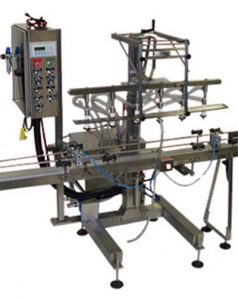
Automatic Inline Liquid Detergent Filler
Designed for medium-to-high volume bottling of household liquid detergents, floor cleaners, and hand soaps. Features bottom-up diving nozzles to eliminate surfactant foaming.
- Fill Range: 50 ml – 5000 ml
- Speed: Up to 120 BPM
- Contact Parts: 316L SS / PTFE
- Control System: PLC with HMI Touchscreen
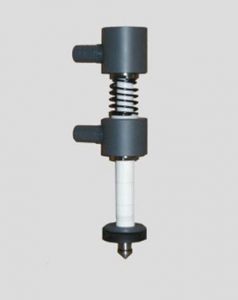
Corrosive-Resistant Non-Metallic Filler
Engineered exclusively for aggressive acid bowl cleaners, concentrated bleach, and sodium hypochlorite solutions. Incorporates solid PVC/Kynar fluid paths and Hastelloy C-22 components.
- Chemical Rating: Acids, Bleach, Caustics
- Nozzle Tech: Anti-Drip PVC / Hastelloy
- Enclosure: Positive Pressure Sealed
- Structure: Epoxy Coated Heavy Steel
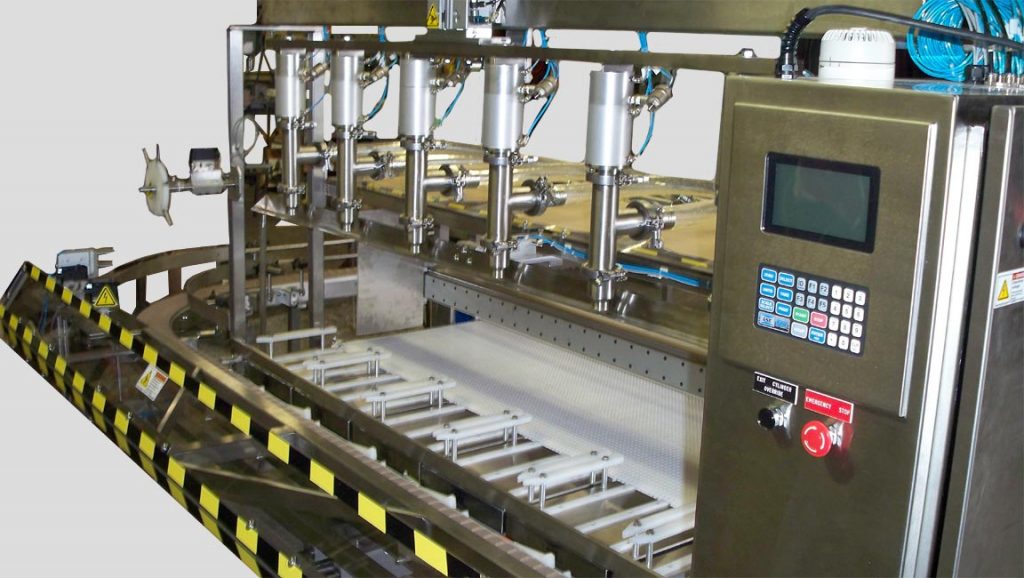
6-Head Net-Weight Gallon Packaging Line
Heavy-duty net-weight filler built for bulk commercial cleaning supplies, 1-gallon jugs, and 5-liter containers. Direct load cell feedback guarantees zero product giveaway.
- Container Size: 1 Quart to 2.5 Gallons
- Accuracy: ±0.1% Mass Measurement
- Dosing Type: Load Cell Mass Sensing
- Changeover: Toolless Fast Swap
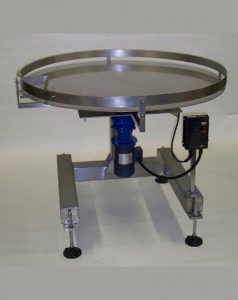
High-Speed Rotary Accumulating System
Heavy-duty stainless steel rotary accumulation and loading turntable. Stabilizes light PET spray bottles and heavy HDPE handles prior to filling and capping stages.
- Disc Diameter: 36" / 48" / 60" Options
- Drive Motor: Variable Speed AC Gear
- Guide Rail: Fully Adjustable Dual Track
- Material: Heavy Gauge 304/316 SS
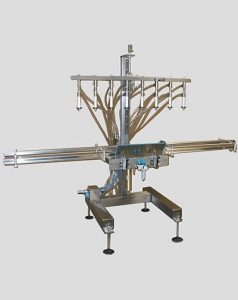
Benchtop Semi-Auto Piston Filler
Ideal for specialized cleaning formulations, pilot testing, and short-run industrial degreaser lines. Offers precision volumetric metering in a compact footprint.
- Operation: Pneumatic Foot Pedal / Auto
- Viscosity Range: 1 to 20,000 cP
- Portability: Benchtop Modular
- Cleaning: Quick Disconnect Sanitization
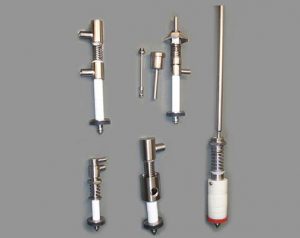
Custom Anti-Drip Subsurface Nozzle Arrays
Proprietary nozzle assemblies designed with internal ball-check valves and screen packs to prevent post-fill dripping, stringing, and neck foam residue accumulation.
- Styles: Diving, Positive Shut-off, Vacuum
- Materials: 316L, PVC, Hastelloy, Titanium
- Seal Tech: Viton, Kalrez, PTFE Custom
- Compatibility: Universal Inline Retrofit
3. Technological Evolution in Household Chemical Automation
The architecture of modern cleaning supplies packaging machines has evolved rapidly from mechanical pneumatics to digital, servo-controlled intelligence. Historically, plant managers relied on mechanical cam adjustments and manual stroke stops to change bottle filling volumes. This created lengthy changeovers, required high maintenance, and suffered from mechanical wear drift over prolonged operation.
A. Servo-Driven Motion Control vs. Pneumatic Indexing
Modern high-speed cleaning product lines utilize multi-axis servo motors controlling both nozzle trajectory and piston displacement. In a surfactant-heavy environment (such as carpet shampoo or concentrated dish liquid filling), the servo motor moves the nozzle lance down to within 2mm of the container bottom. As fluid is metered into the container, the servo orchestrates a perfectly synchronized profile lift, keeping the nozzle orifice submerged just beneath the rising fluid surface. This technique eliminates turbulence, vapor buildup, and micro-foaming, allowing line speeds to increase by up to 35% without bottle overflow.
B. Digital Mass Flowmeter & Load Cell Integration
While volumetric piston fillers remain highly accurate for consistent viscosity fluids, liquid cleaners are subject to density shifts caused by temperature fluctuations during bulk mixing. The integration of Coriolis mass flowmeters and high-speed strain gauge load cells allows direct gravimetric dosing. The machine calculates fluid mass in real time, automatically compensating for temperature-induced volume changes and guaranteeing compliance with weights and measures regulations worldwide.
| Technology Vector | Legacy Mechanical Systems | Modern Servo / Mass Flow Packaging Machines |
|---|---|---|
| Foam Management | Fixed top-fill orifice; high foam risk requiring anti-foaming chemical additives. | Servo-driven bottom-up subsurface diving lances; zero foam generation. |
| Chemical Resistance | Standard 304 SS; prone to pitting corrosion from bleaches and acids. | Corrosion-proof solid PVC, Hastelloy C-22, Titanium, and Kynar fluid conduits. |
| Changeover Time | 45–90 minutes with manual mechanical tool adjustments. | Under 15 minutes via HMI recipe selection and toolless puck swappability. |
| Dosing Precision | ±1.0% to ±2.0% volumetric error margin. | ±0.1% to ±0.25% gravimetric / net-weight precision. |
| Maintenance & OEE | High wear on mechanical linkages; frequent recalibration required. | Solid-state motion electronics; predictive telemetry maintenance alerts. |
4. Global Buyer Procurement Trends & Sustainability Drivers (2026–2030)
According to recent global contract manufacturing data and procurement surveys among FMCG cleaning chemical brands, procurement parameters for automated packaging machinery are shifting decisively toward sustainable flexibility, multi-SKU compatibility, and operator safety.
1. Adaptation to Post-Consumer Recycled (PCR) Containers
To meet global carbon neutral targets, cleaning supply brand owners are replacing virgin HDPE and PET bottles with thin-walled Post-Consumer Recycled (PCR) plastics. PCR containers exhibit significant dimensional variance, wall rigidity inconsistencies, and container neck tolerance shifts. Traditional rigid bottle clamps can crush or warp thin-walled PCR bottles during high-pressure filling. Modern packaging machines incorporate soft-touch pneumatic bottle gating, flexible neck-centering guides, and non-contact optical positioning sensors to handle eco-friendly PCR bottles safely.
2. Multi-SKU Flexibility & Trigger Spray Integration
Consumer preference has shifted heavily toward ergonomic trigger sprayers (for kitchen degreasers, glass cleaners, and bathroom disinfectants) and concentrated refill pouches. Procurement teams now mandate packaging machinery capable of handling diverse bottle shapes—ranging from flat oval trigger bottles to heavy 1-gallon handle containers—on a single universal inline chassis.
3. Hazardous Environment & ATEX Compliance
With the global demand for alcohol-based hand sanitizers, surface disinfectants, and solvent-based industrial degreasers, safety standards have intensified. Buyers increasingly specify Class 1, Division 1 or Division 2 (NEC) / ATEX Zone 1 explosion-proof machine builds. Essential features include intrinsically safe pneumatic circuitry, purge-pressurized electrical cabinets, anti-static conveyor wear strips, and continuous vapor extraction shrouds to prevent solvent vapor buildup.
5. The Filling Equipment Company Enterprise Advantage
Selecting a cleaning supplies packaging machine is a long-term capital investment. For over six decades, Filling Equipment Company, Inc. has designed, engineered, and manufactured heavy-duty liquid filling and bottle capping systems at our College Point, New York facility.
Why Leading Chemical Brands Trust Our Engineering:
- 65+ Years of Manufacturing Heritage (Est. 1959): We bring deep practical experience in fluid mechanics, seal polymer compatibility, and custom nozzle design.
- U.S. Precision Machining & Quality Control: Every machine is custom-fabricated, assembled, and rigorous factory-acceptance tested (FAT) in New York using premium American and globally sourced industrial components.
- Direct Manufacturer Pricing: By working directly with our engineering team, you eliminate distributor markups and gain direct access to custom machine design modifications tailored to your exact chemical formulations.
- Lifetime Support & Rapid Spare Parts Dispatch: We maintain complete engineering blueprints and inventory for every machine built, ensuring rapid replacement parts dispatch and minimal line downtime.
Whether you require a single semi-automatic unit for specialized pilot batches or a fully automated, turn-key bottling line featuring bottle unscramblers, liquid fillers, trigger spray cappers, and rotary accumulation tables, our engineering group works with you from initial fluid sample analysis through final line installation.
6. Frequently Asked Questions: Cleaning Supplies Packaging Machines
Below are detailed answers to the most common engineering and procurement questions asked by global chemical packagers regarding machine selection, maintenance, and operational compliance.
Q1: How do I select the right cleaning supplies packaging machine for foaming vs. non-foaming formulations?
Answer: Machine selection depends on the surfactant concentration and surface tension of your liquid cleaner. Highly active liquid soaps, floor cleaners, and degreasers demand bottom-up subsurface diving nozzle fill systems. These nozzles submerge to the bottom of the container before dispensing begins and rise in synchronization with the liquid level, preventing aeration and foam generation. Non-foaming solvent formulations can utilize simpler top-fill gravity, overflow, or volumetric piston filling.
Q2: What machine materials are required for filling concentrated bleach (sodium hypochlorite) or acid-based cleaners?
Answer: Highly corrosive chemicals will quickly corrode 304 or 316L stainless steel. For sodium hypochlorite, hydrochloric acid, or phosphoric acid formulations, non-metallic filling architectures utilizing solid PVC, Kynar (PVDF), PTFE fluid conduits, titanium lances, and Hastelloy C-22 components are required. Electrical cabinets must also be sealed and positively pressurized to prevent corrosive vapors from damaging sensitive PLC components.
Q3: Can a single packaging machine handle multi-format containers such as spray bottles, pump bottles, and 1-gallon jugs?
Answer: Yes. Modern inline liquid filling platforms utilize modular, toolless quick-change bottle guides, height-adjustable fill frames, and programmable servo controls. By swapping bottle pucks and selecting pre-saved HMI fill recipes, operators can switch from 8 oz trigger spray bottles to 1-gallon handle containers in under 15 minutes.
Q4: How does net-weight filling compare to volumetric piston filling for large household detergent containers?
Answer: Volumetric piston fillers deliver exceptional speed and volume precision for consistent viscosity liquids. However, plastic container extrusion tolerances (especially in 1-gallon HDPE jugs) can cause slight visual fill-level variations. Net-weight filling measures liquid mass directly via precision strain-gauge load cells, ensuring compliance with consumer weight labeling laws and eliminating product giveaway regardless of container wall thickness or temperature changes.
Q5: What safety certifications and containment features are essential for hazardous household chemical filling lines?
Answer: Lines handling flammable solvent degreasers or high-proof alcohol disinfectants require Class 1, Division 1 or Division 2 (NEC) / ATEX explosion-proof compliance. Key safety features include pneumatic emergency shutoff interlocks, acid-resistant polycarbonate drip shrouds, integrated spill containment basins, forced vapor extraction manifolds, and static grounding systems.