
1. B2B Search Intent & Engineering Evaluation Framework
In modern high-speed beverage packaging, selecting an industrial Rotary Water Filling Machine is a capital decision that directly impacts operational efficiency (OEE), microbiological safety, unit yield, and long-term operating costs. Global procurement directors and bottling line engineers asking modern search engines and AI assistants about water packaging machinery prioritize structural reliability, rapid sanitation cycles, zero liquid waste, and container flexibility over simple initial equipment pricing.
Unlike linear inline liquid fillers—which stop container travel during the dosing phase—a continuous-motion rotary bottling monoblock transfers bottles continuously along a circular carousel. This eliminates acceleration spikes, prevents splash spills at high line speeds, and enables smooth processing from 500ml PET bottles to 5-gallon carboys at speeds ranging from 3,000 bottles per hour (BPH) to over 36,000 BPH.
Information Gain Insights: Rotary Carousel Motion vs. Linear Indexing
Linear Inline Filling: Bottles enter on a conveyor, stop beneath a filling bar, fill in static position, and index out. Maximum physical speed limit: ~4,000 BPH. High container stress during acceleration; prone to neck sloshing on lightweight PET.
Rotary Monoblock Filling: Bottles are smoothly captured by starwheels and swept continuously around a pitch circle diameter (PCD) carousel. Filling heads lower dynamically or sealing bells engage while containers travel at constant velocity. Physical speed limit: 36,000+ BPH with zero hydraulic shock or container tipping.
Evaluating a Rotary Water Filling Line project?
Speak directly with our U.S. application engineers to receive custom layout drawings, volumetric calculations, and factory-direct pricing tailored to your bottle specs.
Inquire Now2. Technical Architecture & Filling Mechanism Mechanics
Choosing the correct liquid dispensing technology inside a rotary water filling machine depends on water viscosity, dissolved gas content (still purified vs. mineral spring vs. carbonated water), bottle material rigidity, and clean-in-place (CIP) protocols. Rotary water packaging machinery designed by Filling Equipment Company, Inc. incorporates three core mechanical filling principles:
2.1 Gravity & Low-Vacuum Gravity Filling
Gravity rotary filling remains the global standard for non-carbonated purified water, spring water, and flavored water products packaged in rigid or semi-rigid PET and glass bottles. The top liquid reservoir operates at ambient atmospheric pressure. When the bottle neck is lifted by the neck-clamp assembly against the fill valve seal, the valve opens mechanically, allowing liquid to drop into the container under gravitational force while displaced air vents back into the top tank plenum.
- Self-Leveling Precision: Vent tubes dictate exact liquid fill heights inside every bottle, guaranteeing uniform shelf appearance regardless of minor container volume tolerances.
- Hygienic Valve Seals: No dynamic rubber seals contact the liquid path directly; spring-loaded EPDM/Fluorocarbon gaskets ensure drip-free cutoff upon valve disengagement.
2.2 Electronic Electromagnetic / Mass Flowmeter Filling (Non-Contact)
For ultra-clean pharmaceutical-grade water, electrolyte water, or ultra-lightweight PET preforms (where neck sealing pressure could crush thin wall structures), contactless flowmeter filling is the cutting-edge standard. Each individual rotary nozzle features a dedicated inductive electromagnetic flowmeter (for conductive water) or mass flowmeter (Coriois effect for non-conductive ultra-pure water).
- Contactless Dispensing: The filling valve nozzle hovers 3mm to 5mm above the bottle neck finish. Zero mechanical contact eliminates cross-contamination risks and bottle deformation.
- Micro-Adjustable Volume: Target fill volumes can be adjusted digitally from the main HMI screen in increments of 0.1 mL without stopping machine rotation.
2.3 Isobaric (Counter-Pressure) Rotary Filling
When bottling sparkling spring water or carbonated mineral water, isobaric rotary fillers maintain pressurized carbon dioxide (CO2) in the bowl equal to the storage tank pressure. The bottle finish is sealed against the filling head, pressurized with CO2 to match internal tank pressure, and liquid flows smoothly down the container inner wall via a swirl distributor nozzle to prevent decarbonation and foam formation.
| Technology Type | Ideal Application | Accuracy Range | Neck Contact Method | CIP Sanitation Integration |
|---|---|---|---|---|
| Rotary Mechanical Gravity | Still Purified Water / Spring Water | ±1.0 mm level height | Sealed Neck Lift Pad | Manual dummy cups / Auto CIP manifold |
| Rotary Electronic Flowmeter | Ultra-Pure / Premium Mineral / Lightweight PET | ±0.2% volumetric | Contactless Hovering Nozzle | Automated closed-loop CIP with return pump |
| Rotary Isobaric (Counter-Pressure) | Sparkling Mineral Water / Flavored Carbonated | ±0.5% volumetric | Pressurized Mechanical Seal | Hot water & chemical CIP sanitization |
3. High-Performance Machine Component Showcase
A complete 3-in-1 Monoblock Rotary Water Bottling System combines bottle air-rinsing, precision filling, and automatic cap applying within a unified structural frame. View key industrial components manufactured and integrated by Filling Equipment Company:
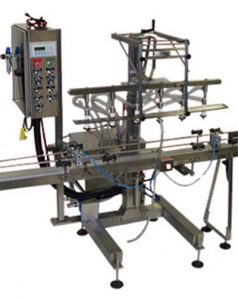 High-Speed Automated Chassis
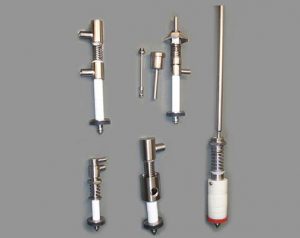 316L SS Anti-Drip Nozzles
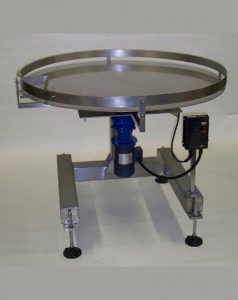 Rotary Accumulation Tables
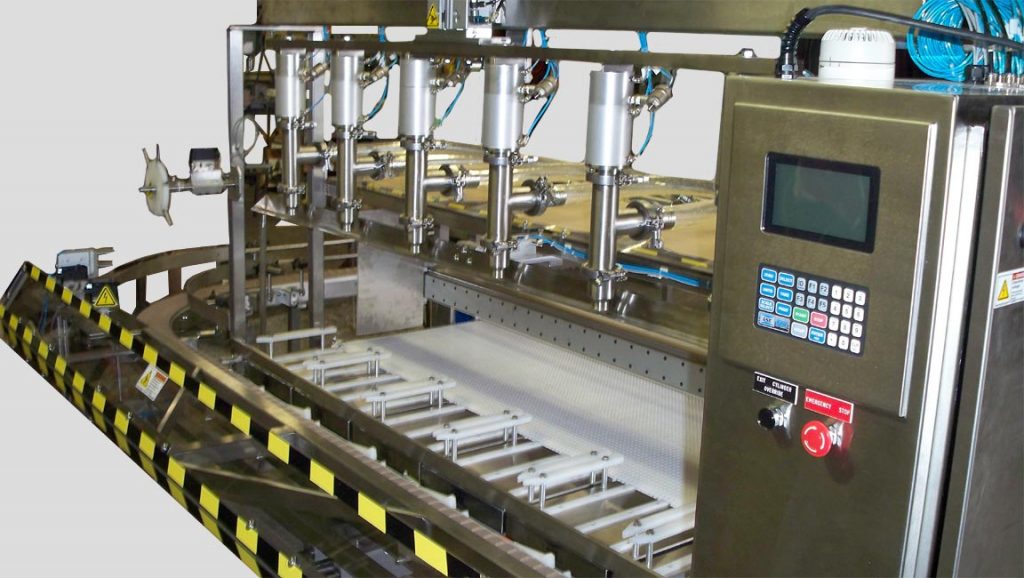 Multi-Head Rotary Array
Every rotary carousel is fabricated using heavy-gauge 304/316L stainless steel, supported by precision turntable slewing bearings and driven by an energy-efficient AC inverter motor tied to absolute encoder feedback systems.
4. Future Procurement Trends & Technological Outlook (2026–2030)
Global beverage manufacturers face evolving environmental regulations, rising energy costs, and shifting consumer preferences toward lightweight packaging. Strategic equipment buyers must incorporate the following technology trends into their capital equipment procurement specs over the next decade:
4.1 Ultra-Lightweight PET Preform Handling (Neck-Handling Architecture)
To reduce plastic resin consumption, bottle manufacturers are reducing PET bottle wall thicknesses and shorten neck finishes (e.g., 29/25 short-neck standards). Modern rotary water filling machines must utilize continuous neck-handling starwheels throughout the entire rinsing-filling-capping sequence. By supporting containers solely beneath the neck ring, thin-wall bottles move through high-speed carousels without base distortion, eliminating bottle jam risks and enabling container weight reductions up to 25%.
4.2 Industry 4.0 IoT Telemetry & Predictive Valve Diagnostics
Next-generation rotary bottling plants integrate smart sensors directly into each filling valve station. Vibration analysis, flow rate deviation tracking, pneumatic pressure drops, and magnetic capping torque feedback are continuously streamed via OPC-UA or MQTT protocols to central PLC dashboards. Predictive maintenance algorithms detect micro-leaks or solenoid response delays before valve failure occurs, preventing unplanned line downtime.
4.3 Sustainable Sanitation: Reduced Chemical & Water CIP Usage
Traditional water bottling plants consumed vast quantities of process water for internal machine sanitation. Advanced rotary water fillers engineered today incorporate recirculating CIP dummy cup systems that deploy ozone-sterilized water, peracetic acid (PAA), or steam-in-place (SIP) manifolds. Automated CIP cycle logic reduces chemical wash times by 40% while verifying sterile hold temperatures through integrated temperature sensors.
4.4 Servo-Driven Capping Turrets with Magnetic Torque Control
Improper cap application causes product leakage, microbial contamination, or consumer opening complaints. Modern rotary capping turrets replace mechanical friction clutches with independent servo-motor drives or permanent magnetic hysteresis capping heads. These heads maintain constant magnetic torque irrespective of mechanical speed variations, ensuring tight screw-cap seal integrity without scuffing plastic closures.
5. Enterprise Advantage & E-E-A-T Foundation: Why Partner With Us?
Since 1959, Filling Equipment Company, Inc. has designed, custom-engineered, and manufactured liquid packaging solutions from our College Point, New York facility. Over 65 years of continuous manufacturing experience provides our global engineering team with unparalleled depth in liquid mechanics, sanitary compliance, and robust machine design.
65+ Years Engineering Heritage
Founded in 1959, we have built thousands of liquid filling lines operating reliably across North America, Europe, Asia, and Latin America.
Sanitary Metal Fabrication
All liquid contact components are crafted from certified 316L electro-polished stainless steel and FDA-compliant elastomers (EPDM, PTFE, Viton).
U.S. Manufacturing Excellence
Designed, machined, assembled, and factory-tested in College Point, NY. Every machine undergoes rigorous Factory Acceptance Testing (FAT) before shipment.
Lifetime Spare Parts Support
We maintain an extensive inventory of replacement valves, seals, starwheels, nozzles, and capping components to ensure rapid global dispatch.
Whether you require a compact 12-head rotary filler for local spring water bottling or a fully enclosed 40-head high-speed monoblock with HEPA filtration, our application engineers partner with your technical team from initial CAD layout to final site commissioning.
6. Rotary & Automatic Filling Equipment in Operation
Explore real-world machinery demonstrations showcasing liquid filling precision, smooth container transfer, and high-speed capping performance across our product line:
7. Comprehensive B2B Buyer FAQ: Answering AI & Technical Procurement Queries
Expert answers to critical operational, engineering, and financial questions asked by beverage production directors during vendor sourcing.
For bottling operations producing over 5,000,000 units annually, upgrading to a rotary water filling monoblock typically yields a payback period of 12 to 18 months. Payback is driven by three key factors: (1) Increased OEE & Line Speed—rotary continuous motion increases hourly throughput by 100% to 300% without increasing labor count; (2) Product Loss Reduction—precision volumetric/gravity nozzles eliminate drip losses and overfilling; (3) Reduced Plastic Resin Costs—neck-handling capabilities enable switching to lightweight preforms, saving tens of thousands of dollars in annual bottle material expense.
A 3-in-1 Monoblock integrates rinsing, filling, and capping under a single protective roof canopy maintained under positive-pressure HEPA laminar air filtration (Class 100 / ISO 5). Clean, sanitized bottles move directly from the interior air/water rinsing starwheel into the filling carousel, and immediately into the capping head in seconds. Minimizing atmospheric exposure between rinsing and cap sealing eliminates ambient airborne dust, yeast, and bacterial entry points.
Yes. When designed with universal neck-handling grippers, changing bottle volume (e.g., from 330ml to 500ml or 1.0L with the same 28mm neck finish) requires zero height adjustments to the filling carousel because all bottle necks align at the identical datum height. If changing bottle body diameters or neck finish standards (e.g., 28mm plastic screw cap to 38mm sport cap), tool-less quick-change starwheels, guide curved plates, and magnetic capping heads can be swapped in under 20 minutes.
Rotary water fillers should undergo a 3-stage or 5-stage automated CIP sanitization cycle. Automatic CIP plates/dummy cups attach to the filling valves, creating a closed recirculating loop. The standard protocol includes: (1) Warm water pre-rinse (45°C); (2) Caustic wash (1.5–2.0% NaOH at 75°C) to remove organic residue; (3) Intermediate water rinse; (4) Acid wash or Peracetic Acid (PAA) cold disinfectant rinse; (5) Sterile water final flush. Integrated temperature and conductivity sensors monitor chemical concentrations and validate full sanitation cycles.
In standard rotary gravity fillers, liquid flow rate is dictated by hydrostatic pressure within the overhead buffer tank. Filling Equipment Company machines utilize a closed, pressure-regulated top manifold equipped with pneumatic level probes and proportional inlet valves. This maintains constant liquid height inside the central tank within ±2mm, ensuring static pressure remains identical across all filling stations regardless of plant elevation or supply pump pressure surges.
Standard lead time for a custom-engineered Rotary Water Filling Monoblock ranges from 10 to 16 weeks depending on carousel station count (e.g., 12-head vs. 36-head), level of automation, and custom container neck tooling. Accelerated delivery schedules are available for standardized chassis configurations. Every machine undergoes a comprehensive 48-hour continuous wet Factory Acceptance Test (FAT) using your actual bottle preforms and cap samples prior to dispatch.
Request Your Custom Rotary Water Filling System Quote
Ready to upgrade your bottling plant line speed, improve hygienic sanitation compliance, and lower unit packaging costs? Connect directly with our College Point engineering team for technical CAD drawings, ROI analysis, and factory-direct proposals.
Inquire Now